Metropolitan Borys Gudziak Takes Part in “The Voice of the UGCC in the World” Conference in Chernivtsi (January 23–24)
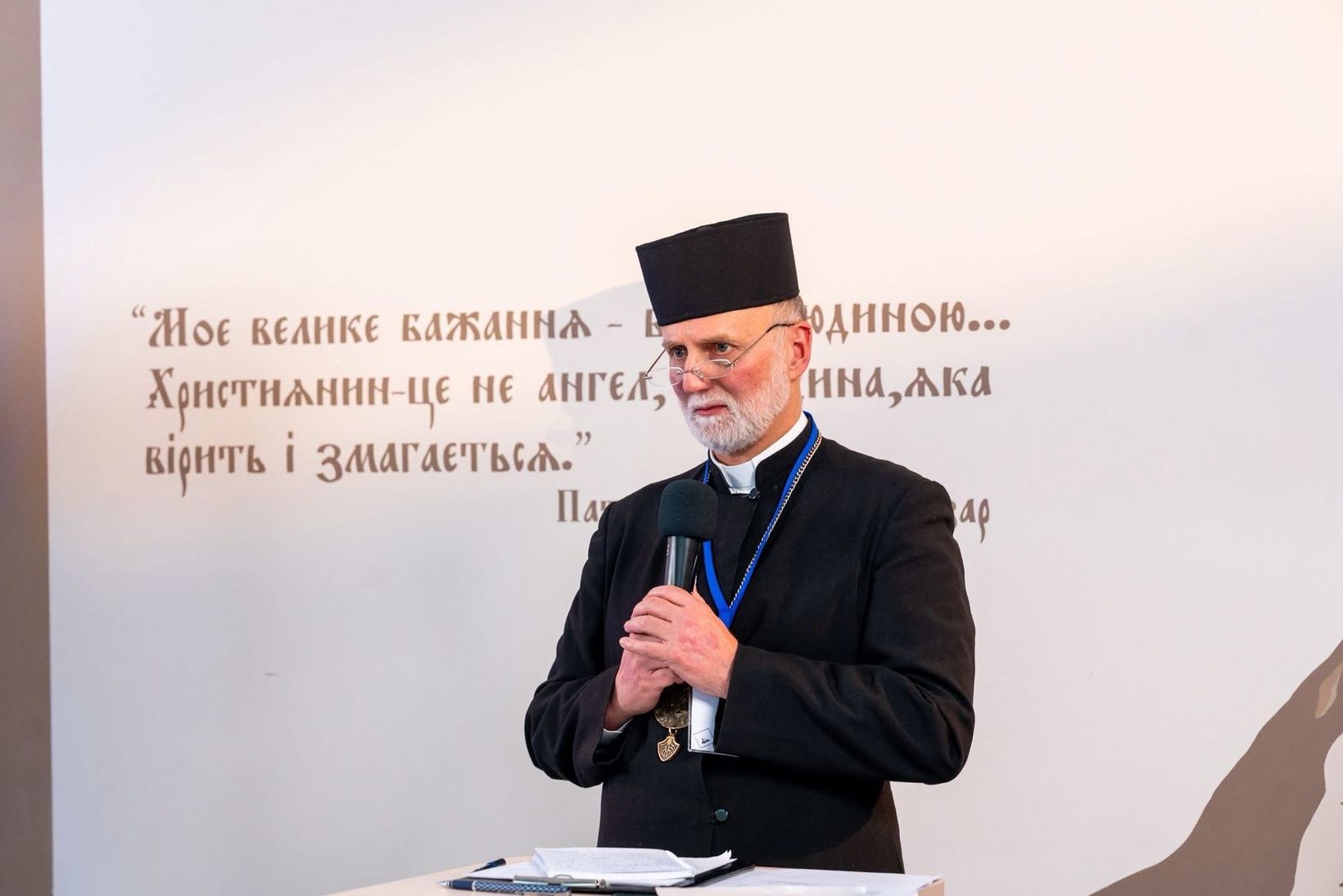
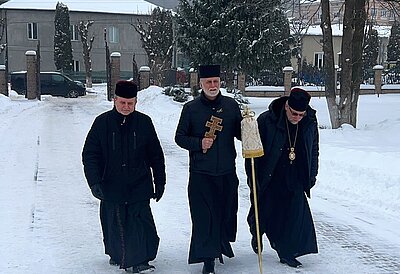
Metropolitan Borys Gudziak, Archbishop of Philadelphia for Ukrainian Catholics, took part in the two-day conference “The Voice of the Ukrainian Greek-Catholic Church in the World,” held on January 23–24 at the Catechetical Center of St. the Apostle Peter in Chernivtsi, Ukraine.
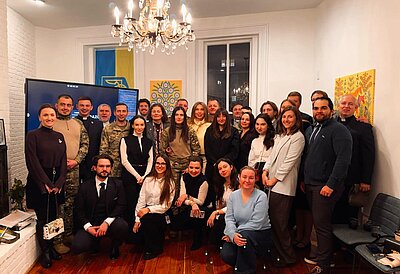
The conference was organized by the UGCC Department for External Church Relations, the Saint Gabriel Institute, and the Ukrainian Catholic University. It brought together bishops, clergy, eparchial external relations officers, students and alumni of the Saint Gabriel Institute, as well as representatives of government, academia, civil society, and international partners.
The conference aimed to analyze the UGCC’s external communication and outline ways to strengthen the Church’s presence in the public sphere at both the global and local levels.
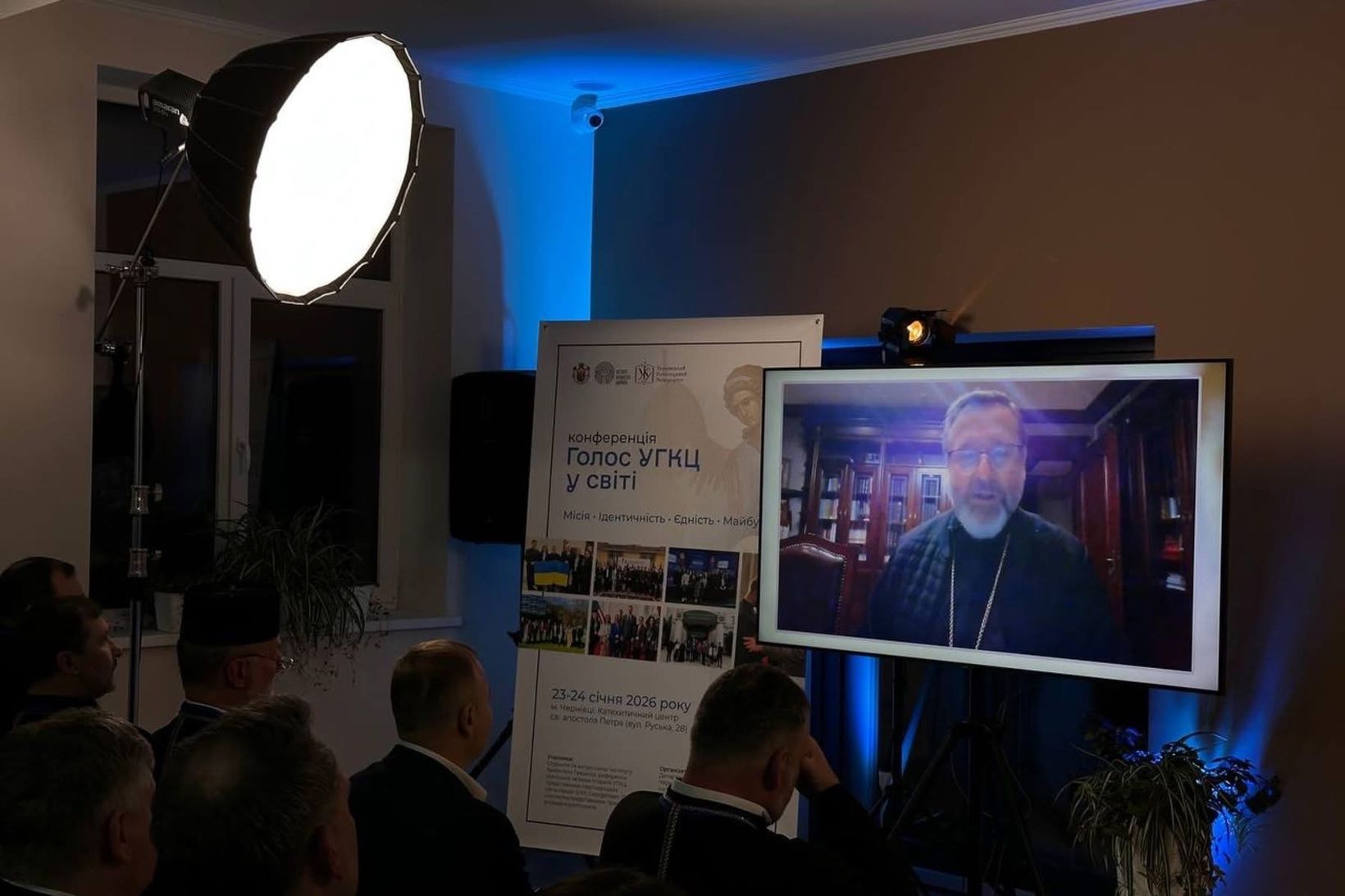
His Beatitude Sviatoslav, Father and Head of the Ukrainian Greek-Catholic Church, offered the opening remarks to the participants. He stressed that today the Church is called not only to be present in the world, but also to be clear and responsible in its communication.
He also noted that the Ukrainian Greek-Catholic Church was once described as a “silent Church,” but that this is no longer the case, “We are no longer a silent Church. We have something to say to the world, and we will continue to say it with ever greater clarity and professionalism. May the Lord God help us in this.”
Archbishop Visvaldas Kulbokas, Apostolic Nuncio to Ukraine, also addressed the participants, speaking about the witness of the Ukrainian Greek-Catholic Church within the universal Church. He emphasized that Ukraine’s voice is heard and understood in the world through living communities, real human stories, and faithfulness to moral values, even amid the hardships of war.
The role of the UGCC in Ukrainian society during the full-scale invasion was also highlighted by Viktor Yelenskyy, Head of the State Service of Ukraine for Ethnopolitics and Freedom of Conscience. He noted that public trust in the Church continues to grow largely because of personal encounters at the local level, where the Church’s message is not merely spoken, but lived together with the people.
A significant portion of the discussions focused on the experience of the Archangel Gabriel Institute as a space for the formation of future Church communicators and diplomats.
Natalia Skoreiko, a graduate of the Institute, emphasized that the program is not simply about acquiring technical skills or tools. “The Archangel Gabriel Institute is not about diplomatic protocol or a checklist of practices,” she said. “It is a deep process of formation that helps participants understand the history, mission, and social context of the Church’s service.”
Metropolitan Borys Gudziak reflected on the long path that led to the creation of the Church’s program in communication and diplomacy and emphasized its vital importance for the life and mission of the Ukrainian Greek-Catholic Church today.
Metropolitan Borys recalled that the idea of establishing a specialized school to prepare Church communicators and diplomats first emerged in 2017–2018 and was discussed at sessions of the Permanent Synod of the UGCC. Although the initiative was delayed by institutional transitions, the COVID-19 pandemic, and the full-scale Russian invasion of Ukraine, the vision continued to mature.
A decisive moment came in 2023, when the Synod of Bishops of the UGCC unanimously supported the creation of an academic program in Church communication and diplomacy. During the 2023–2024 academic year, the program was developed, and in June 2024 it officially began with 39 participants representing 19 eparchies and exarchates from 12 countries across 10 time zones — from Vancouver to Kyiv.
The Metropolitan noted that in its first year alone, the program conducted 32 online seminars, included extensive academic reading, and required written research work, while bringing together leading bishops, scholars, and practitioners. Among them were Bishop Stepan Sus, who shared his pastoral and diplomatic experience coordinating ministry in countries without permanent episcopal presence, as well as historians and professors who provided formation in Church history, public engagement, and critical thinking.
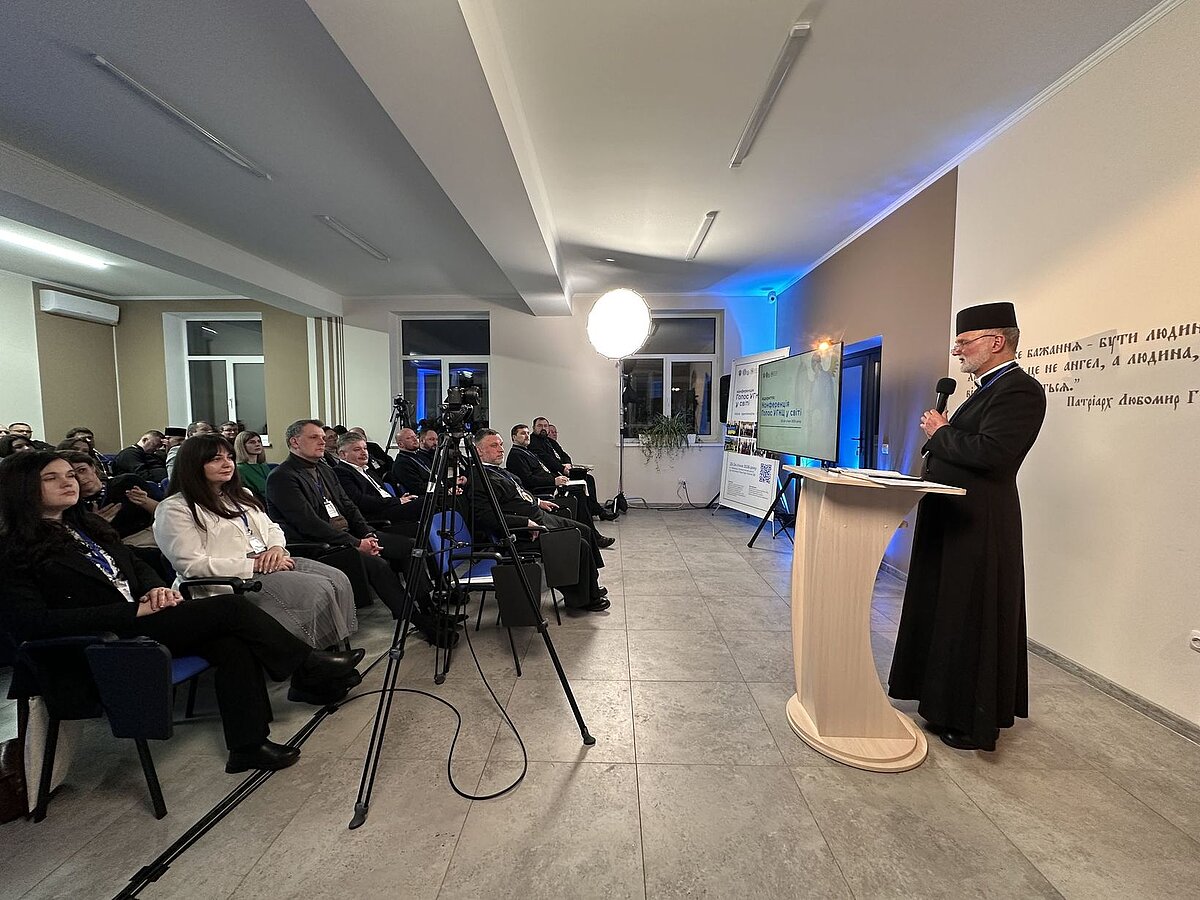
Speaking about the broader context, Metropolitan Borys stressed that Ukraine has lived in a state of war and imperial pressure for more than a decade — and, historically, for centuries. In this reality, the Church has a responsibility not only to provide pastoral care, but also to defend truth, dignity, and justice on the moral, intellectual, and informational fronts.
He recalled the establishment of the UGCC’s Department for External Relations in 2013 and its active development after Russia’s occupation of Crimea and the war in eastern Ukraine. Despite extremely limited material resources, the Church continued this mission through dedication, vision, and faith, “Money is not the most important thing,” the Metropolitan emphasized. “What matters most is having people and having an idea. When there are people and a mission, resources follow. And today it is clear that the Church needs people who know what to say and how to say it.”
Metropolitan Borys concluded by encouraging participants to see their work not as institutional success, but as humble service — grounded in prayer, faith, and responsibility before God and the people.
He also underlined the unique global presence of the Ukrainian Greek-Catholic Church, which today includes dozens of eparchies and exarchates and thousands of parishes in Ukraine and throughout the diaspora. Each parish, he noted, is not only a place of worship but also a living voice of the Church in society and the international community.
Metropolitan Borys drew attention to the vast educational and human potential already formed within the Church, including thousands of young people sent for advanced studies abroad over the past decades, as well as the growing body of Ukrainian theological, academic, and cultural publications. This potential, he said, must be better coordinated and strengthened in order to serve both the Church and Ukraine more effectively on the world stage.
Addressing the participants of the conference and the Archangel Gabriel Institute program, he stressed that authentic Church communication cannot be reduced to techniques or messaging strategies alone. It must be rooted in personal witness, the Gospel, and the commandment of love. “Our communication must grow from who we are,” he said, pointing to Christ’s words that the world will recognize His disciples by their love for one another. “Our life itself becomes our diplomacy. Our fidelity becomes our message.”
Metropolitan Borys concluded by encouraging participants to see their work not as institutional achievement or professional success, but as humble service — grounded in prayer, faith, and responsibility before God and the people.
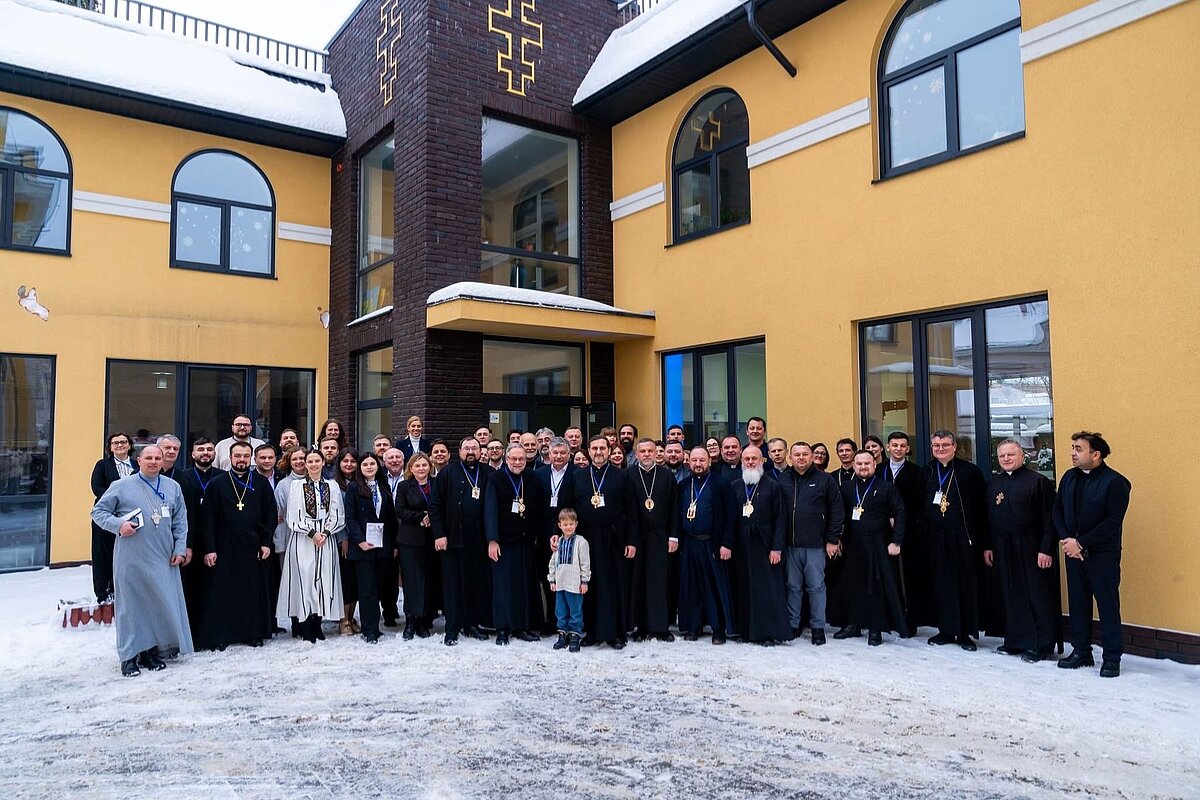
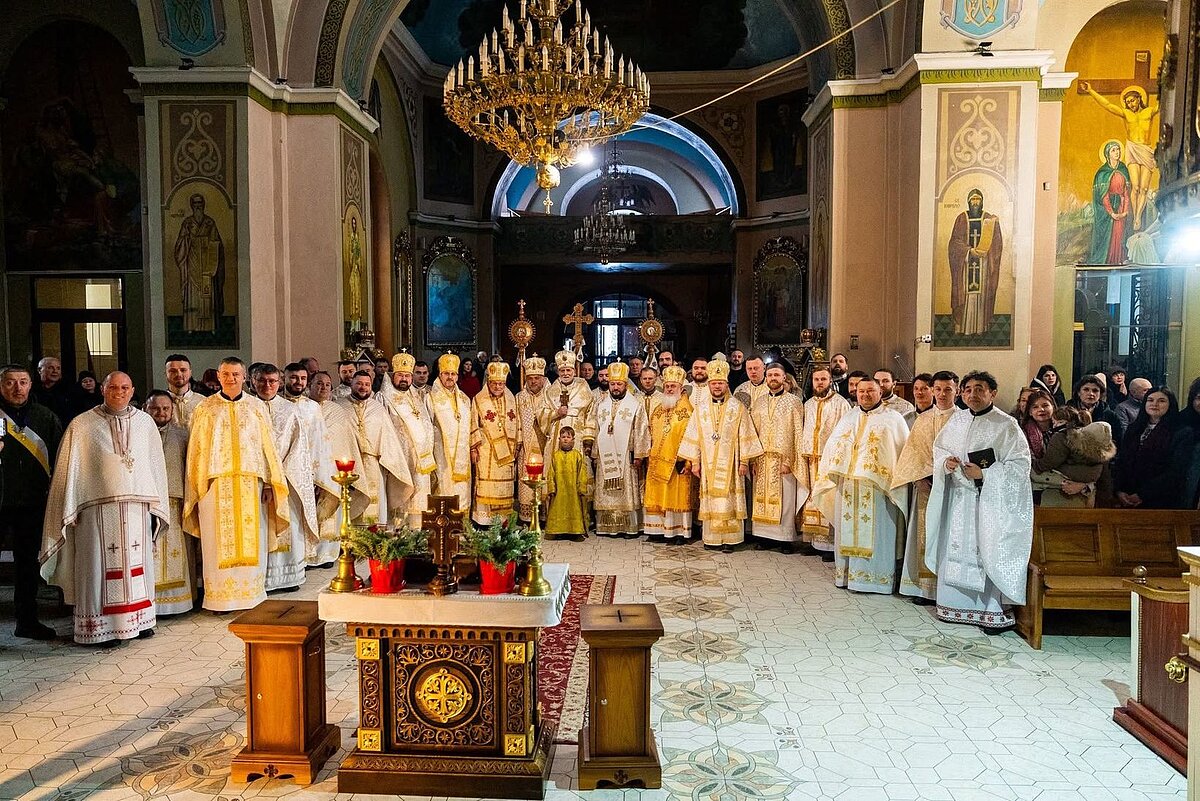
The second day of the conference began with the Divine Liturgy at the Cathedral of the Dormition of the Most Holy Mother of God of the Ukrainian Greek-Catholic Church, during which the Gospel was proclaimed by Archbishop Borys Gudziak.
Metropolitan Borys Gudziak expressed his hope that each eparchy and parish of the Ukrainian Greek-Catholic Church would recognize its unique mission in communicating with the world, “I have great hope that, for example, the Eparchy of Chernivtsi will be able to speak to all of Romania. That each of our eparchies, each of our parishes, will find its own place of presence and its own audience.”
The Metropolitan emphasized that in today’s digital age, distance is no longer an obstacle, “Today there is no distance. Through the internet, we can communicate with anyone”.
He added that through such communication, the Church stands alongside Ukraine’s defenders, who sacrifice their lives to preserve the nation’s dignity, “In this way, we stand beside our defenders who give their lives to protect our dignity. This is a hybrid war, in which the manipulation of information and falsehoods about us become weapons used against us.”
Concluding his remarks, Metropolitan Borys expressed confidence in God’s presence and in the ultimate victory of truth.
“But the Lord is with us. We move forward step by step, with certainty in our salvation in the Lord and in the victory of God’s truth on Ukrainian soil.”
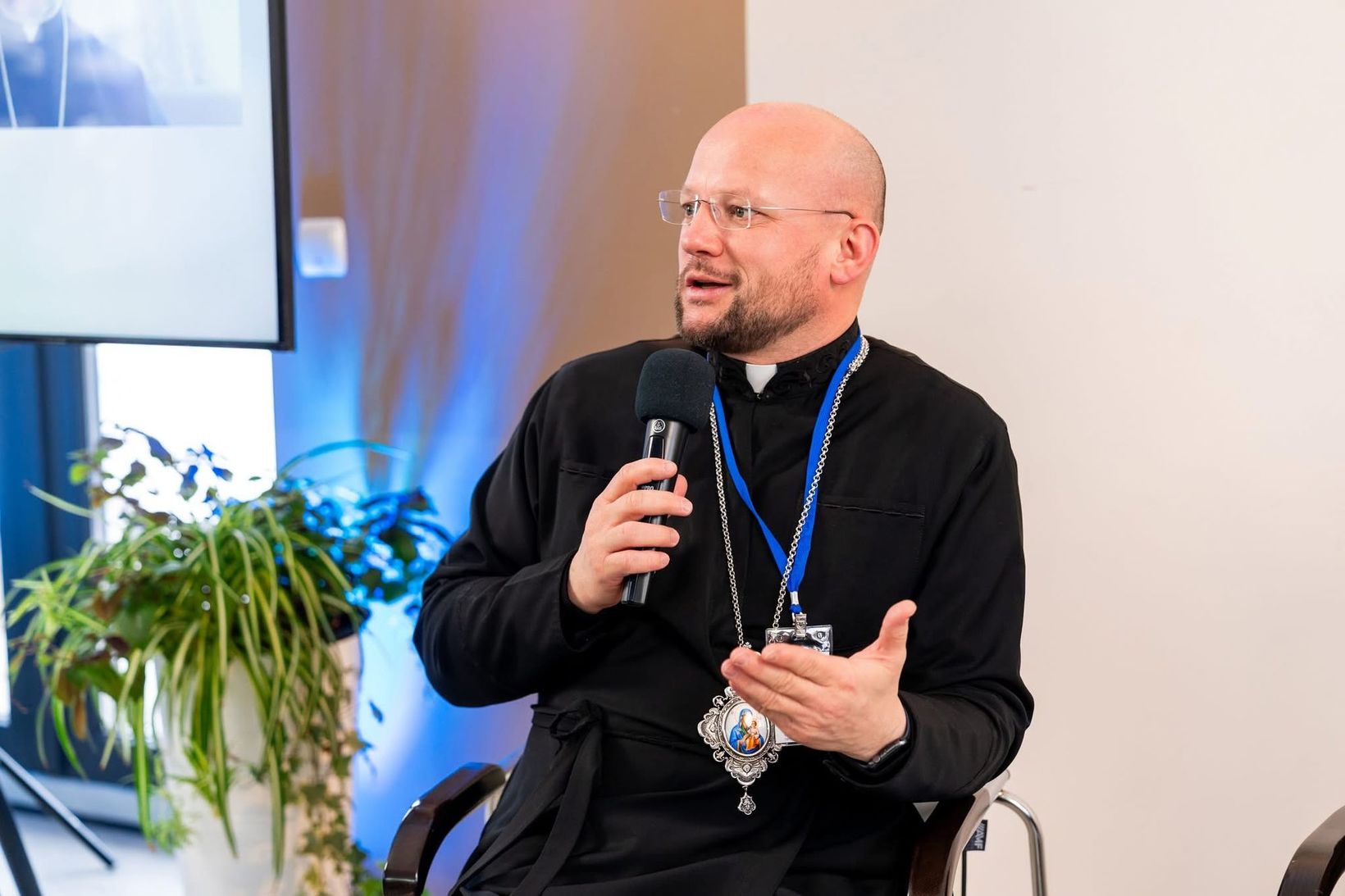
The conference program continued with a session titled “Diplomacy Through Faith: The Ministry of the Ukrainian Greek-Catholic Church.”
During the discussion, participants reflected on the line between the Church’s witness and political engagement, emphasizing that the mission of the Church is not to replace the state, but to stand alongside the faithful and create space for their active participation and service in society.
Bishop Kenneth Nowakowski, Eparch of the Holy Family of the Ukrainian Greek-Catholic Church in Great Britain, noted that the Church’s role is not to instruct, but to bear witness. He added that one of the Church’s important tasks today is to speak to the world professionally about Ukraine’s humanitarian needs.
Bishop Stepan Sus, Head of the UGCC Pastoral and Migration Department, drew attention to the two-sided nature of diplomacy. He emphasized that the Church must not only share its own story, but also carefully study the contexts of other communities in order to better understand how it is perceived by the wider world.
Fr. Oleksa Petriv, Head of the UGCC Department for External Relations in Ukraine, emphasized that the practical value of Church diplomacy lies in its ability to serve as a bridge between cultures and civilizations, appealing to shared values rather than competing interests.
Tetiana Stavnycha, President of Caritas Ukraine, speaking from her own experience, described the ministry of Caritas as “a diplomacy of practical love” — one that restores human dignity and strengthens social cohesion.
Fr. Andriy Shestak, Director of the School of Journalism and Communications at the Ukrainian Catholic University, noted that the Ukrainian Greek-Catholic Church has the potential to become a model for other Churches in the field of communication, provided it continues to invest in people, time, and resources.
During the second session of the conference, titled “The International Mission of the UGCC: Perspectives from the State and Civil Society,” diplomats, public officials, and experts shared their assessments of the Church’s role in the global context.
Arseniy Yatsenyuk, Prime Minister of Ukraine (2014-2016) and Head of the Kyiv Security Forum, noted that Ukrainians have both the moral authority and the resources to tell the world the truth about their country, and that communicating this truth helps strengthen international support for Ukraine.
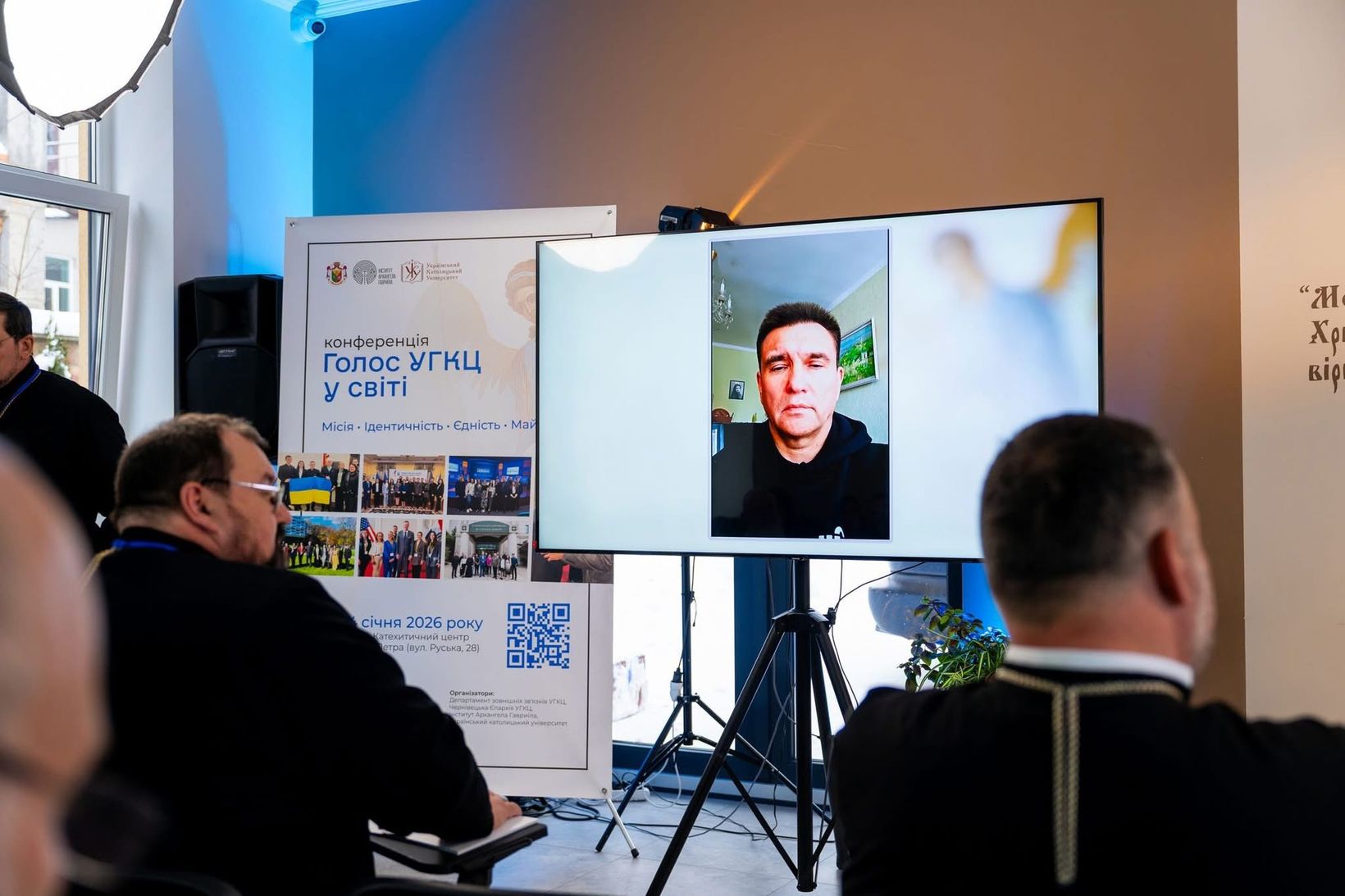
Pavlo Klimkin, Minister of Foreign Affairs of Ukraine (2014-2019) and former Ambassador to Germany, highlighted the challenges of today’s hybrid world, emphasizing that the Church can add unique value to public dialogue by rebuilding trust, affirming shared values, and helping the world better understand Ukraine’s significance.
Yuriy Pidlisnyi, Director of the “Ethics-Politics-Economics” Program at the Ukrainian Catholic University, noted that while the state must be attractive, the Church must be clear and credible, and that a new generation of leaders is needed to communicate Ukraine’s values professionally.
Mykola Murskyi, Advocacy Director of Razom for Ukraine, added that the UGCC has a unique moral foundation to serve as an “alternative face” of Ukraine in international advocacy and to strengthen solidarity among the diaspora and global partners.
The panel discussion “Universities and International Relations in a Time of Hybrid War” brought together rectors of leading universities and representatives of the academic and cultural sectors. Participants discussed the role of higher education in building international trust in Ukraine.
Mykhailo Wynnytskyi, former Deputy Minister of Education and Science of Ukraine, emphasized that long-term international cooperation between universities must be built on partnership, mutual respect, and complementarity.
Bohdana Laiuk, Deputy Minister of Culture of Ukraine, highlighted the need for deeper work with cultural memory, noting that it is important not only to know who we are, but also to be able to translate this knowledge clearly to the world.
Igor Gerush, Rector of Bukovinian State Medical University, noted that effective external communication is impossible without inner strength, emphasizing that only by cultivating its own values can Ukraine confidently present itself to the world.
Ruslan Biloskurskyi, Rector of Chernivtsi National University, noted that cooperation between universities goes far beyond diplomas or academic knowledge alone. He emphasized that it is about building a living ecosystem “in which the Ukrainian voice is heard wherever Ukrainians are present.”
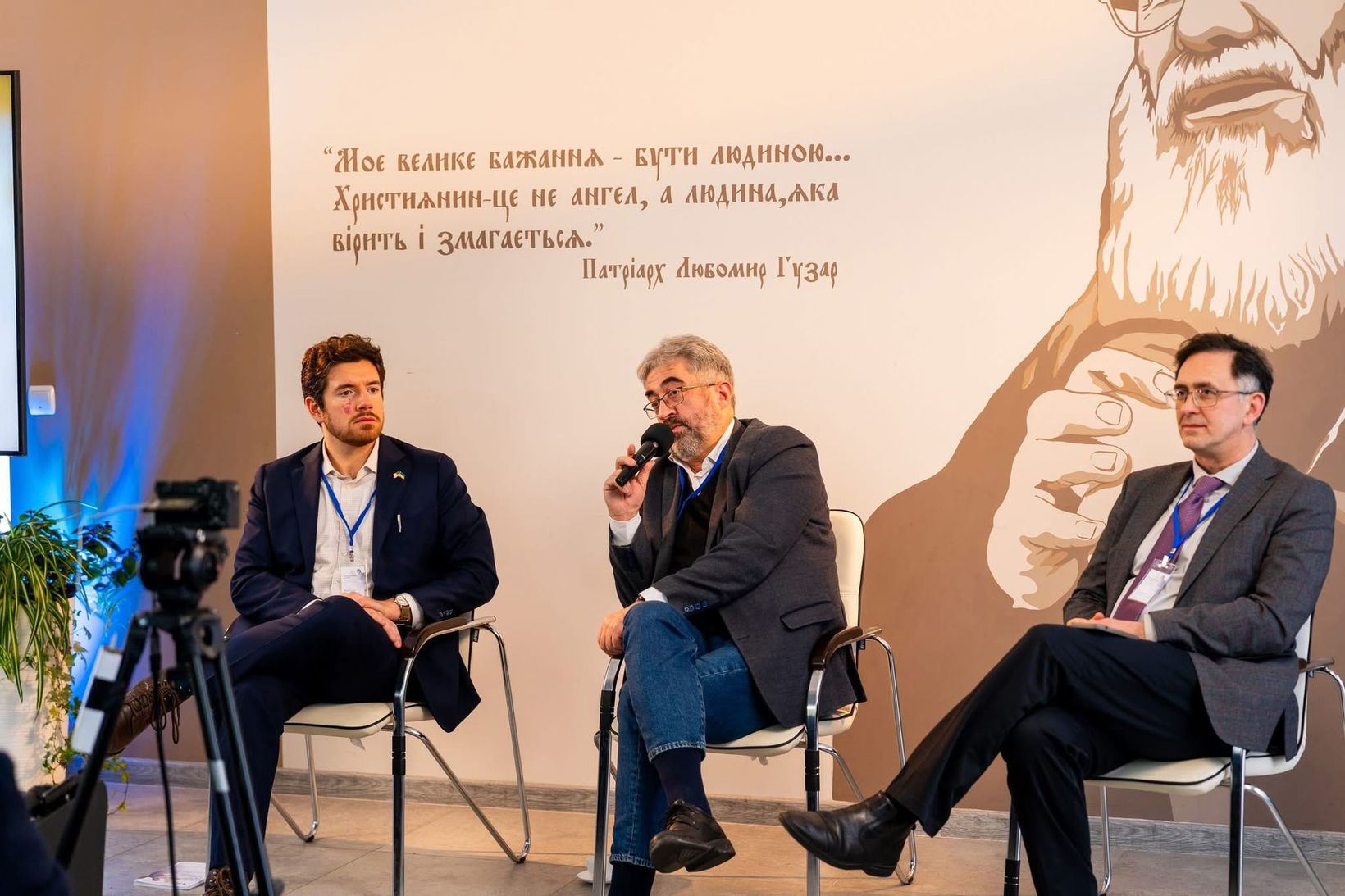
The conference concluded with a series of workshops, during which participants developed concrete proposals — ranging from a strategic map of the UGCC’s diplomatic opportunities to a vision for the role of the diaspora and the future development of Church diplomacy in the years ahead.
Photo credit: Faculty of Social Sciences, Ukrainian Catholic University