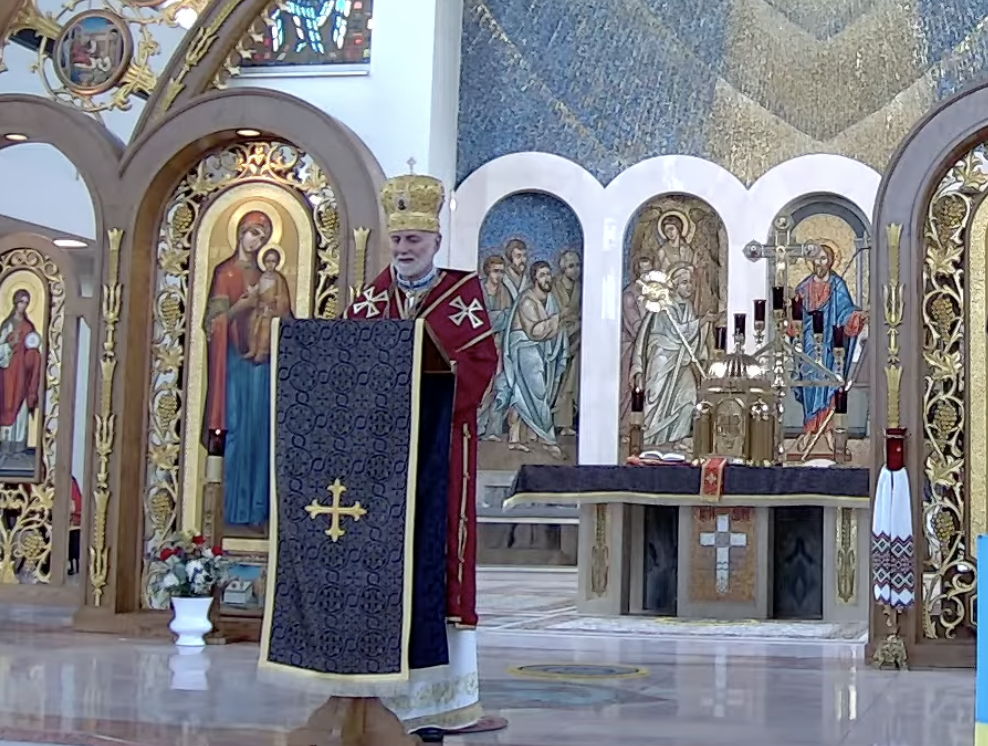
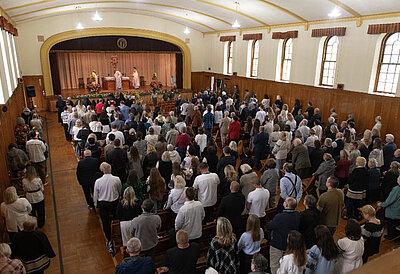
On March 8, during the Divine Liturgy on the Third Sunday of the Great Fast, known as the Sunday of the Veneration of the Cross, Metropolitan Borys Gudziak reflected on the central place of the Cross in the life of Christians and its meaning in the midst of suffering and injustice in today’s world.
Addressing the faithful, the Metropolitan noted that as the Great Fast progresses, the Church invites believers to pause and contemplate the mystery of the Cross, “During the liturgical year the Church draws our attention to the Cross in a special way three times...We celebrate the Exaltation of the Holy Cross on September 14, we venerate the Cross on the Third Sunday of the Great Fast, and again on August 1. The Cross is constantly before our eyes — on our churches, in our homes, and in the sign we make upon our bodies.”
He acknowledged that from a purely human perspective the Cross may appear paradoxical, since it was originally an instrument of execution used by the Roman Empire.
“Thousands were crucified by the Romans — rebels, criminals, those who disturbed the social order,” he said. “Yet the Cross, meant to erase the memory of Jesus, has become perhaps the most widespread symbol in the world, a sign that Christians wear close to their hearts.”
Metropolitan Borys explained that Christians venerate the Cross because it reveals the depth of God’s love for humanity. Through the suffering of Christ, God entered fully into the human experience, “God so loved the world that He sent His Son... We do not have a High Priest who cannot sympathize with our weaknesses. Christ experienced everything that we experience, except sin.”
Reflecting on the reality of war and suffering, particularly in Ukraine, the Metropolitan acknowledged the painful question many people ask in times of tragedy: Where is God? “Today Ukrainians ask this question while experiencing war, injustice, brutality, bloodshed, and the genocidal intentions of the aggressor. Where was God during the world wars? Where was God during the Holodomor?”
While acknowledging that humanity may not fully understand the mystery of evil in this life, he emphasized that the Cross reveals God’s presence in human suffering.
Metropolitan Borys emphasized that even in human pain, confusion, and emotional suffering, the Lord remains present. He reminded the faithful that Christ knows human death and sin, and that the One who is without sin took upon Himself the sins of humanity.
The Metropolitan reminded the faithful that the Cross is ultimately not a symbol of defeat, but of victory, “The hymns of this Sunday proclaim victory and joy,” he said. “In the valley of tears, in human suffering, God remains with us. Entering into the darkness of death itself, Christ shattered its gates and raised Adam and Eve.”
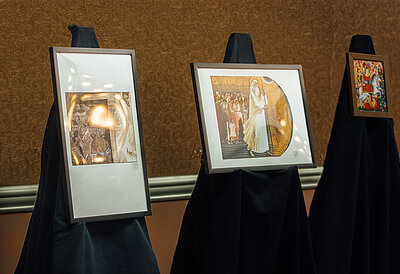
At the conclusion of the Divine Liturgy, Metropolitan Borys also introduced several cultural initiatives connected with Ukraine. He spoke about three artists from the Volyn region who recently arrived in the United States and are presenting a special artistic project connected with art therapy for Ukrainian soldiers and traumatized children and others who wish to participate.
The project will culminate in the creation of a 30-meter-long painting, on which soldiers and children themselves will continue adding drawings and reflections. The completed work is expected to be presented on Palm Sunday. The group is led by Tetiana, the mother of a fallen Ukrainian hero, whose personal experience gives her particular moral authority in working with soldiers and their families.
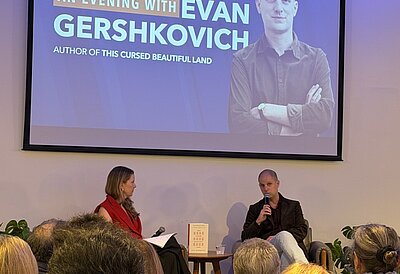
Metropolitan Borys also invited the faithful to attend a cultural event at the Archeparchy’s Cultural and Educational Center later that day featuring a meeting with Ukrainian writer Volodymyr, originally from Donetsk. The author, who has twice fled Russian occupation, is currently working in the United States and continues his literary work while sharing the experiences of war and displacement.
The Metropolitan encouraged the faithful to support these initiatives, noting that even in the midst of the hardships of war, Ukrainian culture and creativity continue to bear witness to truth, resilience, and hope.