- Strategic Resources
- Archeparchy
- Our faith
- Offices and ministries
- News and Updates
- Events
- Parishes
- Youth Protection
- Subscribe to "The Way"
For Ukrainians, the vyshyvanka has long been more than a piece of clothing. Passed down through generations, it carries the history, faith, traditions, and spirit of a people. Every region of Ukraine has its own unique patterns, colors, and embroidery techniques, often reflecting local identity and family heritage. Throughout times of joy and suffering, peace and war, the vyshyvanka has remained a visible sign of dignity, resilience, and love for one’s roots.
This year, the Ukrainian Catholic Archeparchy of Philadelphia invited parishioners and friends to share the stories behind their vyshyvankas and reflect on what these embroidered shirts mean in their lives. Their responses revealed that each vyshyvanka carries memories of family, faith, sacrifice, identity, and the enduring connection between generations.
Among them was Motrya Mac of the Ukrainian Catholic National Shrine of the Holy Family in Washington, D.C., shared a story that connects her vyshyvanka not only to family heritage, but also to a memorable encounter with Saint John Paul II.
For Motrya, the vyshyvanka represents “love of family and heritage.” She shared that the embroidered shirt was purchased in New York City together with her parents.
One of her most cherished memories connected to the vyshyvanka dates back to the summer of 1987, when she attended the Ukrainian Catholic University in Rome. During that time, students from the United States, Yugoslavia, Poland, and Canada had the opportunity to meet Pope John Paul II during a papal audience.
“Since I was the only American who wore a vyshyvanka, I was seated in the first row,” Motrya recalled.
The photo she shared captures the moment she greeted the Holy Father in Ukrainian: “Slava Isusu Christu!” — “Glory be to Jesus Christ!”
Pope John Paul II responded in Ukrainian: “Slava naviky!” — “Glory be forever!”
Diana Motruk, originally from the Kolomyya region in Ivano-Frankivsk oblast and now a parishioner of the Church of Holy Wisdom — Hagia Sophia at Ukrainian Catholic University in Lviv.
For Diana, her vyshyvanka is deeply connected to family memory and love. She inherited it from her grandmother Anna.
“My grandmother is no longer with us,” Diana shared, “but her warmth and love are invisibly present in every thread whenever I wear it.”
She also reflected on the rich embroidery traditions of her native Pokuttia region, especially the well-known overnight vyshyvanka market near Kolomyya, where before dawn one can see an incredible variety of colors, embroidery techniques, and traditional Ukrainian patterns.
“Our region is famous for its night market of vyshyvankas, where at dawn your eyes can get lost among the colors, techniques, and patterns of our traditional clothing,” she wrote. “It is impossible to leave without one — I learned that four times.”
Today, Diana says she wears each of her vyshyvankas with gratitude and pride — especially during this time of war, when the sense of belonging to one’s people becomes even deeper.
“But I am convinced,” she reflected, “that first of all, we must carry the vyshyvanka in our soul. What we wear outwardly should come from an inner need — a love for what is ours, for memory, dignity, and our roots.”
Oksana Glaberman of Bridgeport also shared the story of a vyshyvanka closely tied to family love and memory.
“This was my first ‘grown up’ vyshyvanka,” Oksana shared. “It was a high school graduation gift over two decades ago.”
At the time, she says, it was one of the most precious gifts she had ever received — and it remains one of her most treasured possessions today.
The vyshyvanka was gifted to her by her aunt Gloria, who found a vendor in Ukraine to hand-stitch it especially for her.
“My teta Gloria passed several years ago,” Oksana wrote, “and I wear it proudly in her memory and honor, to share our heritage.”
Because of its deep personal meaning, Oksana describes it as her “fancy occasion” vyshyvanka — one she hopes to preserve for many years to come.
One especially meaningful memory connected to the embroidered shirt came in 2024, when she wore it to a rehearsal at the Metropolitan Opera in New York City for a performance of Beethoven’s Ninth Symphony in Ukrainian with the Ukraine Freedom Orchestra and conductor Keri-Lynn Wilson. In the photo she shared, she also wears a traditional gerdan passed down from her mother.
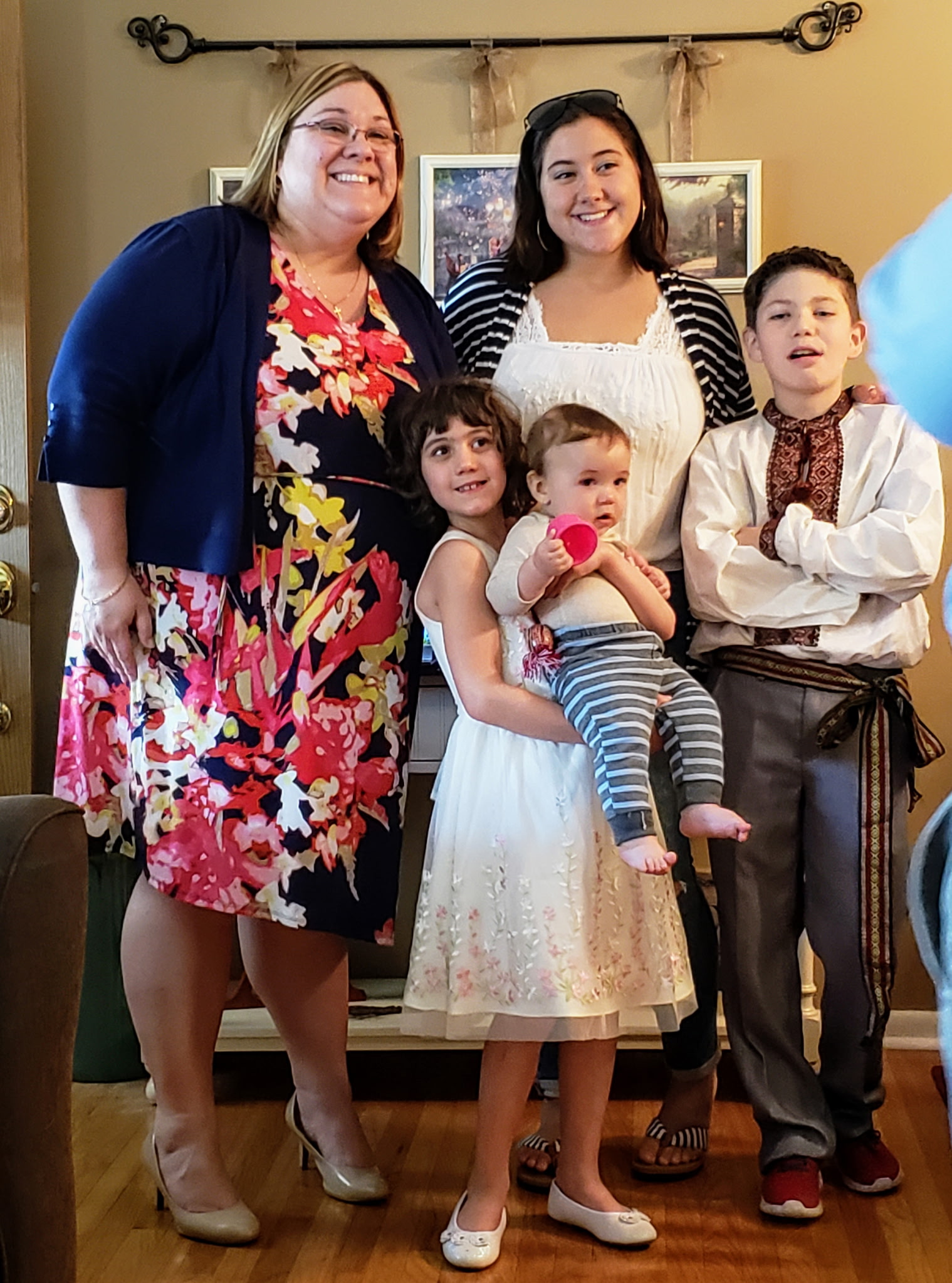
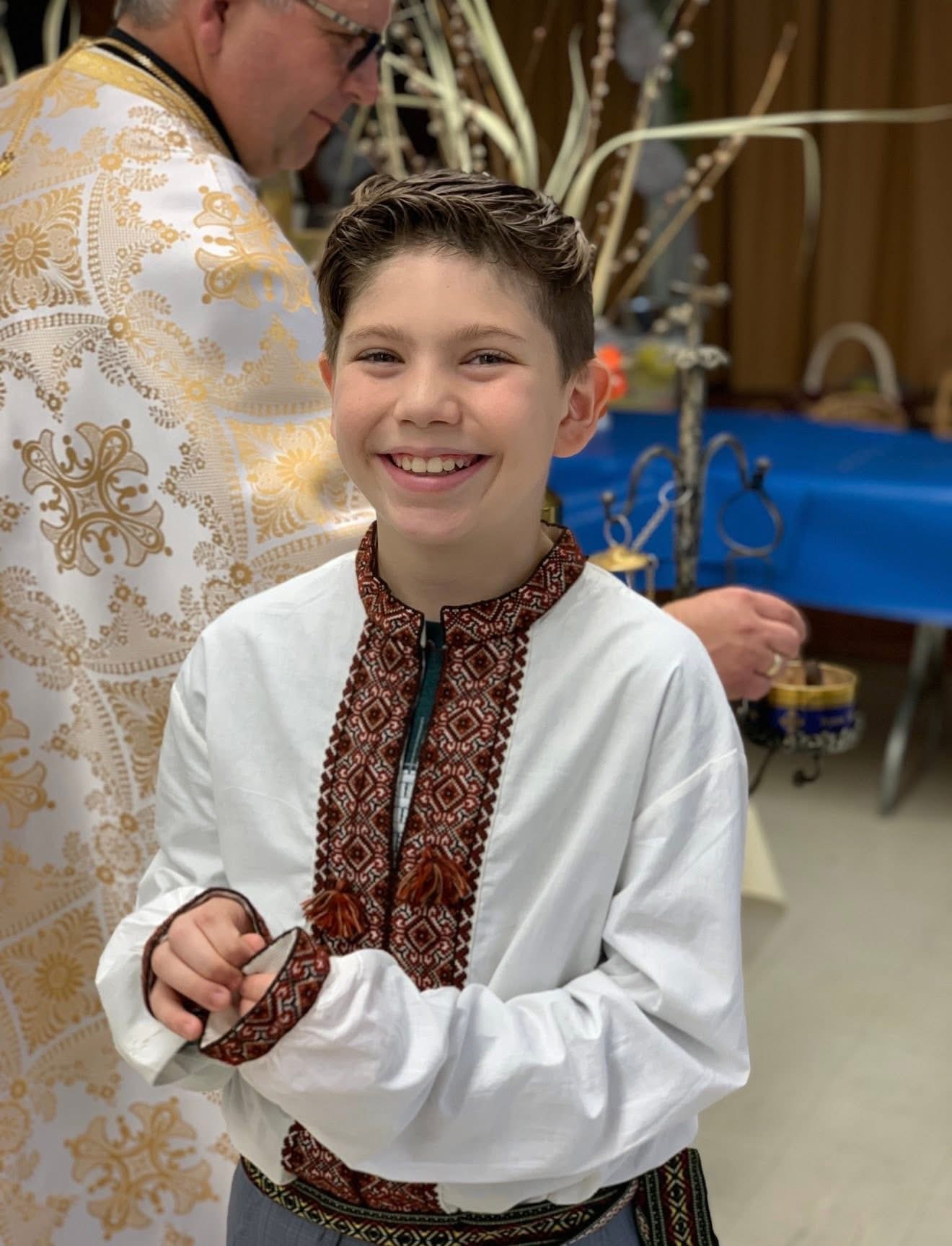
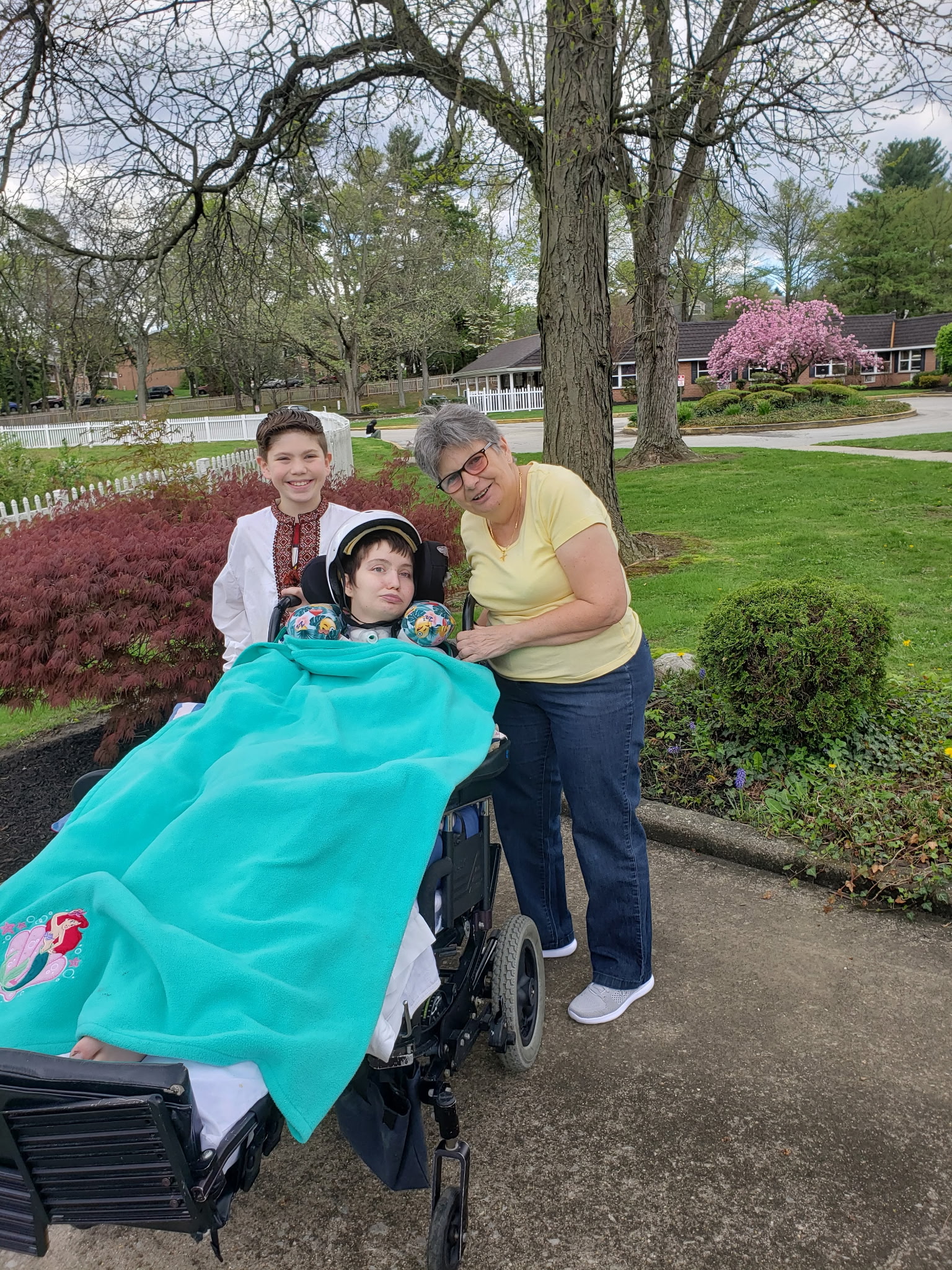
Gabriel Silva of St. Mary’s Parish in Bristol, Pennsylvania, shared how his vyshyvanka reflects the family traditions and faith passed down through the Polish and Ukrainian side of his family.
“For me, it means family,” Gabriel shared. “It symbolizes the traditions continued within the Polish/Ukrainian side of my family.”
He recalled childhood memories of Christmas Eve and Easter celebrations, attending church with family members, and participating in parish traditions such as Saint Nicholas events held in the church basement.
Gabriel explained that his first vyshyvanka was inherited from his father, while the one in the photo he shared was gifted to him by fellow parishioners at St. Mary’s Parish. The traditional belt he wears with it was given to him by his Aunt Paulette.
One special memory connected to the embroidered shirt was wearing it for the Easter blessing at church in 2019 and later visiting family members’ homes for Easter celebrations.
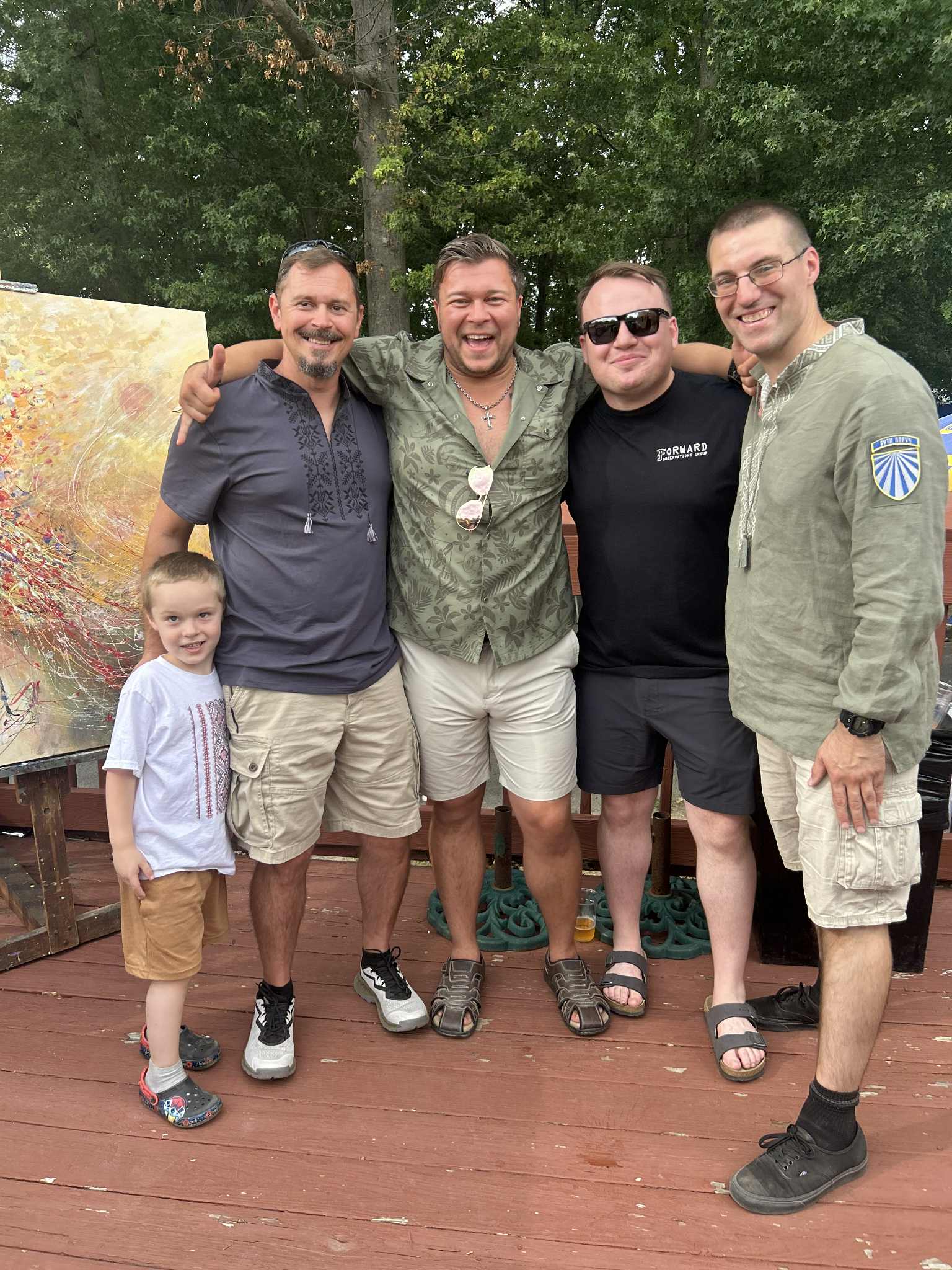
Another story came from John Mateja of the Archdiocese for the Military Services, whose vyshyvanka represents friendship, faith, and solidarity with the Ukrainian people.
John received his military vyshyvanka as a gift from the Chaplaincy of the Armed Forces of Ukraine after working closely with Ukrainian military chaplains.
“Having worked with the Armed Forces of Ukraine, especially their chaplaincy, I grew very attached to the resiliency and faith of the Ukrainian people,” John shared. “Many days and nights were spent praying, singing, and learning from the holy men of Ukraine.”
At the conclusion of his service supporting the chaplaincy, one of the officers presented him with the embroidered shirt — a gift that continues to hold deep spiritual and personal meaning.
“I proudly wear the patch of the AFU Chaplain Corps on my sleeve,” he wrote. “Their motto, ‘To Be Near,’ reflects the ministry that all chaplains and chaplain assistants should aspire to emulate.”
For John, the vyshyvanka serves as “a link with friends, faith, and resilience.”
Rev. Ihor Demydas of Transfiguration of Our Lord Parish in Shamokin also reflected on the deep spiritual and cultural meaning of the vyshyvanka.
“For me, the vyshyvanka is a language, a symbol of the nation in which the ‘code’ of the people is hidden,” Father Ihor shared. “It is a reminder of who I am and where I come from.”
He also described the vyshyvanka as a form of prayer, explaining that every ornament and embroidered pattern carries the lived experience, suffering, and faith of the Ukrainian people.
“The vyshyvanka is also a prayer,” he reflected, “where every ornament may have been spoken and suffered through by the people.”
Father Ihor shared that all of his vyshyvankas are gifts from his wife and that wearing them constantly reminds him of family, home, and the traditions of his native village.
Though each story is unique, together they reveal how the vyshyvanka continues to unite generations and communities across the world. Whether inherited from grandparents, gifted by loved ones, connected to military chaplaincy, worn during family celebrations, or tied to moments of prayer and faith, these embroidered shirts remain living signs of memory, resilience, dignity, heritage, and love for one’s roots.
By Oksana Loziak