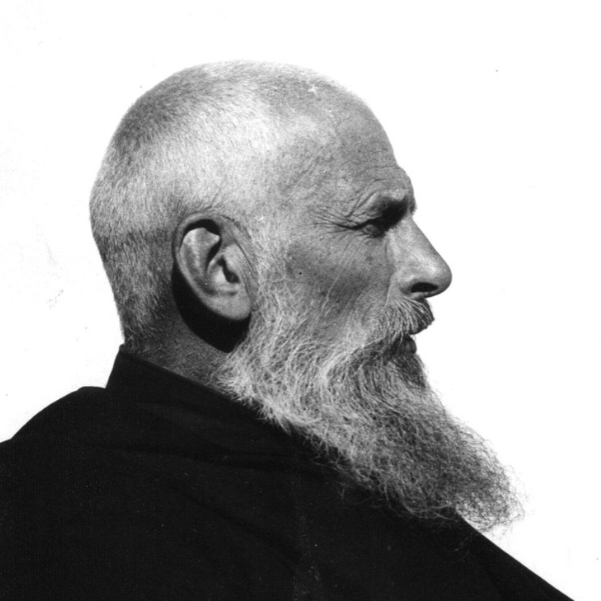
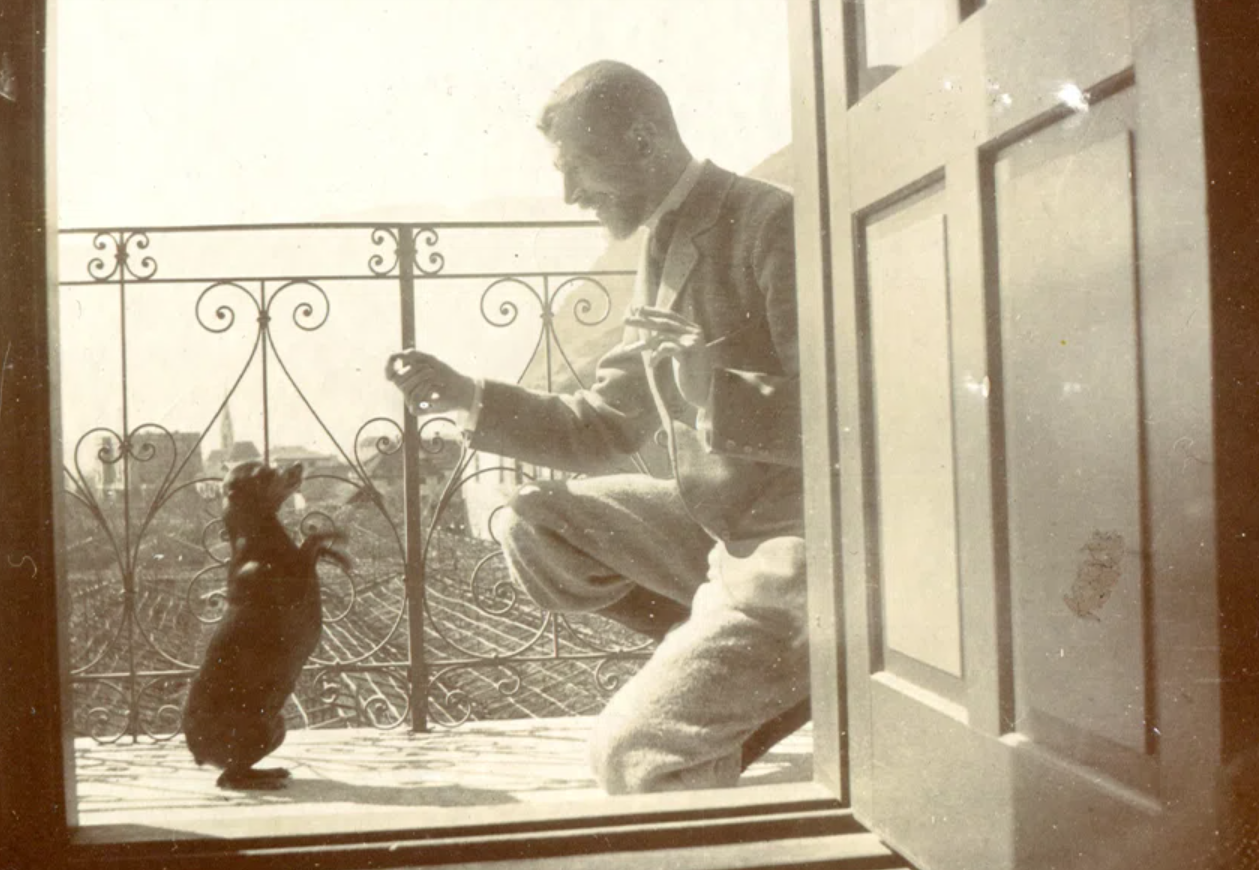
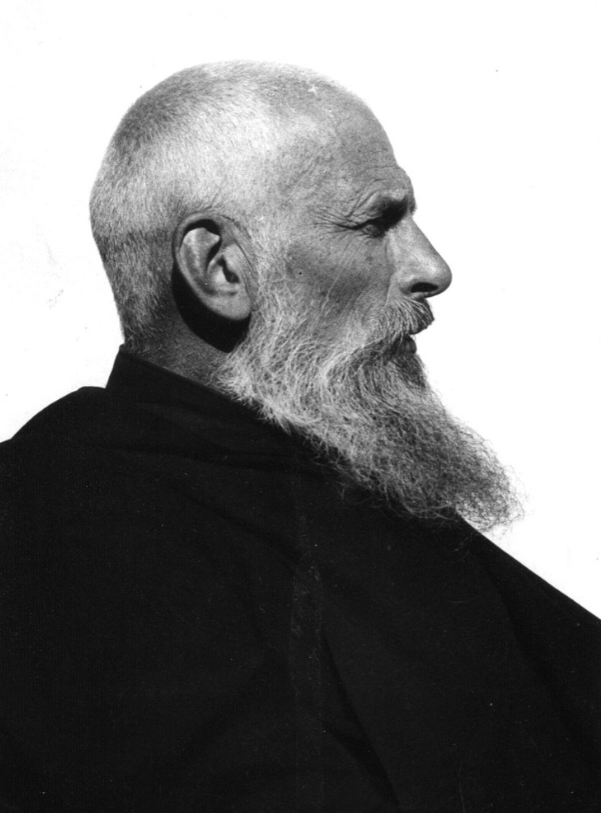
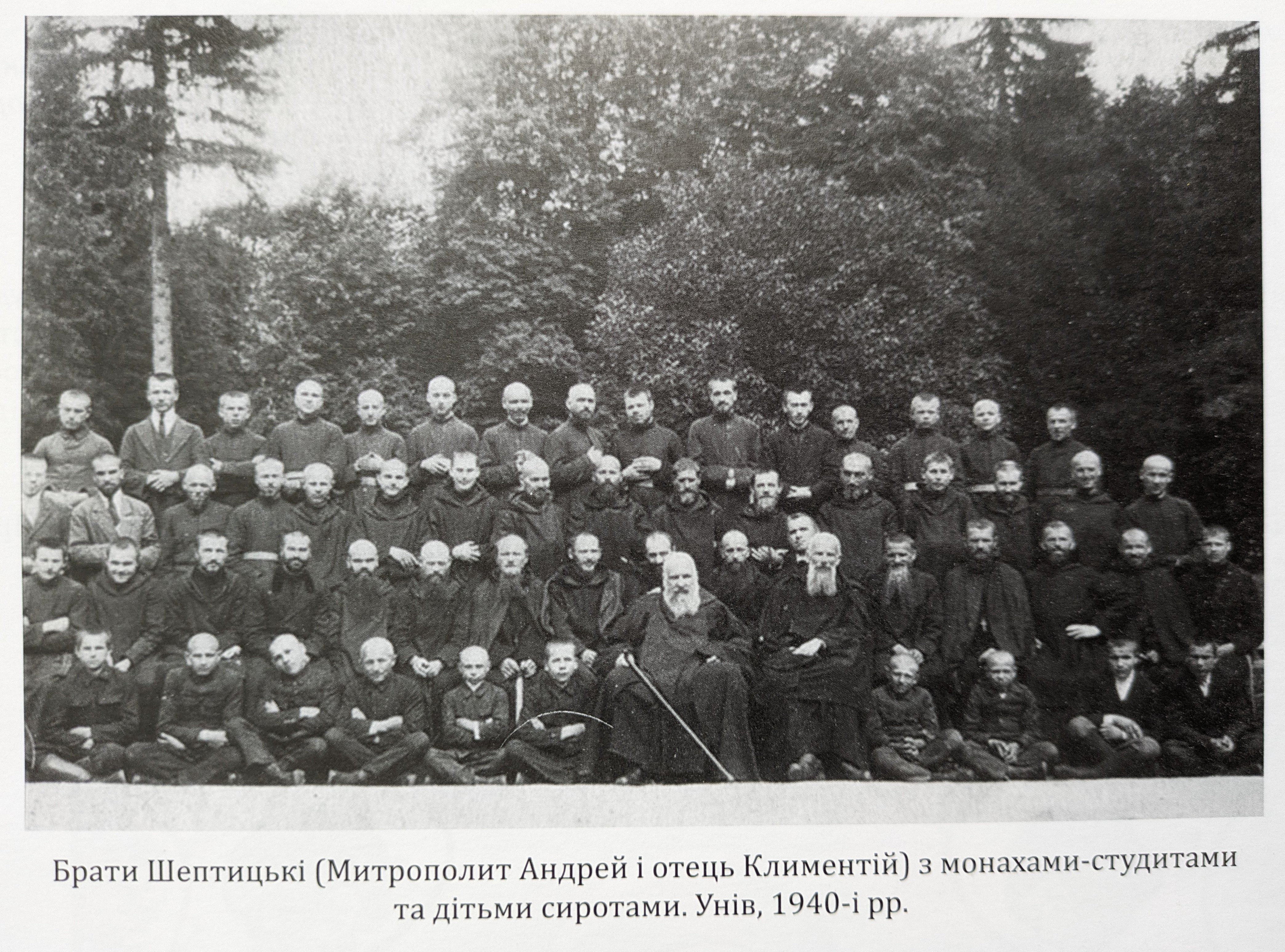
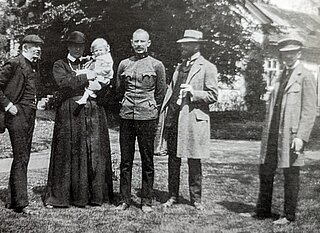
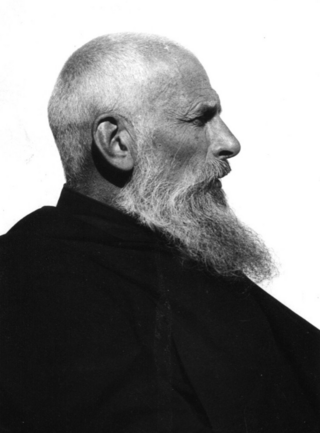
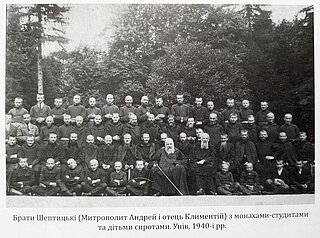
On May 1, we commemorate the death of the blessed martyr Fr. Clement Sheptytsky, brother of Metropolitan Andrey. We would like to share with you some lesser-known aspects of Fr. Clement's life, also known as Dr. Count Casimir Maria Sheptytsky or Kazio, as affectionately called by his family.
A Gifted Manager:
After defending his doctorate in law in Krakow, 24-year-old Casimir Sheptytsky begins to help his father in his economic affairs. He was engaged in the affairs of the estate in Prylbychi, family forests (the Sheptytskys also had land in Pidlyute (Ivano-Frankivsk region) and since 1893 he has been taking care of the estate entrusted to him by his father in Devyatnyky (Lviv region). Iza, the wife of his brother Oleksandr, wrote about their visit to the estate: "How everything is taken
care of, and nice to look at, and how people love and respect Kazio there. (November 1898)" His mother Sofia also wrote to her relative, "Kazyk manages, but, apparently, organizes his work in a more monastic way, 1899." Count Casimir Sheptytsky also founded the building of a new church in the village (which people learned about at its consecration) and also invited Modest Sosenko to decorate the church inside. Leaving the estate to his nephew Jan (the son of Leon), he also left a thick notebook in which he described in detail everything he left behind and how to take care of the houses, fields, forests, and people who lived nearby. With the same care and economic skill, Fr. Clement took care of and built up the Univ Lavra. He not only cared for the spiritual life of the monks, but also for their education and various practical knowledge. For example, once he sent two monks to his brother Leon's house in Lviv to learn to cook from his brother's cook. As his nephew Jan recalled of his uncle's management: "All these details, order, and efficiency were later transferred to the method of creating the foundations of the order of St. Theodore the Studite."
A Defender:
Casimir Sheptytsky received a brilliant legal and political education and studied in Krakow, Munich, and Paris. He was an ambassador of the Galician Seimas and was elected a member of the Austrian Parliament in 1900. In his political activity, he prepared laws related to the forests of the Austro-Hungarian Empire and their preservation, compulsory insurance, pensions, and social protection of ordinary people. His political career lasted only 7 years, but it left a mark on the lives of many people. After becoming a monk, Fr. Clement continued to defend and advocate for the rights of others. When the house of his brother Leon (killed by the Bolsheviks in 1939) in Lviv was taken during the German occupation, he got the tenants to pay the rent, which he sent to his two nieces. When the Soviet authorities arrested all the UGCC bishops in 1945, he continued to defend the Church against the regime. Fr. Clement also visited priests to dissuade them from forcibly converting to Orthodoxy. A vivid example of his defense of the truth was the protection and hiding of Jews in Studite monasteries during the war. Together with Metropolitan Andrey, he saved hundreds of innocent lives.
A Caregiver:
Love for parents and family was an important part of Casimir's life as a secular man and later as Fr. Clement. Following his older brother Roman, he also felt the call to the monastic life. However, out of love for his parents, who required care, he remained to assist them after completing his studies. His mother, Sofia, was often ill, and it was Kazio who accompanied her on trips for treatment. She wrote to her daughter-in-law Iza in 1896: "...Kazyk takes care of me like a nanny: reads, watches over, gave to drink cognac - you have to see it to understand the whole depths of gentleness and love in him..." But the love of God in Casimir’s heart also grew and became stronger despite all the vicissitudes of life. Therefore, at the age of 42, he leaves his secular life and enters monastic life. During this period, Fr. Clement continues to maintain strong relationships with his family, but he also loves and cares for his monastic brothers and the UGCC faithful. At this time, Fr. Clement also took care of Metropolitan Andrey, who was suffering from bone tuberculosis and needed constant care in his last years. Out of great love, Fr. Clement also accepted martyrdom in prison.
The life of Blessed Clement Sheptytsky inspires us to cultivate our talents, deepen our love for humanity and God, and embrace our secular or monastic calling.