“The God Who Seeks”: Metropolitan Borys on Zacchaeus, Conversion, and Encounter with Christ
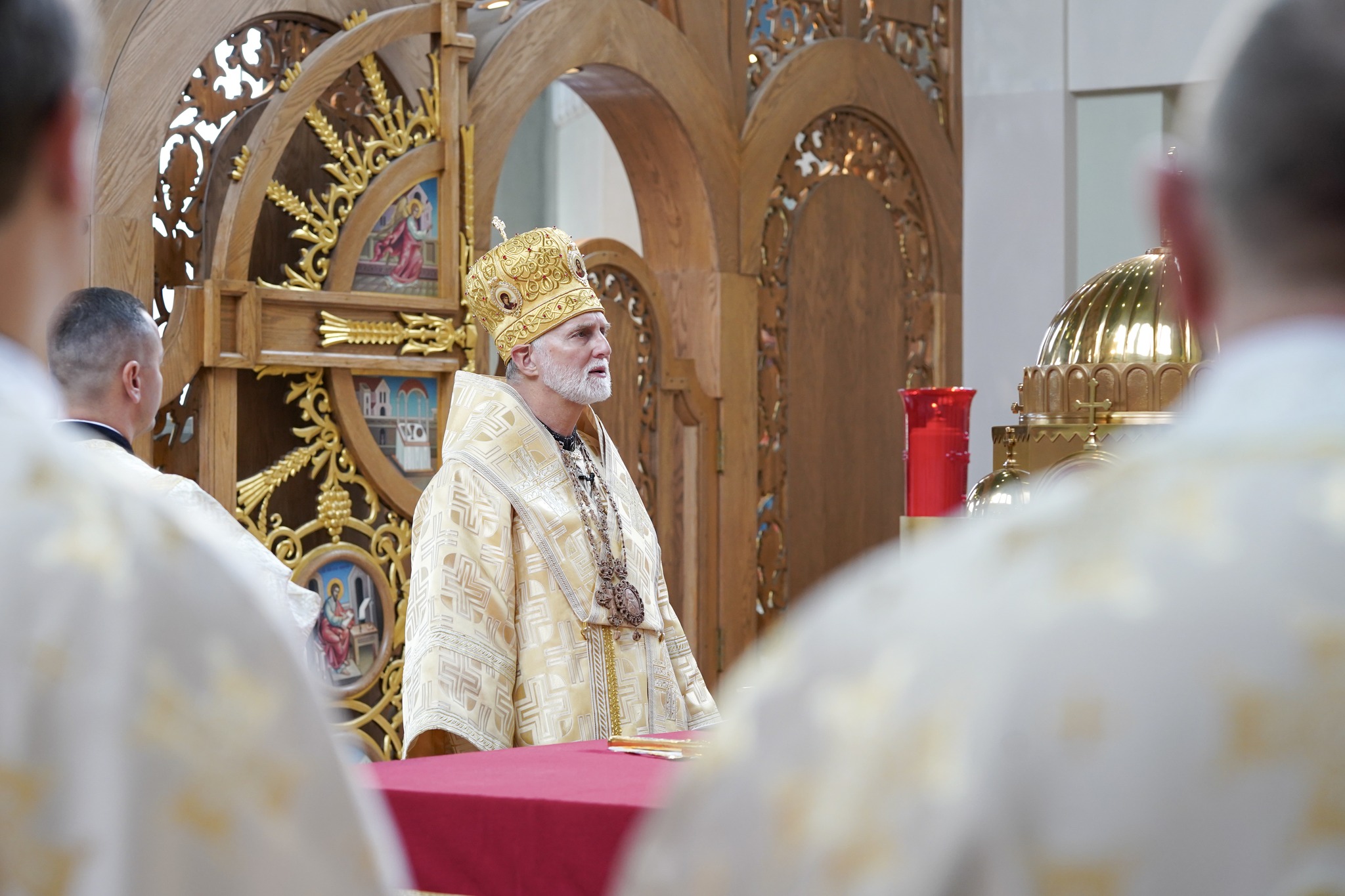
A homily by Metropolitan Borys Gudziak on the Sunday of Zacchaeus, at the beginning of the Church’s spiritual journey toward Great Lent and Pascha.
As the Church moves from the Feast of Theophany toward Pascha, it enters a time of interior readiness for the great events of salvation. The Sunday of Zacchaeus, Metropolitan Borys Gudziak noted, opens a series of Gospel Sundays that “lead us to great things” and prepare the heart for an encounter with Christ in the mystery of Pascha.
Reflecting on the Gospel reading, the Metropolitan drew attention to the figure of Zacchaeus — a chief tax collector, a man viewed by society with suspicion and hostility. “Tax collectors, in every age and especially in occupied lands, were symbols of betrayal,” he emphasized. “They served the occupier and often enriched themselves at the expense of their own people.” As a Jew and a representative of an oppressive system, Zacchaeus was well known — and largely despised.
The Gospel also highlights Zacchaeus’s small stature. This seemingly minor detail, the Metropolitan observed, is deeply revealing. “One can imagine a person who spent his whole life feeling that he was not taken seriously,” he said. “At times, such people try to compensate for inner vulnerability with power or outward displays of strength.” Yet it is precisely this man — familiar and recognizable to all — who dares to climb a tree in order to see Jesus.
It is there that Christ notices him. “Jesus does not merely see Zacchaeus,” the Metropolitan remarked. “He addresses him personally, by name: ‘Zacchaeus, hurry down.’” This moment becomes a turning point. Public condemnation gives way to personal encounter, and shame is transformed into openness.
The Metropolitan drew particular attention to the key word of this Gospel passage — to seek. “This word appears both at the beginning and at the end of the Gospel,” he noted. “Zacchaeus seeks Jesus, but even more importantly, God seeks the human person.” For this reason, Christ concludes by proclaiming: “The Son of Man has come to seek out and to save what was lost.”
“This is not merely the story of one tax collector,” the Metropolitan emphasized. “It is a description of the entire history of salvation: from the moment of humanity’s fall, God continually seeks us — through the prophets, through the angels, and ultimately through His Son.”
At the same time, Metropolitan Borys posed a challenging question to the faithful: do we truly allow the God who seeks us to enter our lives? “At times we think that we are searching for God,” he said, “but in reality we are searching for idols — power, control, or a god created in our own image.” Such a god, he warned, is not the living God of the Gospel.
“God comes in a different way,” the Metropolitan concluded. “He comes simply, visibly, and humbly. He does not impose Himself by force, but invites us into encounter.” Salvation, he reminded, is not an abstract idea or a distant ideal. “God is already seeking us,” he said. “The question is whether we will come down from our tree and open the door to Him.”