- Fundraisers 2026
- Archeparchy
- Our faith
- Offices and ministries
- News and Updates
- Events
- Parishes
- Child Protection
- Ways to Give
- Subscribe to "The Way"
The central theme of the 2026 Synod of Bishops of the Ukrainian Greek Catholic Church is “The Pastoral Care of Vocations to the Priesthood and Religious Life.” As part of our continuing series on priestly and religious vocations, we invite you to discover the story of Fr. Daniel Troyan—a journey shaped by a small parish community, years of searching, and 44 years of priestly service.
Fr. Daniel grew up in the small community of Marion Heights, where St. Mary’s Parish was not simply a place people visited—it was at the center of their lives. From this small parish came five priests and three religious sisters. Looking back, Fr. Daniel believes that these vocations were nurtured by families, priests, sisters, and parishioners who lived their faith not as something separate from daily life, but as a shared way of life.
Your home parish of St. Mary’s in Marion Heights produced several priestly and religious vocations. What created an environment in which so many people were able to hear God’s call?
I’m one of five priests who came from my little parish of St. Mary’s in Marion Heights. There were also three religious sisters from our community. I was always involved in the life of the Church—with my parents, with the Sister Servants who taught in our schools, and with the people of the parish. Faith was not something separate from daily life. It shaped our families, our relationships, and the way people served one another. We saw priests who gave themselves in service. We saw religious sisters who taught us and dedicated their lives to the Church. We saw people who respected their clergy, supported them, and prayed for them.
The parish was not simply a place we visited. It was part of who we were. Through our families, schools, priests, sisters, and service in the Church, we learned that faith was something to be lived every day. I believe that environment of faith helped nurture those vocations. Our town was only about five blocks by five blocks, and the parish itself was small. But the faith, character, and dedication of its priests and people created an environment in which vocations could grow.
Many people imagine that a vocation begins with one clear moment when a person knows exactly what God is calling him or her to do. Your story seems to have been much more of a journey. What was that journey like for you?
When I entered the seminary, I was voted the person least likely to become a priest because I was considered somewhat worldly (smiles). After my ordination, I even proved wrong quite a few people who thought I would never make it. The call to the priesthood was there, but it was challenged on many levels. During that time, whenever someone asked my mother about me or my vocation, she would say, “He’s unsettled. He’s unsettled.”
I think that is part of the journey for many people. We do not always begin with everything figured out. Sometimes we are searching. Sometimes we struggle. Sometimes we wonder whether we are really capable of doing what God is asking of us. But now, after 44 years of priesthood and many ups and downs, I have found my peace and my purpose in the priesthood. I know that God has used my priesthood as a path of salvation for me, and that gives me great comfort.
You have said that your vocation began “in your humanity and in the humanity of the priests” you knew. What do you mean by that?
One of the things I have learned over the years is that my vocation began in my humanity and in the humanity of the priests I knew. When I saw them being human—not only holy—I realized that priesthood was something I could do too. I saw their faults and their good qualities. I saw that, despite their imperfections, they were able to serve God and help people.
They were not perfect men standing above everyone else. They were people who loved God, loved others, and tried to serve faithfully. I think that is important for young people to see. Sometimes we believe that a person has to be perfect before God can call him or her. But God works through our humanity. A vocation is born there—in who we are, with our gifts, our weaknesses, and everything that makes us human. Jesus raises us up by giving us the grace to share in His life and to serve others.
After 44 years of serving people through so many different moments of life, what do you believe is one of the greatest gifts a priest brings to the world?
One of the things that sustains me in my priesthood is the privilege of bringing hope. I can stand before a judge. I can go to a hospital, a funeral, a baptism, or a wedding. Wherever I go, I have the privilege of bringing the hope of Christ and the grace of His sacraments in a way that is particular to the priesthood.
Psychiatrists can help people. Doctors can help people. Many people can offer important assistance in different ways. But the hope I am called to bring is not limited to this world. It reaches beyond this world. I consider it a great privilege to represent the message that Jesus has entrusted to me.
As a priest, I am able to walk with people through some of the most important moments of their lives. I can be present in their suffering and in their joy. Through all of those moments, I can remind them that God is present.
You have said that a priest does not simply celebrate the Divine Liturgy, but prays the Divine Liturgy with his people. How has that shaped your understanding of priestly ministry?
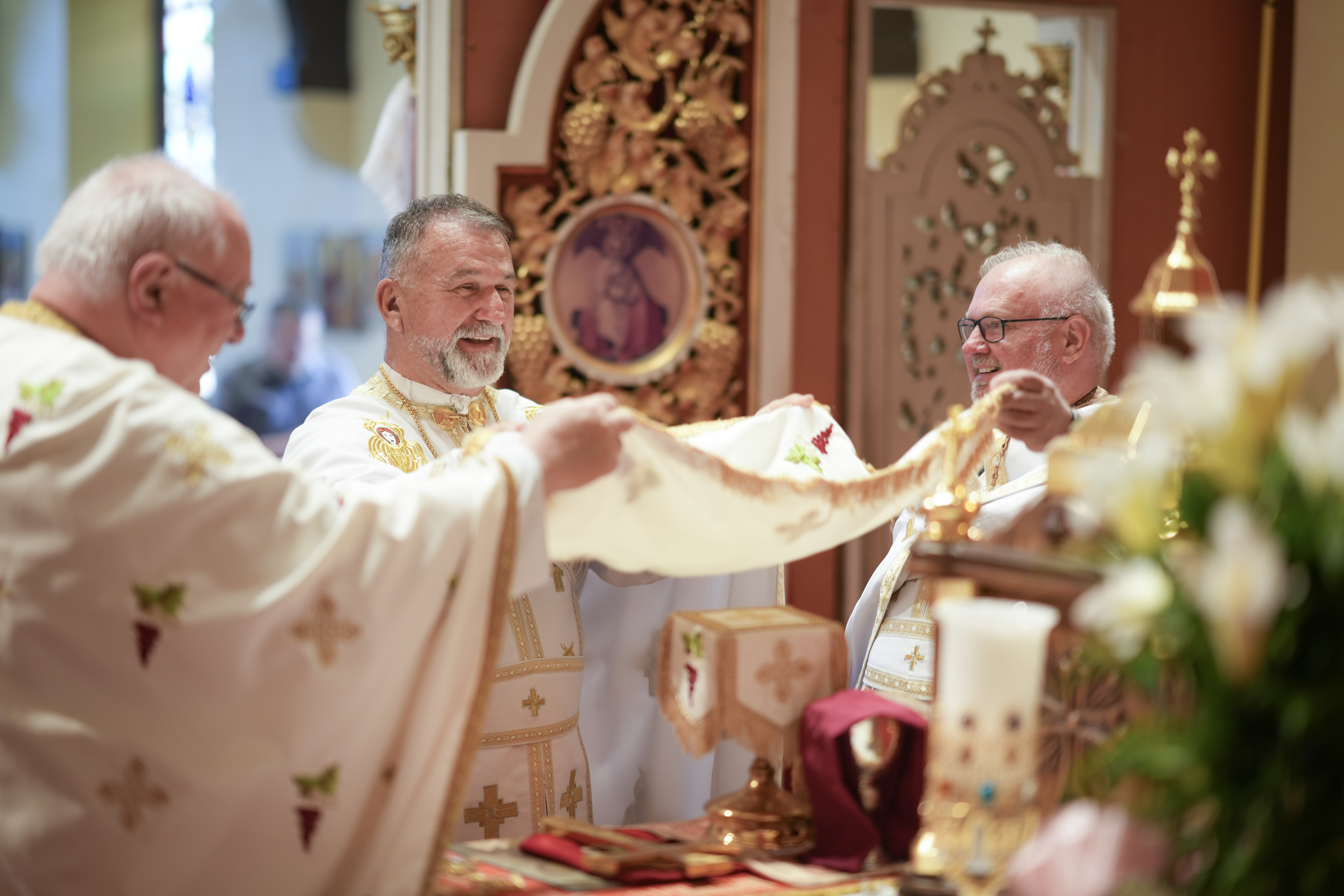
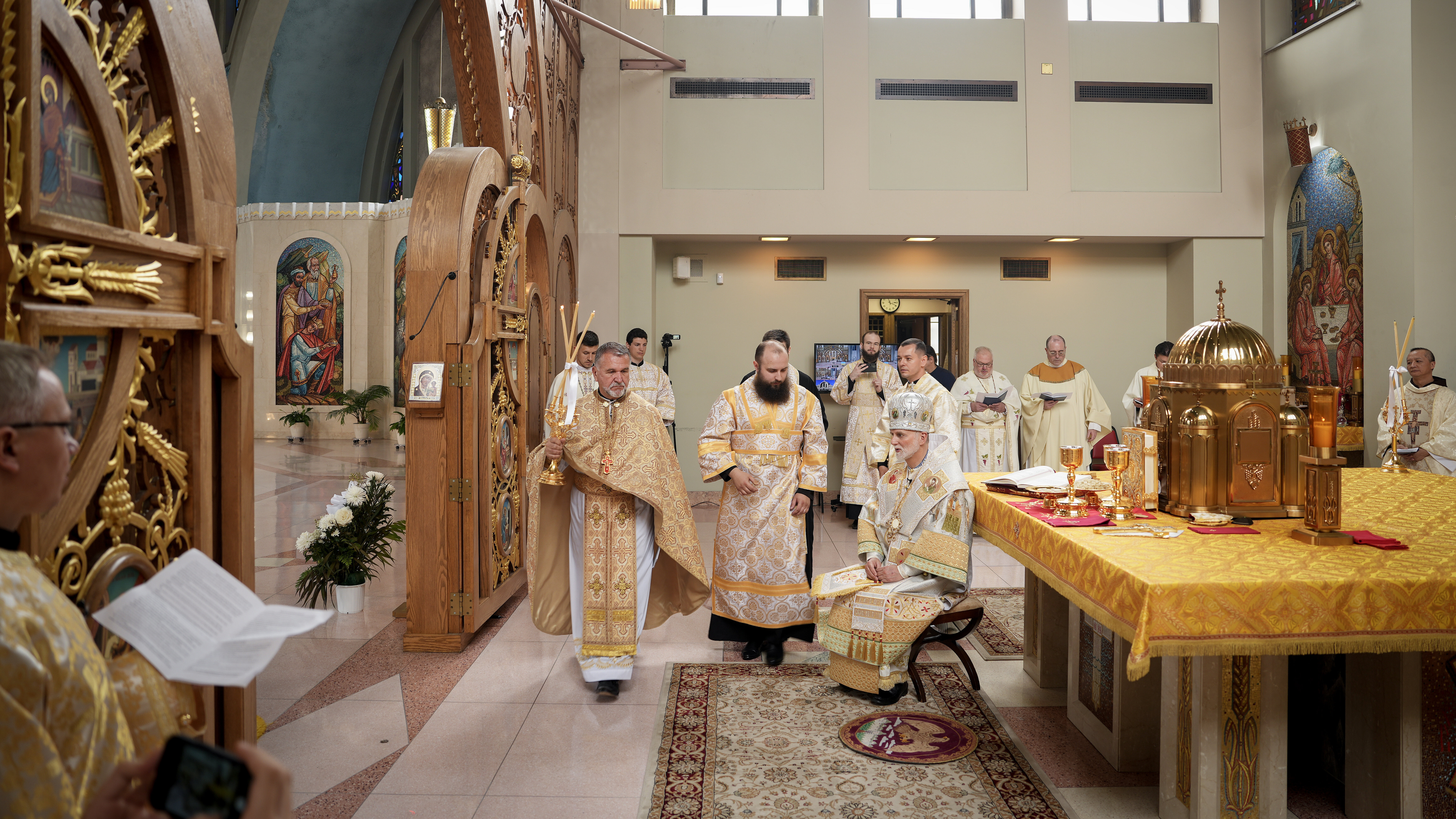
I think it is very important that, as a priest, I do not simply celebrate the Divine Liturgy. I pray the Divine Liturgy with my people. I pray with them, and together we become the Body of Christ. I truly believe that.
When we pray together, we remember that the priest is not separated from the people. We are all standing before God. We are all offering our worship to Him. I often remind people that when we pray in church, I am leading them, but we are all facing the same direction. The focus is not on the people sitting in the pews, and it is not on the priest. The focus is God Himself.
When we understand that priesthood and religious life are lives of service to God and to His people, it makes a tremendous difference. We are not here as princes. We are not here to be served. We are here to serve.
What role does a parish community play in helping someone recognize and follow God’s call?
When someone in a parish is discerning whether to become a deacon, a priest, or a religious sister, the encouragement of the community is very important. Sometimes families need help understanding what their son or daughter may be discerning. The support of the family is especially important.
I have often seen parishioners rally around someone who has a vocation. They support that person financially and spiritually. They pray for them and offer encouragement. They want to see their parish remain a living community of faith, served by people whose vocation they have helped nurture.
The vocations from my home parish—five priests and three sisters—came from a very small town and a very small parish. But the strength and character of the priests, sisters, families, and parishioners helped create an environment in which those vocations could take root.
People today sometimes view priesthood or religious life primarily as a difficult or restrictive way of life. How should we speak about vocation to young people today?
I think the call should be presented not simply as a difficult life, but as a life of adventure and challenge. As priests, we also have to continue growing in faith. Every day is a process of conversion. That is true of priestly life and religious life. It is a different way of living, but like married life, it involves freely embracing a lifelong commitment. It means surrendering a purely individual way of life and embracing a life given to God and to others. It is not for everyone, and none of us lives it perfectly. But I encourage young men and women to take the possibility of a vocation seriously. Talk to priests. Talk to religious sisters. Spend time with them. Try to understand what this life is truly about.
The young men I meet today are looking for faith. They are looking for something in which they can truly believe. They are looking for ways to serve. Sometimes the world leaves them feeling empty, and like I once was, many of them are unsettled. They do not know which direction to take. That is why prayer is so important. We need to pray for vocations. When someone is struggling with whether to respond to God’s call, the grace of God is what is most needed. I would also say: talk to your parish priest. If that does not help, talk to another priest. And if that does not help, talk to another one. Continue pursuing what you believe may be God’s call for you. You will not be disappointed for having sincerely sought His will. A vocation is born in our humanity, and Jesus raises us up by giving us the grace to preach His Good News, to bring His Body and Blood, to proclaim His Word, and to help those who are seeking salvation.
Looking back over 44 years of priesthood, what gives you the greatest joy today?
The joy I have now comes from knowing that I am committed to a way of life and to God, in whom I truly believe—a God who continues to work miracles in my life. My faith enables me to cry with my people, to work with my people, and to be present with my people. All of those things are important because ministry is not only about what I say to them. I also need to be able to listen. That communication and mutual respect create trust between us. I do not expect people to do anything that I am not willing to do myself. That kind of connection has served me well throughout my years in parish ministry. I have always tried to leave every parish better than I found it, and I have tried to leave the people with hope.
I am grateful that God chose me to be a priest. I am grateful for Bishop Stephen Sulyk, who ordained me, and for all the support he gave me throughout my priesthood. There were many turbulent times, and he never gave up on my vocation—even during the times when I did.
I am grateful, and I look forward to a few more years of lifting up my voice in praise of God and, I hope, helping to lead His people along the right path.
Interview by Halyna Vasylytsia