- Fundraisers 2026
- Archeparchy
- Our faith
- Offices and ministries
- News and Updates
- Events
- Parishes
- Child Protection
- Ways to Give
- Subscribe to "The Way"
Catechesis does not end with First Confession or First Holy Communion. Faith is something a person continues to discover throughout an entire lifetime — through learning and prayer, but also through questions, doubts, crises, and lived experience.
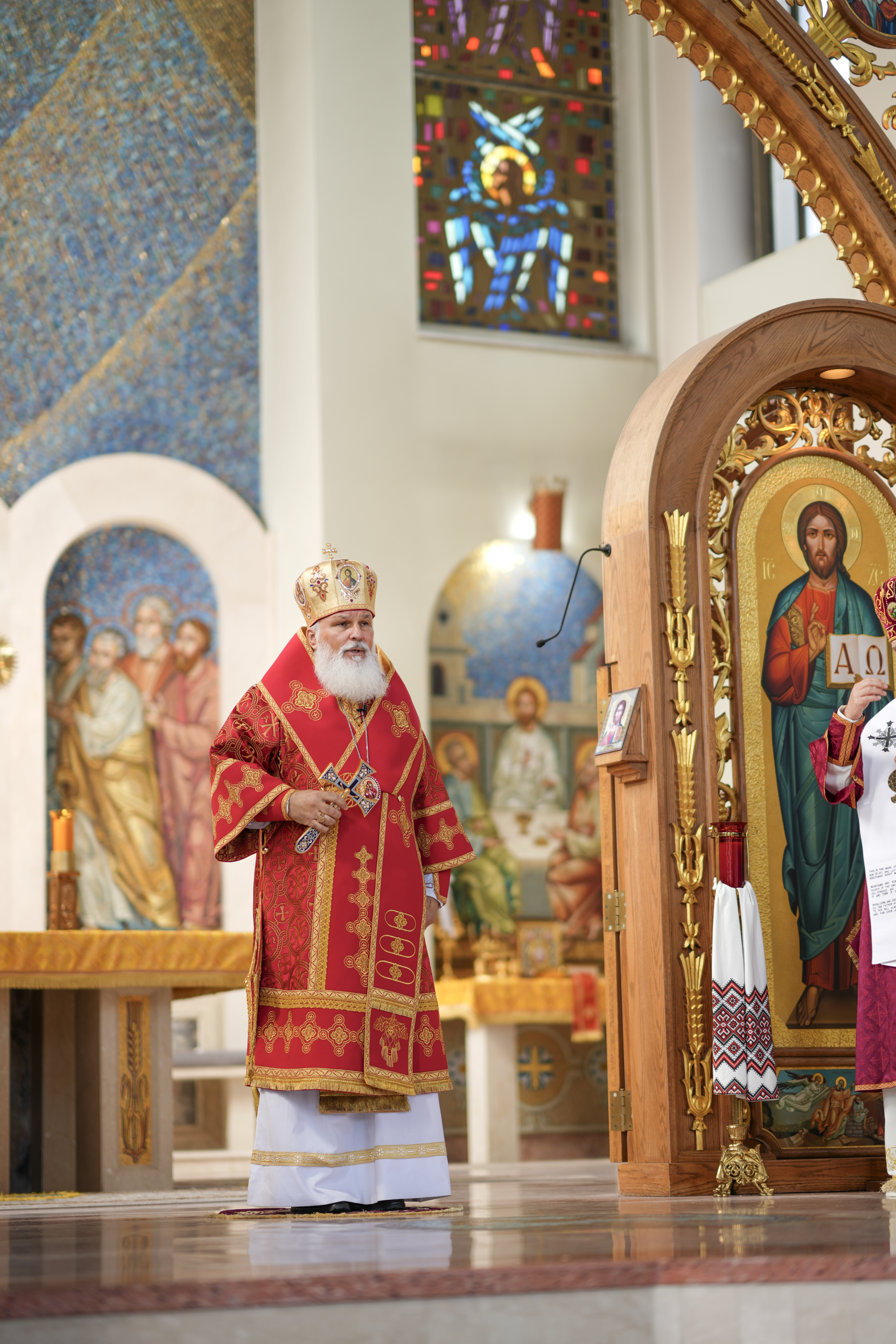
In this conversation, Metropolitan-designate Michael Kwiatkowski reflects on lifelong catechesis, the challenge of passing on faith in the age of artificial intelligence, the role of families and parishes in nurturing vocations, and the human reality behind the public image of a bishop. He also speaks personally about a crisis of faith he experienced as a seminarian, what decades of priestly ministry have taught him about the presence of God, and what he would tell his 20-year-old self today. As he prepares to assume his new responsibility as Metropolitan, he concludes with a simple and personal request: “Keep me in your prayers.”
As Chairman of the Patriarchal Catechetical Commission, you have a broad perspective on catechesis throughout our Church. Yet we often associate catechesis primarily with children preparing for First Confession and First Holy Communion. Why does formation in faith need to continue throughout our entire lives?
Catechesis is such an important aspect of our life in Christ and an important ministry in the Church. The goal is to provide education in the faith beginning in childhood and continuing throughout our entire lifetime, as adults and as elderly people as well. As you mentioned, there is a tendency to reduce catechesis to preparing our children for First Confession and First Holy Communion, and after that, we simply do what we can. Of course, that is not the case everywhere. Some parishes have a full range of catechetical programs, especially where there are parochial or Catholic schools.
I also think it is interesting that the Synod of Bishops and His Beatitude Sviatoslav have been promoting Lectio Divina and Bible studies. Especially for adults, this can be more comfortable than simply coming to a class and receiving instruction. People come together, and there is formation and learning, but it is also interactive. There is conversation and discussion.
Our Catechetical Commission has materials for all ages, and our Church in Ukraine has produced wonderful resources, many of which are now becoming available in English and other languages. The programs and resources are there. We need to be aware of them, make use of them, and have people who are dedicated enough to put them into practice.
If artificial intelligence can already explain Church teaching, find a passage from Scripture, or answer a theological question, what is the irreplaceable role of the catechist today? What is there in faith that can only be passed on from one person to another?
AI is an extraordinary resource. It is able to draw on an enormous number of resources, and that is part of what makes it so amazing. But, as the Holy Father Pope Leo and others have said, we should not forget that AI is, in a sense, a robot. It gives you what is fed into it. When it comes to conveying the spirit of the Gospel and the experience of life, only human beings can do that.
AI can give us a great deal of information and provide a foundation, but then we have to ask: What does this information mean? What do I do with it? Is it being presented in the same spirit in which the Lord would give it, or in which a person who is truly living the faith would give it?
Maybe AI gives us 95 percent. But that extra five percent is very important. That is why we always need to reflect on and review what we receive. AI is a tool that can help us, but it is not everything.
People often see a priest — and even more so a bishop — as someone with a strong faith who already has answers to spiritual questions. But are there moments of doubt, or even crises of faith, in a bishop’s life? Have you experienced such moments yourself, and how did you go through them?
Certainly, there were times of crisis — sometimes even crises of faith, moments of wondering and questioning. I remember an experience when I was in the seminary. Somehow, I really began to question everything — even the heart of the faith, the presence of God, and even the presence of God in the Church. I wanted to look more deeply into this, and in a sense, I gave the Lord some time. I said, “Okay. I’ll continue with the routine. I’ll fulfill my daily obligations. I’ll live the life. I’ll say the prayers.” Without going into too much detail, I was blessed with a sense that, yes, the Lord truly is present. It was a very real sense of His presence.
The Lord is present in the Blessed Sacrament. The Lord is present in the Church — yes, in a spiritual way, but also in a very concrete, real, and powerful way through the Holy Eucharist and Holy Communion. That may have been one of a few particularly special occasions in my life. But I think that knowing the presence of God — having a real sense of His presence — is something I understand much more deeply now.
Do you have your own way of staying close to God amid the responsibilities and concerns of everyday life?
I think that in order to live your vocation fully, you have to give yourself completely to the Lord. You have to say, “Lord, this is Your doing. I want to be Your servant. I want to serve in the way You want me to serve.” If you give yourself more to the Lord in that sense and trust Him, you open yourself to living His will. Once you do that, you really begin to have that sense that the Lord is present in your life. And you will find that when you draw away from the Lord and become absorbed in your own things, that sense of the presence of God begins to fade. As the expression goes, it is not the Lord who draws away. We draw away from Him.
It is like a child who gets lost in a market or shopping center. The child becomes interested in something, gets distracted, and then suddenly realizes: “Wait — where is Mom? Where is Dad?” We can experience something similar with the Lord.
When we return to the life that we truly desire in our hearts — a life with the Lord — then we begin to see that the Lord is truly present. You simply follow, and you see how wonderful it is.
This year has been proclaimed the Year of Vocations in the Ukrainian Greek Catholic Church. When we speak about vocations, we often focus on the individual person who is discerning. But what role do the family and the parish play? Can we help another person recognize a vocation that they may not yet see in themselves?
I think the parish and the family are very important. Sometimes, when it comes to nurturing a vocation, we think, “Well, we shouldn’t get involved. We certainly don’t want to be responsible for forcing somebody or pushing someone in one direction or another.” That is true. But on the other hand, we also want to be friends, brothers and sisters to one another, and sometimes say: “Listen, I see this in you. Have you ever thought about this? There is something here that you should consider.” I remember reading about a practice in a parish or perhaps an eparchy where the priest asked people to write on a piece of paper the name of someone they thought might have a vocation. The priest would then share it privately with that person.
Sometimes that person would be shocked: “What? Are you serious? People actually think I might have a vocation?” And that can mean a great deal. We may be completely wrong. Ultimately, it is up to the Lord. But if we see something in someone — a particular characteristic, an attitude, or simply the way that person lives — we should be willing to share that with them. Sometimes we need to awaken something in another person — to fan that flame a little — simply by expressing what we see in them. That can be a tremendous help.
People usually see a bishop at the altar or at official events. They see someone who teaches, leads, and makes decisions. What is there about the life of a bishop that might surprise people — especially young people — and help them see the person behind the role?
Bishops come from different backgrounds. They have different experiences. They like different kinds of music. They may dress differently in their spare time, when they are “off camera,” so to speak. Becoming a bishop does not mean, “Now I cannot listen to this music,” or “I cannot dress this way anymore.” There are certain things you should do at certain times, but otherwise you should be who you are. The Lord chose you out of your particular life and experience to serve in a certain way. And perhaps your own life experience will help other people in a way that no one else can, precisely because it is your experience. At the same time, we have to grow. Someone who valued his privacy very much may suddenly have to become much more public. Someone who did not speak very much or did not give interviews now has to speak frequently and give interviews. But besides all of that, bishops cry. Bishops laugh. Bishops experience anxiety sometimes. They are concerned. At other times, they experience joy. They cry with joy together with people who are experiencing the hand of the Lord in their lives.
I think that is something people should understand. Bishops have certain responsibilities, but they also need the support of the people around them. And that does not mean that no one should ever challenge them. Sometimes a bishop also needs someone to say, “Listen, what are you doing? I want to understand what is happening here.”
If you could sit down today with the 20-year-old Michael Kwiatkowski — before forty years of priesthood, before becoming a bishop, and before this new responsibility as Metropolitan — what would you tell him?
When I was 20 years old, I’m not sure how much anyone could have told me about what I should or should not be doing. I remember one thing that used to really irritate me when I was around that age. My father, or someone else, would say, “When you get older, you’ll understand.” And I would think, “I understand now! Maybe you are the one who needs to understand things better.” But — spoiler alert — it is so true. Once you get older, you do see things differently. Life experience helps you see more clearly how life should be lived and which things are truly important. So I would say to someone who is 20: live life. Explore the gifts that the Lord has given you. Enjoy life, enjoy learning, and enjoy bettering yourself. But live according to your faith.
If you were raised in a Catholic family, do not lose your faith. Explore it deeply. If some things do not quite make sense to you, look into them and ask questions. And if you are not certain whether you have faith, explore that too. Have the courage to do it. We have courage to do many things — extreme sports and everything else. But have the courage to look into the depths of your own heart and soul, and at the world around you, and ask: How should I see this world? What can I do to make it better? I think that takes a lot of courage too. And if you are looking for something extreme, that is pretty extreme.
As you begin this new chapter of your ministry as Metropolitan, what would you ask of the people you are now called to serve?
I would ask those who read this interview to be so kind as to keep me in their prayers. I say this sincerely. Perhaps it sounds like a cliché, or simply like the right thing to say, but I think every bishop wants to be a good bishop — to serve the people well, according to the will of God, according to the needs of the Church, and according to the needs of our people at this time.
To serve as Metropolitan is different from serving as the bishop of a particular eparchy. I think the Metropolitan also has to be a person who, in a certain sense, speaks for the whole Metropolia and for our people. I want to do that well. God willing, I will receive the inspiration and the courage to do so. But I also believe that comes through the prayers of the people. And I would very much appreciate those prayers.
by Halyna Vasylytsia