“Have You Ever Thought of Entering Monastic Life?”: Sister Ann Laszok on Vocation and a Life Woven into the Church

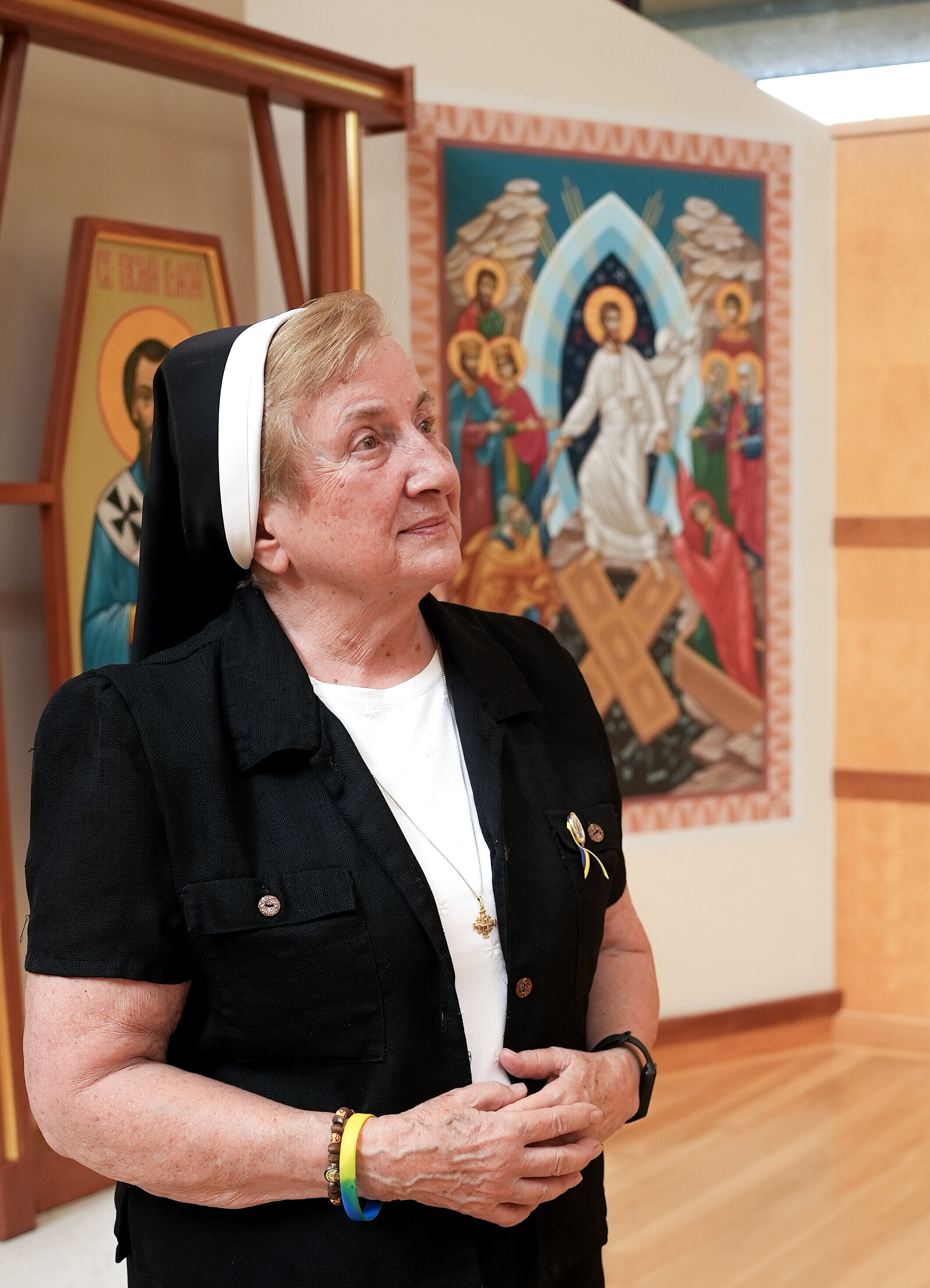
The central theme of the 2026 Synod of Bishops of the Ukrainian Greek Catholic Church is “The Pastoral Care of Vocations to the Priesthood and Religious Life.” Continuing our series on priestly and religious vocations, we invite you to discover the story of Sister Ann Laszok, OSBM, of the Sisters of the Order of Saint Basil the Great.

Her vocation did not begin with a dramatic revelation. It grew within a life that, as she puts it, was “woven in with the Church.” She attended a Ukrainian Catholic school, her family was actively involved in parish life, priests were frequent guests in their home, and on Saturdays she helped the sisters clean the church.Then, during an exit interview in high school, one of the sisters asked her a simple question: “Have you ever thought of entering monastic life?” Sister Ann had already applied to Seton Hall and had not seriously considered religious life. But the question stayed with her and eventually led her to ask herself whether God might truly be calling her.

When did you first begin to think that God might be calling you to religious life?

One of the sisters, who was the principal of my high school, asked me during an exit interview what I would like to do in the future. I said, “I think I want to teach children, but teach religion also.” And she turned around and said to me, “Have you ever thought of entering monastic life?” I really had not, because I had already applied to college, to Seton Hall. But then I received a letter from the novice mistress in Fox Chase. She said, “I hear that you’re thinking of entering.” And her last sentence was, “If I don’t hear from you, I know you don’t have a vocation.” That line also struck me. I thought, “What if I do have a vocation? Am I answering the call if God wants me to enter?” So, sitting with that question and praying over it, that is when I decided to apply and enter the Sisters of Saint Basil.

You have said that your life was “woven in with the Church” throughout your childhood and high school years. What did that look like?

I went to a Ukrainian Catholic school, St. John’s in Newark, New Jersey. My family was always involved in church. We went to church regularly, to all the services. Besides that, we had a close relationship with the Redemptorist Fathers there. We were like the “pre-computer” family that put the parish envelopes in order so someone could record how much each person had donated. So we had priests in our family home many times. I also used to help the sisters clean the church on Saturdays. So my life really was woven in with the Church throughout my elementary and high school years.

The priests were very active in the school as well as beyond the school. They used to drive us to school in a school bus. Some of the priests even repaired the buses. One of them was very mechanically inclined, and even as a pastor, he repaired the school buses. The priests were very hands-on, always with the children and the families. Our relationship was very friendly on a personal level as well as on an official level. I really admired our priests because they worked with people through various organizations, but they also worked very closely with people personally. The Redemptorist Fathers were very influential in my life.

When you entered the convent, were you afraid?

I can honestly say that I did not have any fears.  I am probably a character who goes where angels dare not tread (she said, smiling).I guess there were questions. But I really felt confident, perhaps because of my love of God and my love of the Church, so I did not have any fears as such. Or maybe I did not want to admit to myself that I had fears. That could be true, too.I knew the people - the persons behind the habit. So I guess maybe that is why I was not afraid. I knew the sisters, but I had no idea what it would be like.

Coming to the convent, it was a time of almost total seclusion in the beginning. I was learning how to pray at the Divine Office, how to meditate, and how to live in community without a telephone. Well, we did not have cell phones at that time. But we were even without newspapers. So yes, it was almost total seclusion.
Religious life is not always easy. In difficult moments, what has helped you remain faithful to your vocation?

Whether you are married, single, a monastic, a nun, or a monk, life has its struggles. There are difficulties everywhere. Yes, there have been times when people misunderstood me and did not really want to dialogue or communicate with me, or perhaps learn more about me. I think it was because of my relationship with Christ that I was able to bear those times of difficulty.

Sometimes you hit a wall. But if you are patient and realize that God is with us at all times, you can overcome it. Maybe you can begin to see where the other person is coming from or understand their difficulty. Maybe you just happened to be in the way at the moment of their anger or jealousy or whatever they were experiencing. So I think it is developing a strong relationship with Christ, and knowing that God loves us and is with us always, that helps us bear the difficulties and struggles of life.

Looking back over the different stages of your life, where do you see the blessings of your vocation most clearly?

My life has been very blessed. There have been people who were a blessing to me, but also people who were lessons for me. I think Mother Teresa said that people are blessings as well as lessons for us, helping us continue to grow in love of God and love of neighbor. Through my different ministries, I have had the opportunity to encounter people in many places. I worked as director of religious education and did workshops in Australia. I visited our sisters in Argentina and Ukraine, and for five years I organized English catechetical camps in different cities of Ukraine. The people have always been a blessing. There is an image called In His Image. It is a picture of Christ, but if you look closely, it is composed of people’s faces. When you step back, you do not see the individual faces—you see Christ. And that is really what my life has been like. It is made up of all the people who taught me, whom I loved, and who also contributed to my growth as a human being. Now that I am a little older, I realize that different phases of my life have had different challenges as well as blessings.  When I was young and taught elementary school, that was a joy because I used to have fun with the children. Then I worked at Manor College as dean of admissions, financial aid, and registrar all at one time. I was recruiting for the college and talking about all the wonderful programs that we had at Manor College.

For more than 30 years, I worked as director of religious education and did workshops for catechists and adults, and sometimes even priests and bishops. That is where I met many of my priest friends and formed strong bonds. And in these past years, I have worked on the Interculturality Commission for the whole Order of the Sisters of Saint Basil. I realize that this has been a generative time in my life, when I have been able to support our talented young sisters in the Order.

Following Sr. Bernarda's example of humanitarian work to orphanages during the summer, I started organizing  trips to orphanages with volunteers. This expanded into several weeks of English Catechetical camps in Rudno, Ivano-Frankivsk, Zaporizha, Mukachevo and  several other cities. After the camps we would go to visit with humanitarian aid orphanages, halfway house, psychiatric institutions for children and adults. We did this for 6 years until Covid hit and then the war started.

The first Sisters of Saint Basil came to the United States in 1911 and began serving in very difficult circumstances. What do you think gave them the courage to begin such a mission?

Our sisters who came in 1911 really had a true missionary spirit because they loved Christ. Mother Helena Langevych, even when she wrote letters to people, always ended her letters with, “Christ lives.” And that is really the foundation of monastic life—to have a deep relationship with Christ. It is really what Saint Basil says: the greatest commandment is to love God and to love your neighbor as yourself. So we follow Christ by loving others and serving others.

What role does the ministry of religious sisters play in the life of the Church?

I think people are aware of the sisters and the work that they do, but perhaps not as explicitly as they recognize the work of priests.

The sisters’ ministry is like the foundation of the Church. You do not usually think about the foundation of a building. When you are looking for a home, you look at the outside, maybe the rooms. But the foundation is really what the whole building is based on. That is what the sisters’ work is like in our Church. Although it is not always visible, it is a support for the Church. The ministry of sisters needs to be talked about more because sisters usually do not promote themselves. They work with the people, for the people, and for the Church. We can also see the influence that sisters have had on vocations.

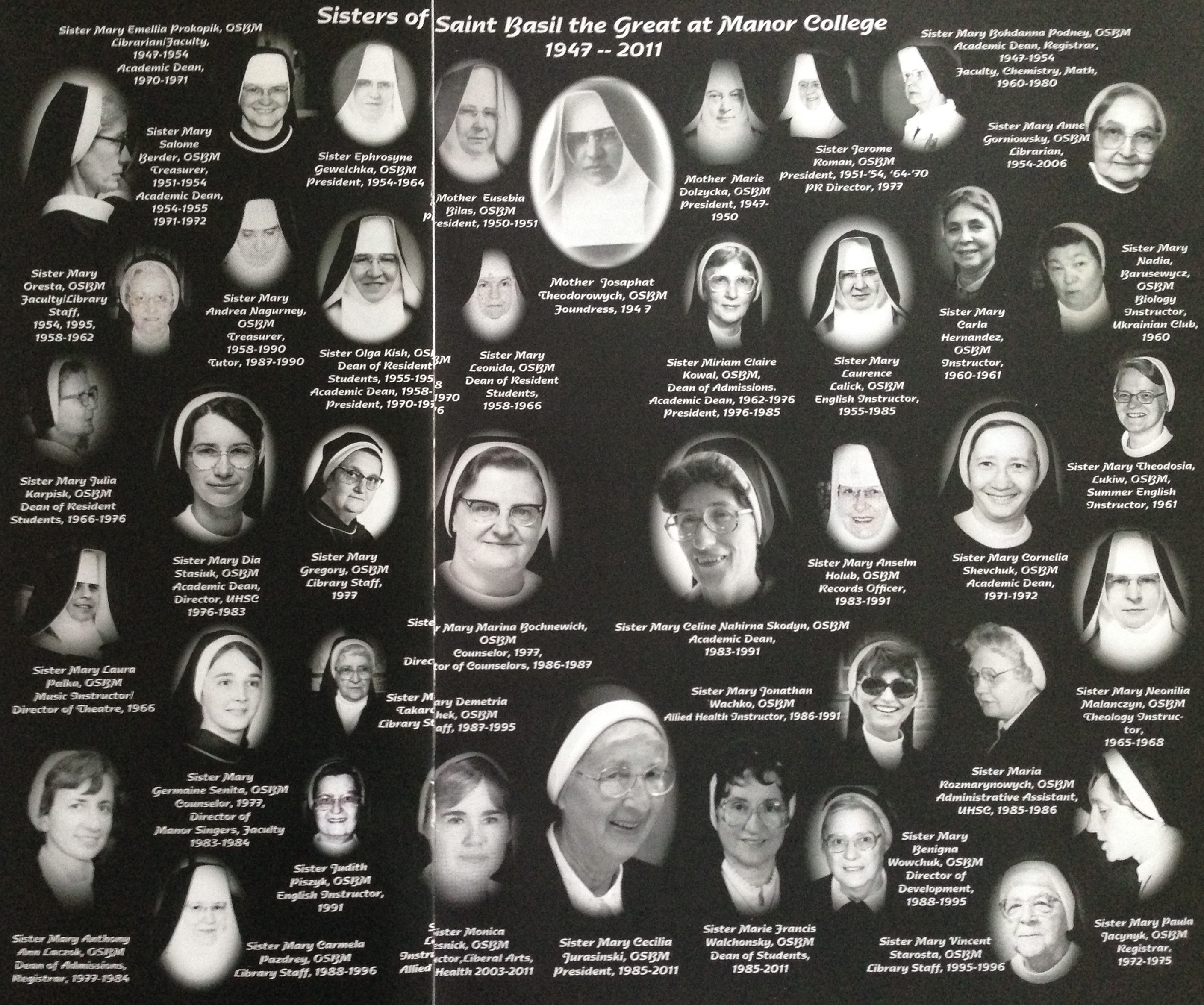
In 2011, when we were celebrating our 100th anniversary, we developed a video called Women of Spirit: 100 Years of the Sisters of St. Basil in America. We tried to interview as many priests, sisters, and bishops as possible who had been taught by the sisters. Many of them attributed their vocations to the work of the sisters. Among them were Metropolitan Borys Gudziak, Bishop Basil Losten, Bishop Hlib Lonchyna and his brother, Father Taras Lonchyna, as well as many others. Many of our own sisters also attended our elementary schools, our academy, and Manor College. Because they were influenced by the Sisters of Saint Basil, they themselves entered religious life. Just as in a family our faith is passed on from one generation to the next, sisters and priests pass their faith on to subsequent generations.

What can families, parishes, and church communities do to help young people see the beauty of consecrated life and seriously consider such a vocation? 

Just as Pope Leo XIV, in his Encyclical Magnifica Humanitas, uses the image of families helping to rebuild the walls of Jerusalem during the time of Nehemiah, we need each family, each parish, and each eparchy to work toward building up God’s Kingdom by encouraging vocations.

How? By praying for vocations, reading about sisters and priests who have dedicated their lives to the People of God, and telling stories of our encounters with good sisters and priests. Today’s generation is very self-giving, but somewhat fearful because of the situation in the world today. I believe that young people are so inundated with their phones and the internet that they do not have enough time to spend with their families—playing together as well as praying together. If more time were spent together as a family, families could share their faith. In the past, grandparents would sit down with their grandchildren and pray with them. We do not have that same extended family structure in the United States anymore, and young people do not have as much support as they used to. So it is very difficult for young people, unless they have a strong bond with their families, to commit themselves and not be fearful of taking on the life of a priest or a religious sister.

What would you say to a young woman who feels that God may be calling her to religious life, but is afraid that entering the convent might keep her from fulfilling her dreams?

We really do not know what a person is going through. They might feel that God is calling them but maybe are afraid. But entering religious life does not mean that the day you step into the convent, you are making a commitment for life. You do get a trial period. You have the postulancy, where you begin to learn. Then you have the novitiate, where you learn more deeply about your relationship with Christ and perhaps more about yourself. Then you take your first vows for three years. After that, you have another two years to decide whether you want to make a permanent commitment. So you have a period of time when you can discover yourself, as well as your relationship with Christ and the community, so that hopefully by the end of those years you know whether you want to commit yourself to the People of God through the community.

When you think about the future of religious life, what gives you hope?

It is difficult to imagine what religious life will look like in the future. But I have hope. Our vision statement says that Christ is our rock and our foundation, and on this rock we will build our future. And I believe that if everyone recognizes their vocation as a Christian—to follow Christ and spread the Word of God and the Good News that God loves us—I really believe that the future will look bright.


Interview by Halyna Vasylytsia

Related News

More News
Hugs, Cold Lemonades, and Little Volunteers: Metropolitan Borys Visits the Sambir-Drohobych Eparchy

#Ukraine

#Archeparchy

Hugs, Cold Lemonades, and Little Volunteers: Metropolitan Borys Visits the Sambir-Drohobych Eparchy

Metropolitan Borys Gudziak Presides at Hierarchical Divine Liturgy Marking the 100th Anniversary of the Plast Camp “Sokil”

#Ukraine

#Archeparchy

Metropolitan Borys Gudziak Presides at Hierarchical Divine Liturgy Marking the 100th Anniversary of the Plast Camp “Sokil”

Metropolitan Borys Gudziak Visits Communities of the Exarchate of Lutsk

#Ukraine

#Archeparchy

Metropolitan Borys Gudziak Visits Communities of the Exarchate of Lutsk

“Our Spirit Grows Stronger and Stronger If We Believe”: Bishop Hlib Lonchyna’s Homily in Ostroh

#Ukraine

#Archeparchy

#Sermon

“Our Spirit Grows Stronger and Stronger If We Believe”: Bishop Hlib Lonchyna’s Homily in Ostroh