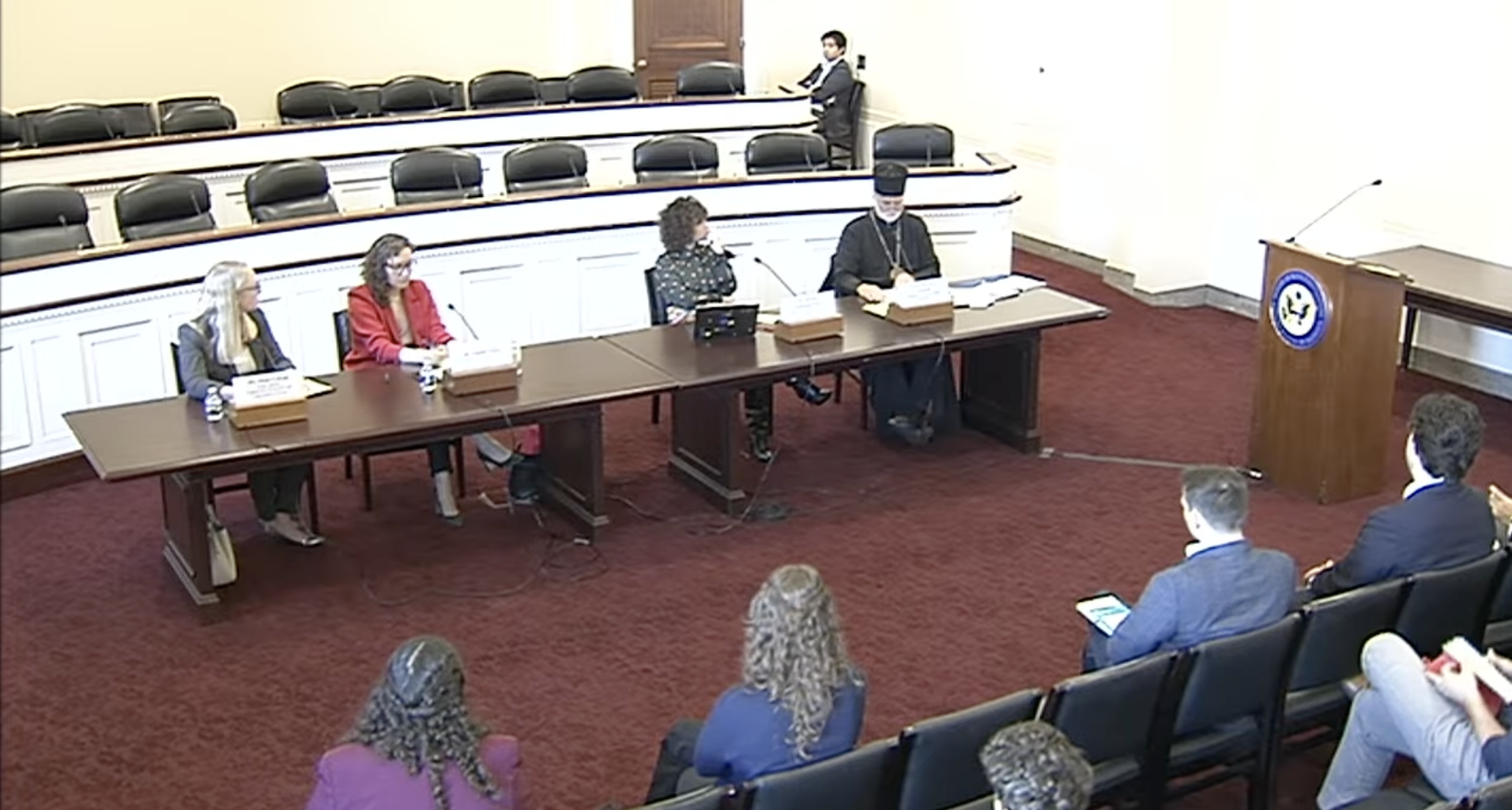
On November 16, 2026, Metropolitan Borys Gudziak, Ukrainian Catholic Archbishop of Philadelphia and President of the Ukrainian Catholic University (UCU), participated as a speaker in a briefing titled "Generation Victory: How Ukraine Is Educating Students in Wartime," organized by the U.S. Commission on Security and Cooperation in Europe (Helsinki Commission) in Washington, D.C.
The briefing focused on the challenges facing Ukraine's educational system during Russia's ongoing war, the resilience of Ukrainian students and educators and the importance of education in preserving human dignity, national identity and freedom.
In his remarks, Metropolitan Borys emphasized that despite constant threats, destruction and psychological trauma, Ukrainian young people remain determined to pursue their education and contribute to their country's future.
He noted that 4,766 educational institutions have been damaged or destroyed in Ukraine. In Kyiv, the time students spent under air raid alerts during school hours increased from 12 hours in September 2025 to 71 hours in September 2026.
During the discussion, Metropolitan Borys emphasized that protecting education requires addressing the security challenges caused by the war. He highlighted the importance of air defense in protecting energy infrastructure and ensuring that schools have electricity and heating. He also drew attention to the situation of Ukrainian children in Russian-occupied territories, including their deportation to Russia and efforts to undermine their Ukrainian identity through education.
"Today, the best thing that can be done is to stop the war and stop the aggression and stop the occupation," he said.
Metropolitan Borys also addressed the psychological impact of the war on young people. Citing a survey of more than 2,000 students, he noted that nearly four in five reported significant or moderate stress, while approximately one-quarter were classified as exhausted.
Drawing on his experience at the Ukrainian Catholic University, Metropolitan Borys spoke about the profound impact of the war on the university community, noting that 43 members of the university family have been killed since the beginning of the full-scale invasion. He described how schools and universities commemorate students, graduates and teachers who have lost their lives, including through memorial plaques and scholarships established in their names.
Despite these losses, he highlighted the determination of Ukrainian students to continue learning. According to figures he presented, enrollment in bachelor's programs increased by approximately 31,000 students compared with the previous year. He also noted that 53% of young people have volunteer experience, 68% do not want to leave Ukraine and readiness to participate in the country's recovery has increased from 59% to 77%.
Metropolitan Borys stressed that the war has brought fundamental questions about truth, freedom, dignity and the meaning of life to the forefront of Ukrainian society.
He also spoke about the importance of spiritual strength, values and principles in helping individuals and communities confront the consequences of war. He emphasized that Ukraine will face a long process of healing and reconciliation, requiring reflection, forgiveness and support for those affected by the conflict.
Discussing the situation in Kharkiv, Metropolitan Borys described how students continue seeking opportunities to learn and engage intellectually despite daily attacks. He noted that the city has 21 universities, 11 of which continue teaching in a blended format.
He emphasized that educational institutions provide more than academic instruction. They create communities, strengthen relationships and offer young people a sense of purpose during times of uncertainty.
Metropolitan Borys also addressed the future role of universities in supporting veterans, providing opportunities for professional retraining and maintaining connections with Ukrainian scholars abroad. He noted that approximately 20% of researchers have left Ukraine and emphasized the importance of transforming this loss of academic talent into international cooperation and an exchange of knowledge.
He called for stronger international academic partnerships and greater understanding of Ukrainian history and culture. In this context, he highlighted the Global Coalition of Ukrainian Studies, an initiative launched by Ukraine's First Lady that brings together more than 100 universities worldwide.
Throughout his remarks, Metropolitan Borys underscored that supporting education in Ukraine is essential not only for the country's recovery but also for preserving the values, knowledge and communities that sustain its people during the war.
Learn more about the briefing