“No Way, No How”: Fr. Paul Makar on Running from the Priesthood, Answering God’s Call, and Returning to the Sea

The central theme of the 2026 Synod of Bishops of the Ukrainian Greek Catholic Church is “The Pastoral Care of Vocations to the Priesthood and Religious Life.” Continuing our series on priestly and religious vocations, we invite you to discover the story of Fr. Paul Makar. As a first-grader, a sister told him that one day he would be “a fisher of men.” Years later, when bishops told him he would become a priest, his answer was very different: “Oh, no way. No way, no how.” 

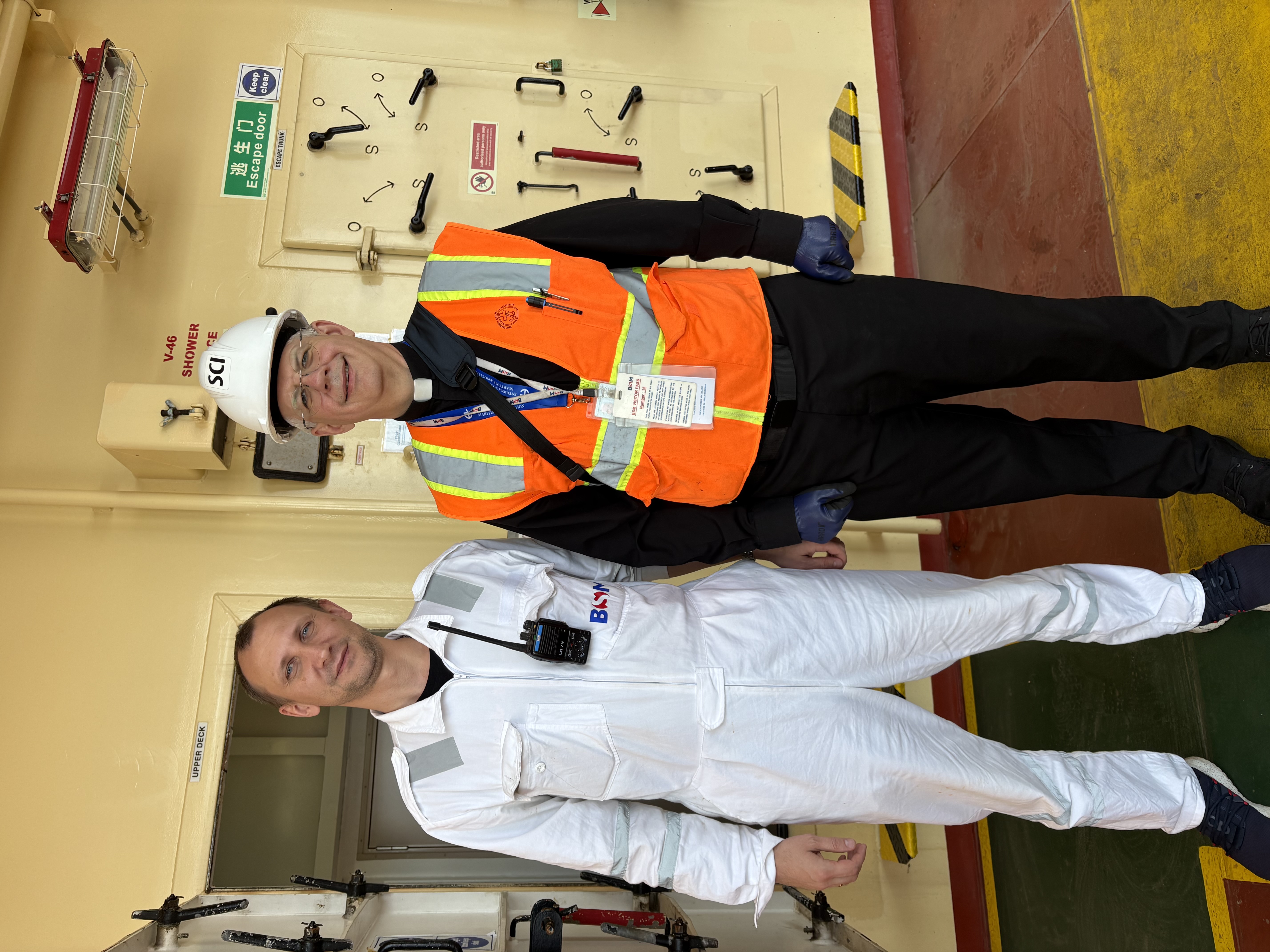
He wanted the Navy, travel, and a different life. He became an engineer, built a career, bought a house, and had a girlfriend. But the call remained. In 2004, he entered St. Josaphat Seminary, and six years later he was ordained a priest. Today, the young man who once dreamed of going to sea has returned to it in an unexpected way - as a priest and chaplain to seafarers. 

What are your earliest memories of feeling drawn to a vocation in the Church? 

I was born and raised in Perth Amboy, New Jersey, and I am a third-generation descendant of Ukrainian immigrants. My earliest memories are of being in church as a young boy with Monsignor Stephen Sulyk, as we knew him then. I remember how majestic and regal he looked in his vestments. But I think the real turning point came when bishops would visit our parish. I remember seeing Bishop Basil Losten there with the future Metropolitan Stephen Sulyk. Seeing them at the altar, with the incense, the choir singing, and the whole beauty of the Liturgy—it touched my heart as a young boy. To me, they were giants!

The religious spirit was always very strong in my family. We made it a point to be in church on Sundays and for the major feast days, and I was always there with my parents and grandparents on both sides. The Missionary Sisters of the Mother of God were also our teachers and administrators at the parish school, and they were very encouraging. I especially remember Sister Martin Rodko, my first-grade teacher at Assumption Catholic School. She once gave us an art project: we had to take a shoebox and create a scene from the New Testament. For some reason, I chose Jesus fishing on the Sea of Galilee with His apostles. When I brought it to class, Sister Martin looked at me and said, “Paul, you are going to be like Jesus—a fisher of men.” At that age, it didn’t really click with me. But eventually I became an altar boy and began serving in church. I guess you could say the spark was already there. 

Your father also felt called to serve the Church as a deacon. How did watching his vocation unfold influence your own? 

When my father felt called to the diaconate, I would accompany him to different parishes - to Carteret, Bayonne, Jersey City, Whippany, and New Brunswick - as he learned to cantor and helped out in those communities. Through him, I had the opportunity to meet and observe many priests, including Father Roman Mirchuk, Father George Worschak, and others. I saw them serving the Church and working with people.  I also remember serving at the altar for my father’s diaconal ordination. Experiences like that stayed with me, even though at the time I still did not understand where they would eventually lead. 

Even though the idea of priesthood had been around you from a young age, you resisted it for quite some time. What did you imagine your life would look like instead? 

The spark was there, but from time to time it would get doused because the world was there. I wanted to see the world. I wanted to explore. I wanted to be a military officer. As I grew older, I wanted to be in the U.S. Navy. I wanted to travel around the world on a submarine and see everything I could.  I actually used to dread going to Philadelphia with my father whenever he had to meet Metropolitan Stephen Sulyk, because every time Metropolitan Stephen saw me, he would say in that voice of his, “I’ve got a room for you at the seminary. You are going to go and be my priest.” And I would say, “Oh, no way. No way, no how.” 

My father would get very embarrassed, and Metropolitan Stephen would just say to him, “Give it a while.”  The same thing would happen when I went with my father to Stamford and saw Bishop Basil Losten. He would tell me, “You’re going to be a priest, and I’m going to have you in my seminary up here in Stamford.” And I would say, “Oh, no.” He was a little more forceful. He would say, “What do you mean, no? You are going to be a priest.”  But at that point in my life, that was not the future I imagined for myself. 

You eventually built the kind of life you had imagined for yourself - a career, a home, a relationship. What brought the question of priesthood back into your life? 

After I joined the Navy, my church life became somewhat irregular. Whenever I was home, I would go to church for Christmas and Easter if I was on leave. When I was in Hawaii, believe it or not, there was a Ukrainian Catholic mission there, and I would go to that mission. When I was in Florida at Naval Nuclear Power School, I visited the church in Apopka, and I also visited a parish in Rhode Island when I was at Surface Warfare School.  But nothing really took hold until after I got out of the Navy and was working ashore as an engineer. By that point, I had bought a house, had a car, had a girlfriend, and had two cats in the yard. Life was pretty well established. 

I will never forget a conversation I had with Father Roman Mirchuk when I brought my father to Whippany to help him develop the choir. I said to Father Roman, “I want to be in a monastery.” My dad said, “No, you’re going to a parish.”  And Father Roman said, “No, no, no. You have to understand—God has jobs for all of us in the Church. Some of us are on the supply side. Some of us are on the medical side. Some of us are in support roles, and others are doing the war fighting. That is how it is in every major army.”  Then he said to me, “Paul, we don’t know where God is calling you yet, but He is calling you to carry your cross. Think about that.”  And I did. 

What finally convinced you to try seminary—and what did answering that call require you to leave behind? 

Later, when I was at a low point in my life, I spoke with my pastor, Father Roman Dubitsky. He said to me, “You’ve always had a calling in you. I’ve seen you serve at the altar as an altar boy. I’ve watched you help your parents. You even help with the singing from time to time.”  Then he said, “Try seminary. If you feel called to monastic life, you can go later. But if you don’t try seminary, you may spend your life regretting that you never tried.” 

That made sense to me. After a lot of thought and prayer, I met with Metropolitan Stefan Soroka. He was very happy and told me that he wanted me to go to seminary. And I said, “Okay.”  Within a year, I left my job and my career, sold my house, sold my car, and parted ways with my girlfriend. I had really been called to a life of celibacy, and I really wanted to live a monastic life. I left almost everything I had behind. 

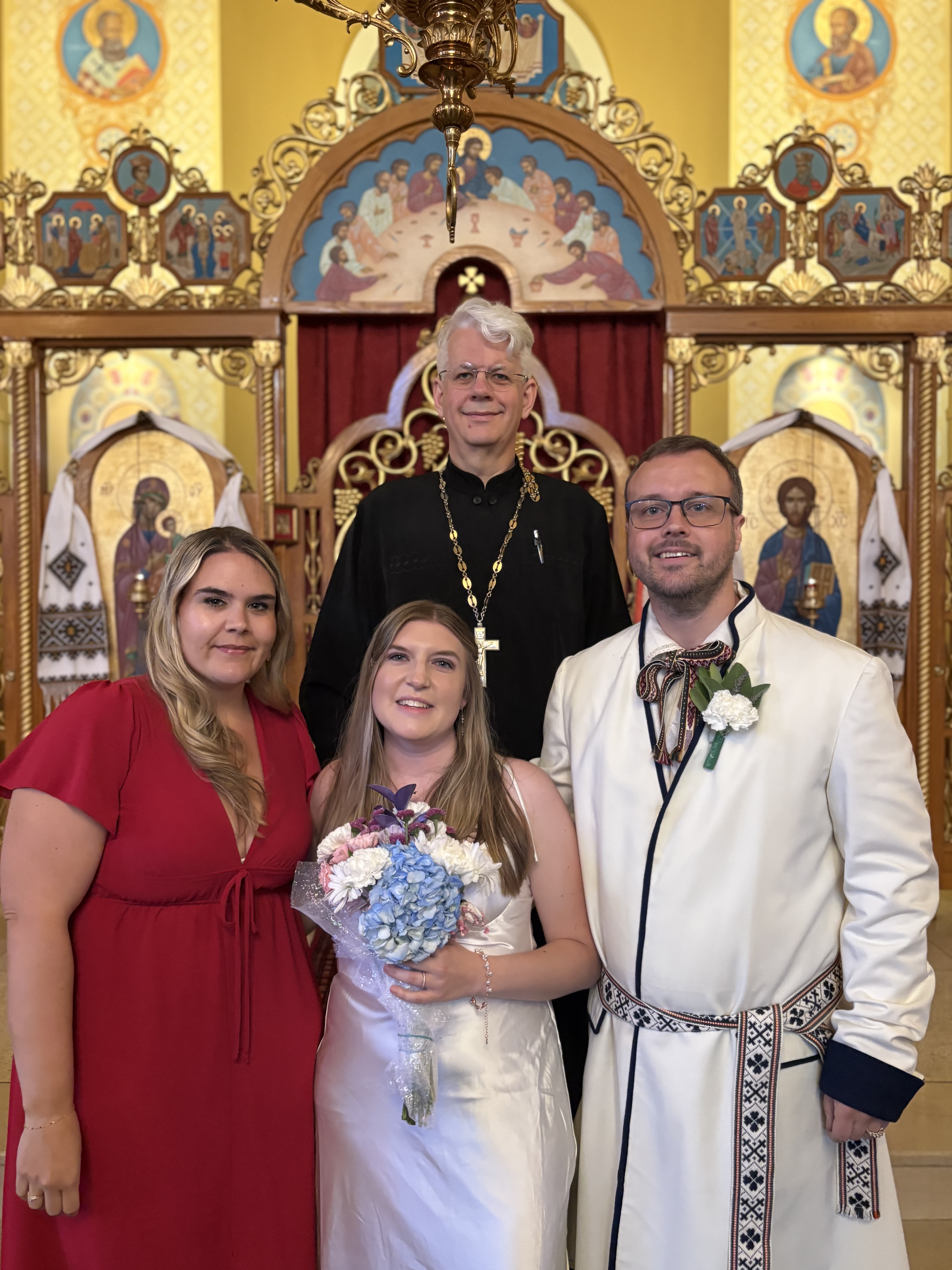
My mother was not happy with me because she wanted me to get married and have children—as any good Ukrainian mother would. My father, on the other hand, was happy because I was following in his footsteps.  And in August 2004, Father Dubitsky drove my father and me, with my belongings, to St. Josaphat Seminary in Washington, D.C. Six years later, after all of that struggle and toil, Metropolitan Stefan ordained me a priest in 2010. 

After living through your own discernment - and later serving for nine years as vocations director - what did you learn about how a vocation should be encouraged? 

I understand how that call works because I lived it in my own life and did not answer it right away - not when everyone around me was saying, “Push, push, push—go to seminary now.”  Sometimes we have to let God work in His own time. Each person responds in his or her own way. 

A vocation can never be forced. If you try to force someone into it, it is not going to work. But if you allow a vocation to mature, have patience, and support the person along the way, it will grow.  Potential vocations are there in every parish. As vocations director, my job was never simply to fill seats. That is not what we are there for. We are there to help a man or woman open their heart to God, allow that heart to be touched by Him and grow in the Holy Spirit, so that they can truly hear God’s call amid all the noise of the world—and sometimes even the voices of our own families and church communities. 

How did you eventually find yourself caring for priests who had once accompanied you on your own journey to the priesthood? 

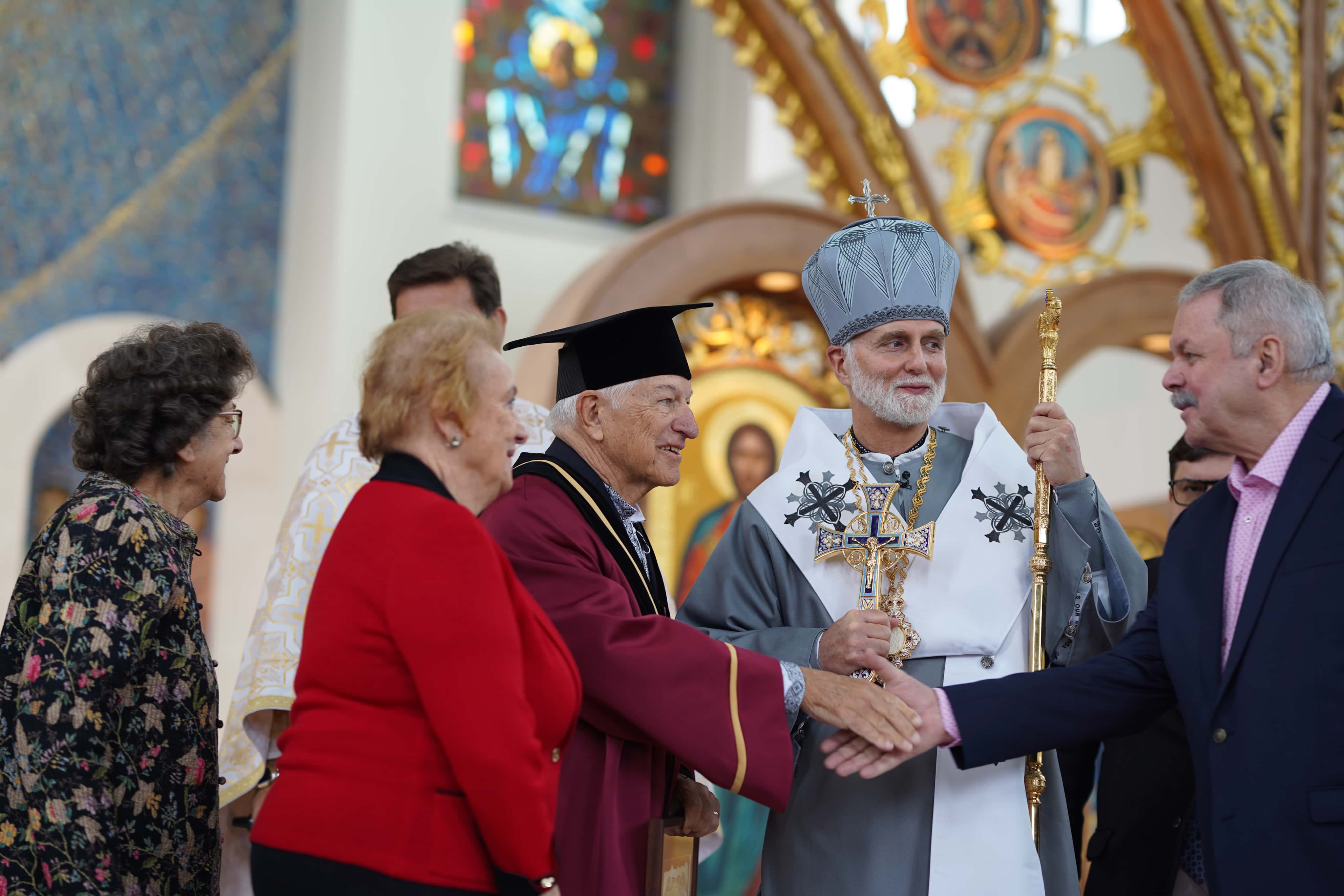
God has a sense of humor, a sense of irony, and a sense of order.  When I was sent to Cherry Hill, I found myself caring for Metropolitan Stephen Sulyk - the same priest who had baptized me, heard my first confession, gave me my First Holy Communion, and later vested me at my priestly ordination. He had been there at the beginning of my life in the Church, and years later I had the opportunity to serve him and care for him. 

The same is true with Father Roman Dubitsky. He was my pastor for many years and was one of the priests who helped me recognize my vocation. He told me that he was waiting to retire until I was ordained - and when I was ordained in 2010, he did retire. Now he serves at the altar with me here at St. Josaphat’s in Bethlehem. So you could say that the circle of life really does come around. A priest who became an archbishop and another longtime priest who cared for me when I was young—I eventually had the opportunity to care for them. 

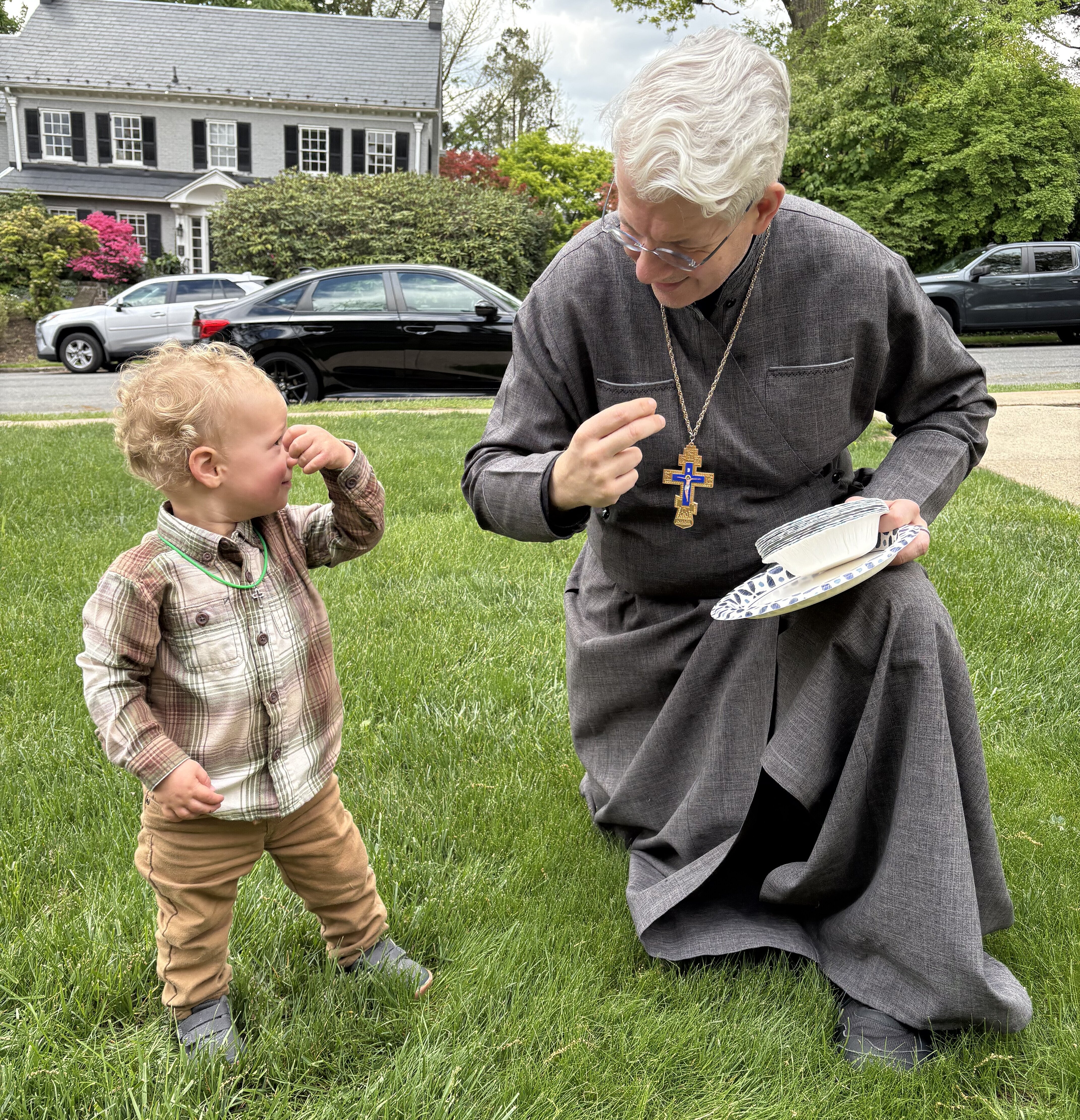
And there is another example of that. In 2014, a young Ukrainian high school student came from Philadelphia and asked me, “How do I become a priest?” I met with him and his mother, helped them join St. Michael’s in Cherry Hill, and before long, he became my best altar boy. After graduating from high school, he studied for a time at Manor College. That young altar boy eventually entered seminary. Today, Father Bohdan Vasyliv is happily married and serves our Archeparchy at St. Michael’s Ukrainian Catholic Church in Shenandoah, Pennsylvania, and St. Nicholas Ukrainian Catholic Church in St. Clair, Pennsylvania. It taught me an important lesson: you may or may not reap what you sow, but years down the road, you will recognize God’s hand in the seeds you planted. I pray to God that one day, one of those whose vocation I helped nurture will be there to care for me when I reach that stage of life, assuming, of course, that this is God’s plan.

You have said that a priest’s primary responsibility is not fundraising or parish activities, but helping people get to heaven. What does that mean to you in practice? 

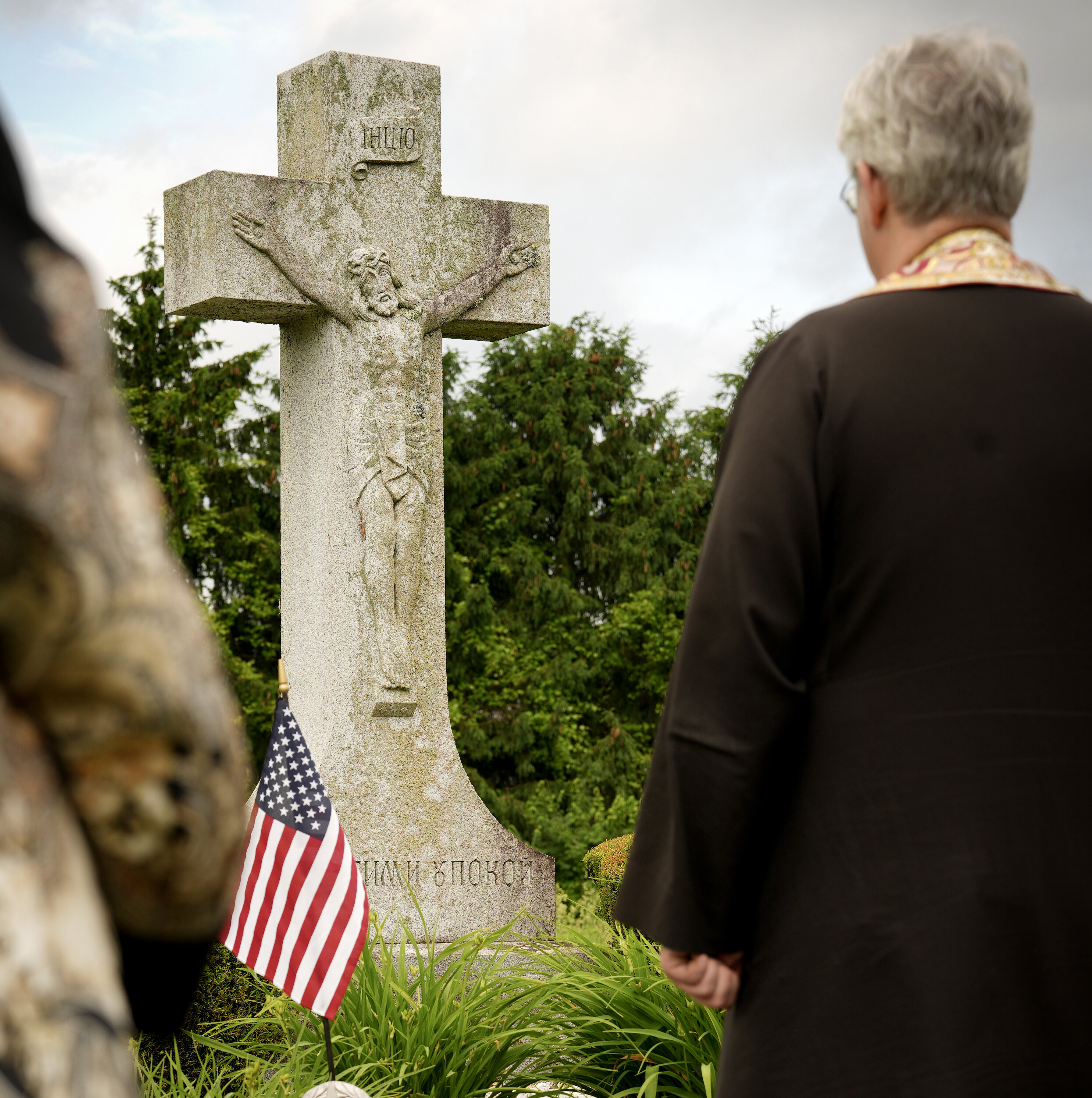
One of the main things I was taught as a priest by Father Dubitsky and Father Mirchuk is that my job is not to have the best fundraisers.  My job is not to be a caretaker for the best and prettiest cemetery in the area.  My job is not to have the best pyrohy or holubtsi.  My job is to make sure people get into heaven, and that they have the necessary tools to help them get there. That is why we carry our cross. My job is to help people not be afraid to carry that cross and walk with it. 

I am there to hear confessions, to make sure that a person comes out with a clean soul, and to help heal the wounds they are carrying. My job is to make sure they have a prayerful Liturgy, that every time they step into the church, they can truly pray.  And when I preach, I ask myself: Do I leave someone with at least one thing to think about as they walk out those doors? Do I leave someone with some sort of inspiration to open their heart to God? Do I give someone even one thing that could bring them a little closer to salvation?  That is what I do as a priest. And if, as a priest, I give that good example, others are going to follow. Father Dubitsky, Metropolitan Stephen, Bishop Basil, Father Mirchuk, and the others I looked up to when I was a kid—to me, they were giants. 

Before becoming a priest, you trained and served in the maritime world. Years later, that part of your life returned through chaplaincy. How did that happen, and what does this ministry mean to you today? 

Before I entered seminary, I had served as an officer in the United States Navy and trained as a merchant marine officer. I spent four years earning a degree in marine engineering from SUNY Maritime College. 

Even back then, I saw how important the presence of a chaplain could be. We had a priest who would regularly come to campus, check on us, and see how we were doing. Later, when I was in the Navy and going through some very difficult times, Navy chaplains helped put me back on a steady keel. I have watched naval chaplains save lives.  Years later, when I returned to SUNY Maritime for my 30th class reunion, people who remembered me were surprised to learn that I had become a priest. They asked whether I would consider providing spiritual care for cadets and seafarers.  Around the same time, I knew there was a need for ministry to Ukrainian seafarers. In 2024, I approached Metropolitan Borys, told him about my maritime background, and received his blessing to become involved.  Today, I volunteer at the ports of Newark and Philadelphia, where I board ships, meet with sailors, listen to their concerns, pray with them, and help where I can. 

Life at sea can be very demanding. Sailors work long and dangerous hours, often with very little sleep and tremendous pressure while their ships are in port. On top of that, they carry concerns about their families. Ukrainian sailors may be worrying about parents who were not able to evacuate, about what is happening back home, and about their loved ones living through the war.  Sometimes all I can give a sailor is five minutes of respite. Sometimes it is a prayer. Sometimes it is simply a shoulder to lean on.  I work with sailors of all backgrounds, but when I meet Ukrainian sailors, even hearing their native language can make a tremendous difference. I know that from my own experience at sea.  That is why I do what I do. When we can do even a little bit to make their lives easier, it matters. 

Drawing on your experience serving as vocations director, what role do priests and parents play in helping young people recognize a vocation? 

There are two things that I have found to be especially important in nurturing vocations.  First and foremost is the parish priest. Does he set that example? Is he the kind of priest that little ones will look up to and want to follow? 

I am not here just to keep a museum, or to serve only one generation, or, again, to have the best looking cemetery.  I am here for everyone - from the littlest to the oldest. And that means paying attention to the little ones, too.  But that leads to number two: parents. Do mothers and fathers nurture the faith in their children? My own parents laid that groundwork for me. My father served as a deacon for more than thirty years, my mother worked for more than thirty years as a parish secretary, and my grandparents and great-grandparents also served the parish in different ways. Faith was part of the life of our family. 

Do we lay that same groundwork for our children? Do we encourage them in their faith, or do we just take them to church, prepare them for their First Confession, and then come back only at Christmas and Easter?  You do not have to be a fanatic about it. You do not need to be a theologian. But you do need to encourage them. You need to set the example. Faith has to be lived. If you don’t live it, it’s not going to take root. When children see their parents pray, make the sign of the cross, light a candle, venerate the icons, and make the Church part of everyday life, those little things help root the faith in them.  When priests and parents live that faith themselves, the seeds of vocation have a place to grow. 

What would you say to someone who senses that God may be calling them to the priesthood or religious life, but is afraid to answer? 

Don’t be afraid. God is on your side.  Carry your cross. All of you have that spark within you. Allow the Holy Spirit to fan that spark into a bright flame.  The question is: how badly do you want it?  For me, I am a man created in the image and likeness of God. On the back of my cross is the command to be the image of Christ in everything I do, everything I say, and the way I live. 

And what do I want? I want to be saved.  So don’t be afraid. Take the helm and sail out into the open sea, knowing that God is your compass and your guide.  He will give you life in abundance. And when you live that life fully, you will be able to bring life to others and share it generously. 
by Halyna Vasylytsia

Related News

More News
The Role of Community in Welcoming Newcomers

#U.S.

#Archeparchy

The Role of Community in Welcoming Newcomers

Archeparchy Joins “Witness to Hope” Conference on Supporting Immigrant Communities

#U.S.

#Archeparchy

Archeparchy Joins “Witness to Hope” Conference on Supporting Immigrant Communities

Exalting the Cross in Our Lives: A Reflection by Fr. John Mikitish

#U.S.

#Archeparchy

#Sermon

Exalting the Cross in Our Lives: A Reflection by Fr. John Mikitish

Remembering September 11, 2001 Through the Voices of Our Community

#U.S.

#Archeparchy

Remembering September 11, 2001 Through the Voices of Our Community