- Fundraisers 2026
- Archeparchy
- Our faith
- Offices and ministries
- News and Updates
- Events
- Parishes
- Child Protection
- Ways to Give
- Subscribe to "The Way"
Each year on September 5, the International Day of Charity invites people around the world to reflect on the meaning of service, generosity, and responsibility toward those in need. The date carries a particular connection to St. Teresa of Calcutta, who died on September 5, 1997, and whose life became one of the most recognizable witnesses to Christian charity in the modern world.
For Fr. Brian Kolodiejchuk, MC, Mother Teresa’s legacy is not simply a subject of study. He knew her personally, was deeply influenced by her spirituality, and later spent years helping the Church examine and preserve the testimony of her life as postulator of her cause for canonization.
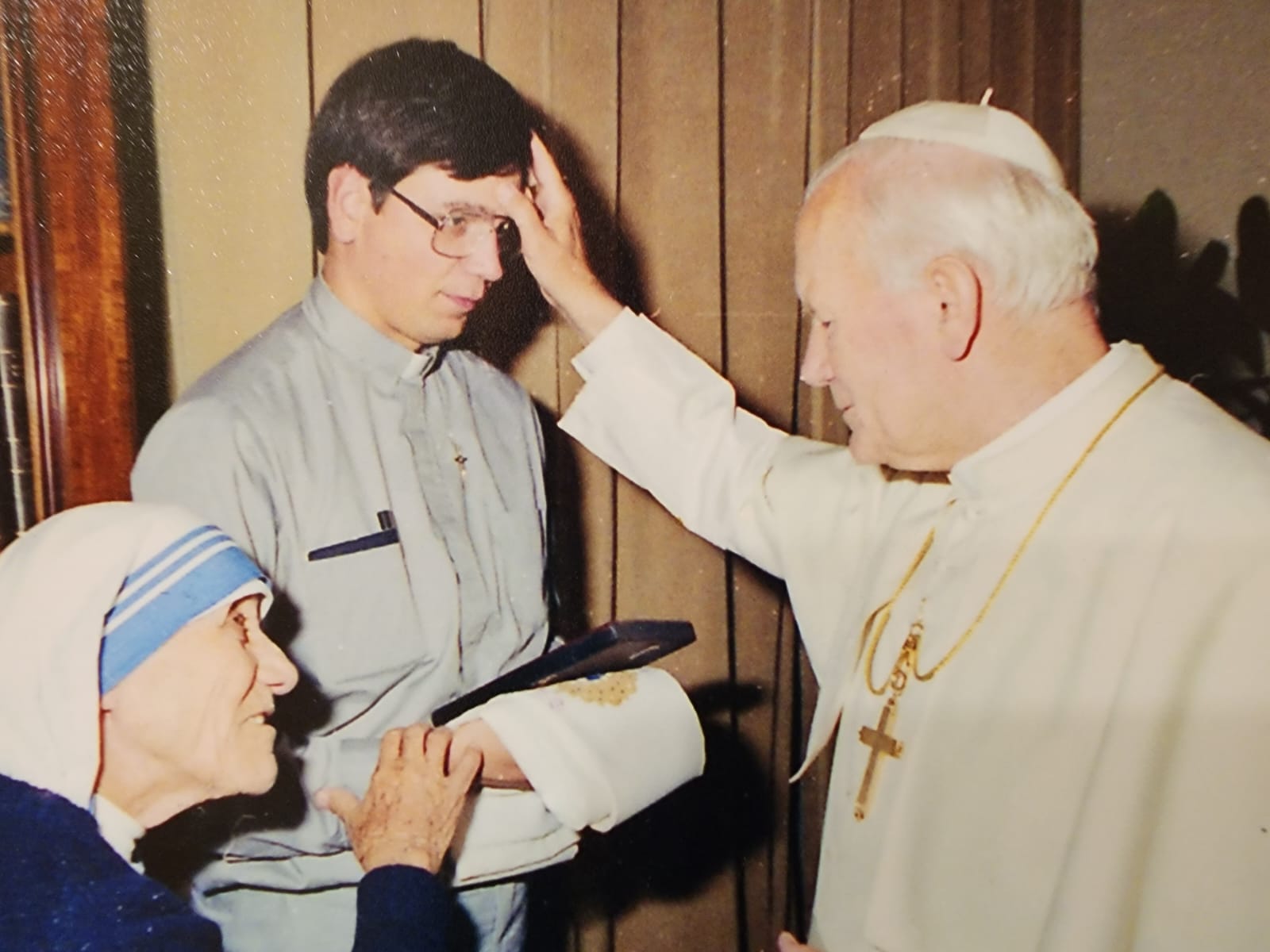
A Canadian priest with Ukrainian Catholic roots and a member of the Missionaries of Charity Fathers, Fr. Brian today serves as director of the Mother Teresa Institute and Mother Teresa Center. His own vocation carries a remarkable connection to both Mother Teresa and the Ukrainian Catholic Church: she was present at his priestly ordination in 1985 at St. John the Baptist Ukrainian Catholic Church in Newark, New Jersey.
In a conversation with the Ukrainian Catholic Archeparchy of Philadelphia ahead of the International Day of Charity, Fr. Brian reflected on his memories of Mother Teresa, her understanding of charity, the loneliness and suffering of the modern world, and the hope Christians are called to bring to others.
Fr. Brian first came into closer contact with Mother Teresa through his sister, who had joined the Missionaries of Charity. At the time, he had already spent seven years with the Ukrainian Rite Redemptorists — four years in minor seminary and three years studying philosophy in Toronto — before discerning a different direction.
During a visit to Rome, an unexpected encounter with Mother Teresa changed the course of his life.
After a Mass, when Fr. Brian approached her to say goodbye, Mother Teresa surprised him with a simple invitation.
“My parents said goodbye, and then it was my turn. And when I was saying goodbye, she said, ‘I would like to pin a cross on you too.’ I was, like, in shock,” Fr. Brian recalled. “I had been with the Ukrainian Rite Redemptorists for seven years — four years minor seminary, three years philosophy in Toronto — and I had just left a few weeks before. So it was a big shock.”
That invitation eventually led him toward the Missionaries of Charity Fathers.
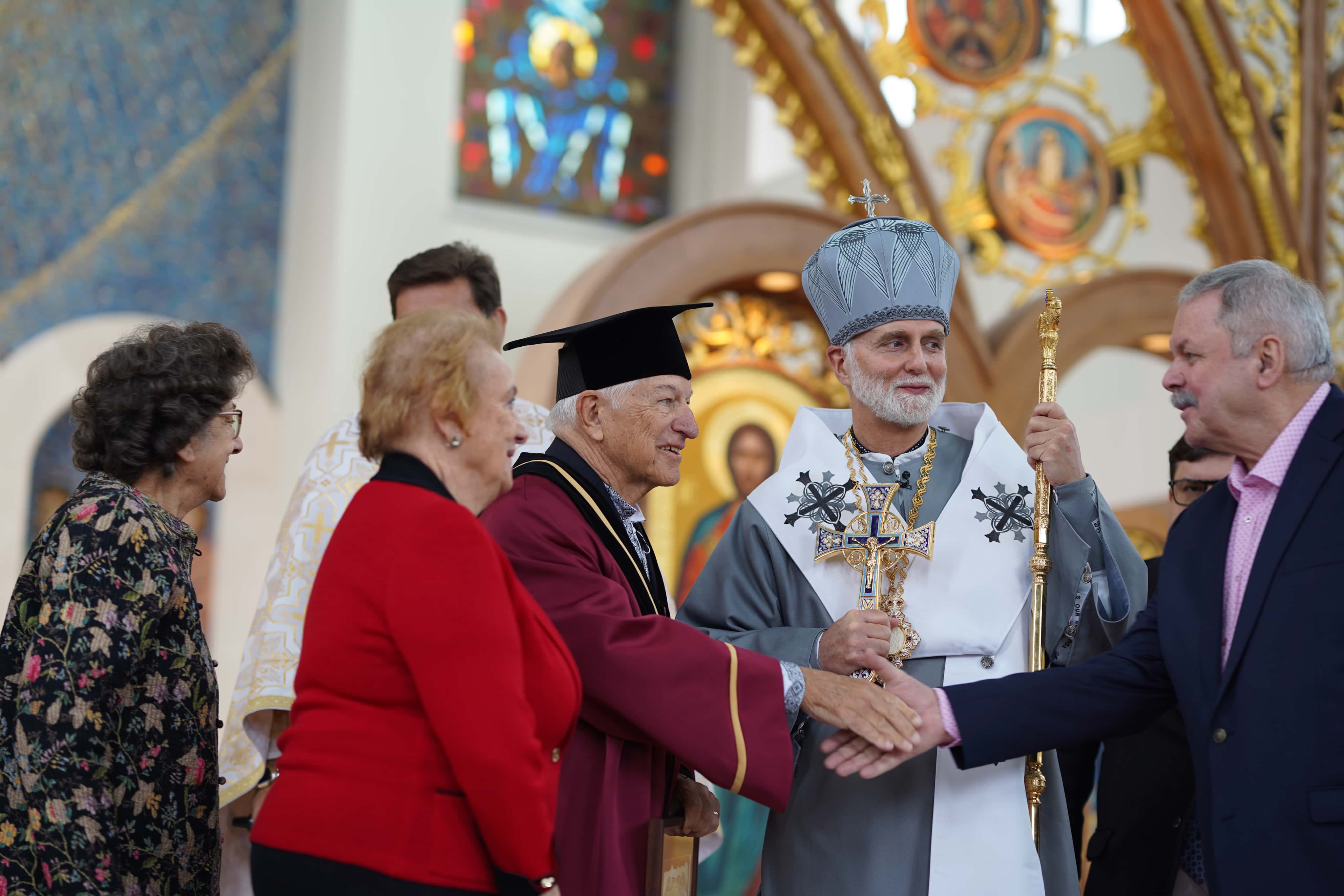
His path to priesthood nevertheless remained closely connected to his Ukrainian Catholic roots. He was ordained on June 15, 1985, at St. John the Baptist Ukrainian Catholic Church in Newark by Metropolitan Maxim Hermaniuk, CSsR, the Ukrainian Catholic Metropolitan Archbishop of Winnipeg. At that stage, the Missionaries of Charity Fathers were still developing canonically, so Fr. Brian remained a priest of the Archeparchy of Winnipeg until the community was able to incardinate its own priests.
Mother Teresa herself traveled to Newark for the ordination.
Her arrival, however, became part of the family story. Fr. Brian was already at the church while his parents were traveling with Mother Teresa and several sisters from New York. As the ordination approached, they had still not arrived — and this was long before cell phones made it possible to find out what had happened.
The explanation was wonderfully ordinary: the van had gotten a flat tire.
They arrived only shortly before the Divine Liturgy began.
Mother Teresa remained for the ordination and spoke at the end of the celebration. Yet some of Fr. Brian’s most treasured memories came afterward. Around the time of his ordination, she prayed for him and entrusted his priesthood to the Mother of God. After his first public Mass of thanksgiving the following afternoon, she waited as he blessed those who had come forward.
“Mother Teresa was waiting, waiting, waiting. She could have gone,” he remembered. When he had finished, she brought him before an icon of Our Lady and again prayed for him and his priesthood, entrusting both to Mary.
Looking back, Fr. Brian still speaks about those events with a mixture of gratitude and humor.
“What was the Ukrainian from the north end of Winnipeg doing hanging around with Mother Teresa?” he said with a laugh. “That’s crazy. It’s just proof that God chooses the least likely people.”
For Fr. Brian, Mother Teresa’s understanding of charity cannot be reduced to philanthropy or financial generosity. Donations are necessary, he stressed, and Mother Teresa readily accepted help that made the work of the Missionaries of Charity possible. But she wanted something more personal from those who wished to help.
“When people would offer money, she would take the offering — fine. But then she would say, ‘Yes, but I want your hands to serve and your heart to love,’” Fr. Brian explained. “Donation, help — yes, that helps. Otherwise, we wouldn’t be able to do what we do. But she really wanted you to be involved: hands to serve, heart to love.”
That personal involvement did not have to take the form of extraordinary accomplishments.
Fr. Brian pointed to the everyday work of the Missionaries of Charity: feeding people, washing, cleaning, caring for a shelter, serving a meal, or simply being present to another human being. These are actions almost anyone can perform.
“The things they actually do are in themselves simple,” he said. “Washing, cleaning, serving — they’re simple things that everyone has to do to some degree. They don’t have to do big things, but small things with great love. And that’s one of our teachings: love gives value to it.”
For a Christian, he explained, even the smallest act can acquire a deeper meaning when it is offered to God and performed with love.
“The important thing is the love with which we do them,” Fr. Brian said. “Little thing, big thing, big suffering, little suffering — whatever it is, the value is that we do it with love. Again, the double love of God and love of that person — not one or the other, both.”
That “double love” — love of God and love of neighbor — lies at the heart of Mother Teresa’s spirituality.
Mother Teresa’s service to the poorest of the poor began with a very specific vision of faith: she believed that Jesus was present in every person she encountered, particularly in those who suffered.
For her, Fr. Brian explained, the person before her was never an anonymous “case” or simply someone in need.
She saw a brother or sister — and she saw Christ.
This explains one quality that many people remembered after meeting her. Even though Mother Teresa met countless people, including world leaders and public figures, witnesses often said that when they were with her, they felt as though they were the only person in the world.
“She was giving you her full attention,” Fr. Brian said. “And you were, in a way, because at that moment you were Jesus for her. For her, it’s my brother, my sister, and it’s also the presence of Jesus. So she is loving you as a fellow human being, and she is loving Jesus in you as well.”
Fr. Brian described this way of seeing others as refusing to choose between the human and the spiritual. It was not one or the other, but both.
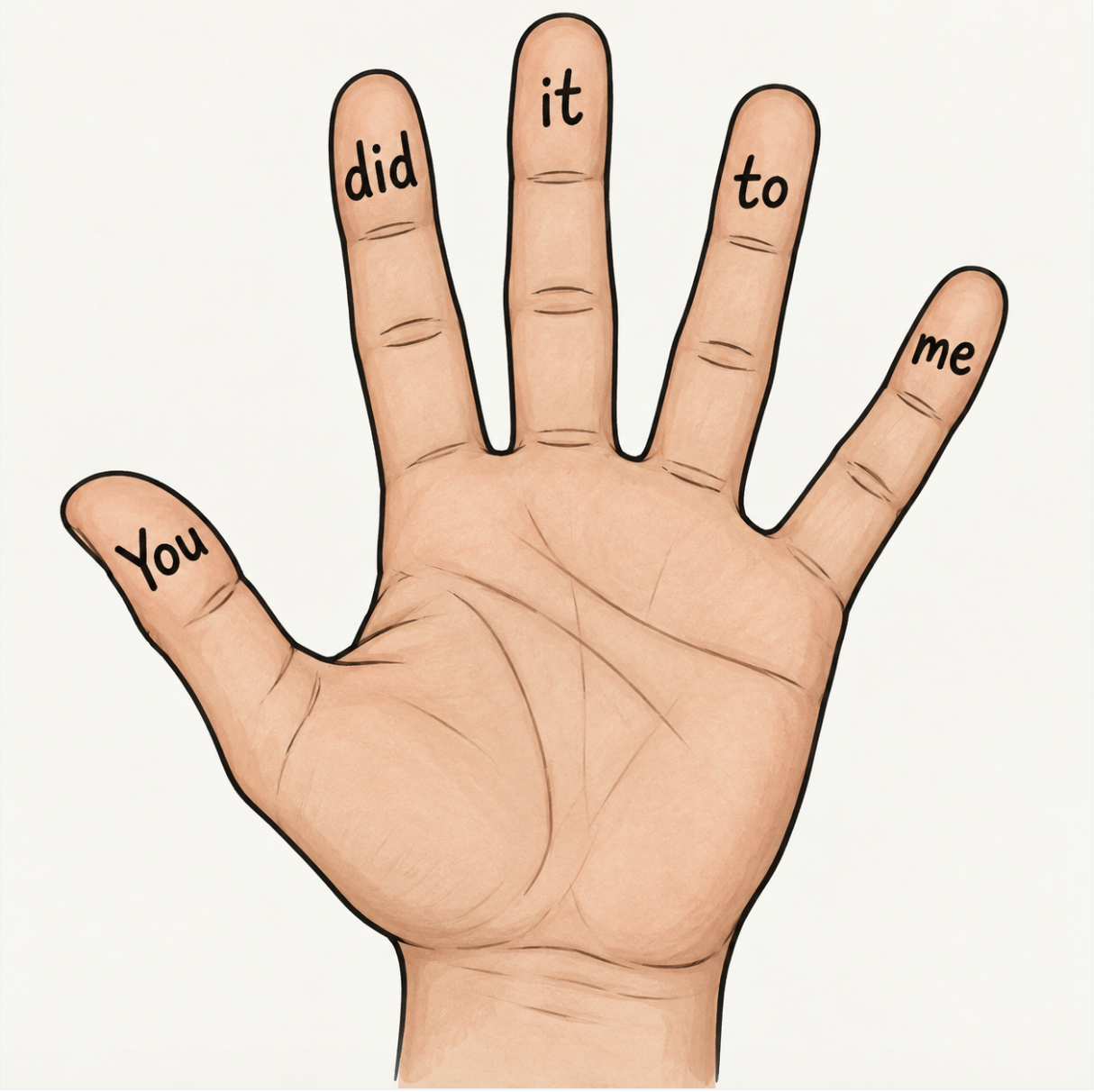
Mother Teresa took seriously Christ’s words in the Gospel of Matthew: “You did it to me.” She famously summarized those words on five fingers — one word for each finger: You did it to me.
That vision of faith remains central to the Missionaries of Charity: Christ encountered in the human person, especially in what Mother Teresa called His “distressing disguise.”
And for ordinary Christians, Fr. Brian stressed, opportunities to live this spirituality appear constantly.
“If we are paying attention during the day, there are a lot of chances, a lot of opportunities,” he said. “You see your brother, your sister, and you see Jesus in them too. Maybe one day they’re having a bad day or a difficult day, so you smile nicely. Good. That’s how you do these things. There are many opportunities if you pay attention. And to pay attention more, you need the prayer.”
Charity, therefore, does not begin only when someone travels to a mission or volunteers at a shelter. It can begin at home, at work, in a parish office, around a table, or in the way one responds to someone having a difficult day.
Mother Teresa became known throughout the world for serving people living in extreme material poverty. But as the Missionaries of Charity expanded beyond India, Fr. Brian recalled, she became increasingly conscious of forms of poverty that could be less visible.
“The first years, the emphasis of the sisters was on the material service because in India, Calcutta and other countries, the great need was material — food, shelter, those things,” he explained. “But then, when the sisters and she started going out, she realized, and she would say, ‘The greatest poverty in the world today is to be unloved, unwanted, uncared for.’”
That insight may be even more recognizable today.
Fr. Brian spoke about widespread loneliness, broken families, insecurity, and young people and adults who feel lost or uncertain about the direction of their lives.
“Far more widespread is this being unloved, unwanted, insecure, broken families — teenagers and adults kind of lost, not knowing what direction to take,” he said.
For Mother Teresa, the response was not simply to speak about loneliness but to encounter the lonely person directly. Her spirituality demanded presence: to recognize another person, give that person attention, and see beyond circumstances or appearances to the dignity of a brother or sister.
It is perhaps one reason her example still resonates in societies whose forms of poverty may look very different from those she first encountered in Kolkata (Mother Teresa became known throughout the world for her work among people living in extreme poverty in Kolkata, formerly known as Calcutta, the capital of the Indian state of West Bengal. The city officially adopted the English name Kolkata in 2001, reflecting more closely its Bengali pronunciation).
When asked what Mother Teresa might tell people living today amid war, loneliness and uncertainty, Fr. Brian returned to one of her most familiar principles: the transformation of the world begins much closer to home than people often imagine.
“Love begins in the family,” he said. “Change the world — change my own heart first of all. Look in your own family first. Love begins at home, and then in your community, and your parish, and in your city, and in your country, and somehow you’re led to do something on a bigger scale.”
He recalled once witnessing Mother Teresa send a volunteer home because the woman had been spending too much time helping the sisters.
Instead of taking advantage of an enthusiastic volunteer, Mother Teresa reminded her that charity also meant attending to the people entrusted to her at home.
“I saw with my own eyes once in Rome — there was a woman helping the sisters, and Mother saw her,” Fr. Brian recalled. “Mother sent her home and said, ‘You’re here too often. You have to go and be at home. Don’t forget your first responsibility is the home.’ Someone came to help you, and you might think, very good, keep her, work more hours. But no — go home, because you’ve been here too much. Your first responsibility is in your house, in your home, with your family.”
That did not mean everyone should remain within the home. Fr. Brian emphasized that circumstances differ. A person caring for young children has responsibilities different from someone whose children are grown and who has more freedom to volunteer.
The principle is simpler: genuine charity does not ignore the people already entrusted to us while looking for more dramatic opportunities elsewhere.
The family comes first, and from there love can move outward into the parish, neighborhood, city and wider world.
For Ukrainians, the question of charity is inseparable from the reality of war, displacement, grief and loss.
Asked what Mother Teresa’s example can teach those suffering through war, Fr. Brian did not offer an easy explanation for suffering. Instead, he emphasized perseverance in faith while acknowledging just how difficult that can be.
“The war is extremely difficult,” he said. “Not to lose faith, and keep the faith, and perseverance and trust. That’s one of the biggest questions: Why does God allow all this suffering? … But don’t give up hope. Somehow to find God even in the suffering, difficult as that is.”
He also stressed that Christian solidarity takes different forms. Some people can offer financial or humanitarian assistance. Others can serve directly. All can pray — and prayer, he insisted, should never be dismissed as though it were somehow less real than practical assistance.
In speaking about the response of Christians to Ukrainian suffering, Fr. Brian recalled a Knights of Columbus initiative that brought widows and children who had lost husbands and fathers on pilgrimage to Poland. Beyond material assistance, he saw in it an example of people accompanying others spiritually and humanly in their grief.
“That’s something very concrete, practical,” he said. “They took them, they prayed, they went to these different places, and so they were kind of renewed in their faith. … That’s when that solidarity comes in with the suffering.”
There is no simple theological formula that can make the deaths of innocent people understandable, he acknowledged.
“Can we figure it out why God allows these things? No,” Fr. Brian said.
Yet Christian hope insists that evil does not possess the final word.
“Even in the worst situation, I’d say love or charity always has the last word,” he said. “Good Friday is not the last word. Resurrection Sunday is the last word. But we have to go through Good Friday to get to Resurrection Sunday. Some people suffer more than others. How that all works, we don’t know. We can’t understand everything. We just have to believe that somehow that’s true — but it’s very difficult.”
It is a hope that does not deny Good Friday, but refuses to believe that the Cross is the end of the story.
Fr. Brian spent many years working closely with the material connected with Mother Teresa’s life and cause for canonization. Asked what people still find surprising about her, he pointed first to the spiritual “darkness” revealed through her private writings.
Many assumed that a woman whose life appeared so completely united to God must also have continually felt that closeness.
The reality was very different.
“She was not only feeling God absent, but feeling unloved,” Fr. Brian explained. “That’s why she understood the poverty of today, because that’s what she herself experienced — being unloved, unwanted and uncared for. Experienced the feeling, not in reality. So the paradox is that she was so closely united with Jesus that He could share with her His most extreme suffering, which was interior.”
At the same time, people are often surprised by how ordinary Mother Teresa was in daily life.
Fr. Brian remembered explaining in a television interview that Mother Teresa lived ordinary community life with the sisters and even washed dishes.
The interviewer found this difficult to reconcile with the monumental public image of her.
Fr. Brian’s response captures something essential about her, “She lived with the sisters and she washed the dishes and things. They said, ‘You’re telling us these things, and we have this image of Mother — she’s this big, grand figure.’ Well, I mean, she was a big figure by doing little things, if you want to say it that way.”
Perhaps that is precisely why her example remains accessible. Her holiness did not depend on every action being extraordinary. It depended on the love with which ordinary things were done.
When asked what one lesson from Mother Teresa he hopes every young person would embrace, Fr. Brian returned to something even more fundamental than service: a personal relationship with Christ.
“Try to have that personal friendship with Jesus, that personal connection,” he said. “Especially with this poverty of loneliness and feeling unwanted, try to make that personal connection, relationship — an encounter with the Lord. But that should be real, and that comes especially with prayer. And then, as Mother liked this expression, put your love into living action.”
For Fr. Brian, participation in the Divine Liturgy and reception of Holy Communion should not remain isolated religious acts. A genuine encounter with Christ necessarily creates a movement outward toward another person.
Drawing on what St. John Paul II called the “law of the gift,” he explained, “If I’m focused just on me, I will never be happy. But if I’m focused on loving God and loving neighbor, then the fruit of that is happiness. Everyone has suffering. You can’t escape. No one escapes suffering. The question is: What do you do with it? How do you handle it? What meaning do you give it?”
After years of knowing Mother Teresa, studying her writings and preserving her legacy, what does Fr. Brian most want people to remember about who she truly was?
His answer was immediate. “One very important thing to take away from her is that she was a woman — I like to say, a woman passionately in love with Jesus — and that explains all the rest,” he said. “She understood Jesus’ passionate love for her, and that’s why she liked ‘I thirst,’ the image of thirst, because that is an intense thing. And so she wanted to thirst for Him back. Jesus’ love is very great and intense and infinite. And then on our side, to love as much as we can, intensely, personally, and put that love into living action by doing the little things with great love.”
Finally, asked what message he would offer to the faithful of the Ukrainian Catholic Archeparchy of Philadelphia on the International Day of Charity, Fr. Brian returned to the heart of everything he had said.
“Meet Jesus, encounter, live with living faith — not just routine,” he said. “Meet Jesus, make it living, and get involved, some community, and serve. Get out of yourself. There will be suffering — everyone has suffering — but focus outward. And that, again, begins in your own family where you are. And then you can branch out according to what you can do.”
It is a message entirely consistent with the life Mother Teresa lived: begin with Christ, recognize Him in the person before you, and allow that love to take concrete form.
For some, that may mean feeding the hungry or caring for those who have nowhere else to go. For others, it may mean patience with a family member, attention to a lonely person, prayer for someone who is suffering, or an ordinary task quietly performed out of love.
The action itself may be small.
But, as Mother Teresa taught and Fr. Brian continues to remind us, what matters is the love with which it is done.
By Oksana Loziak
Photos from the archives of Fr. Brian and the Ukrainian Catholic Archeparchy of Philadelphia