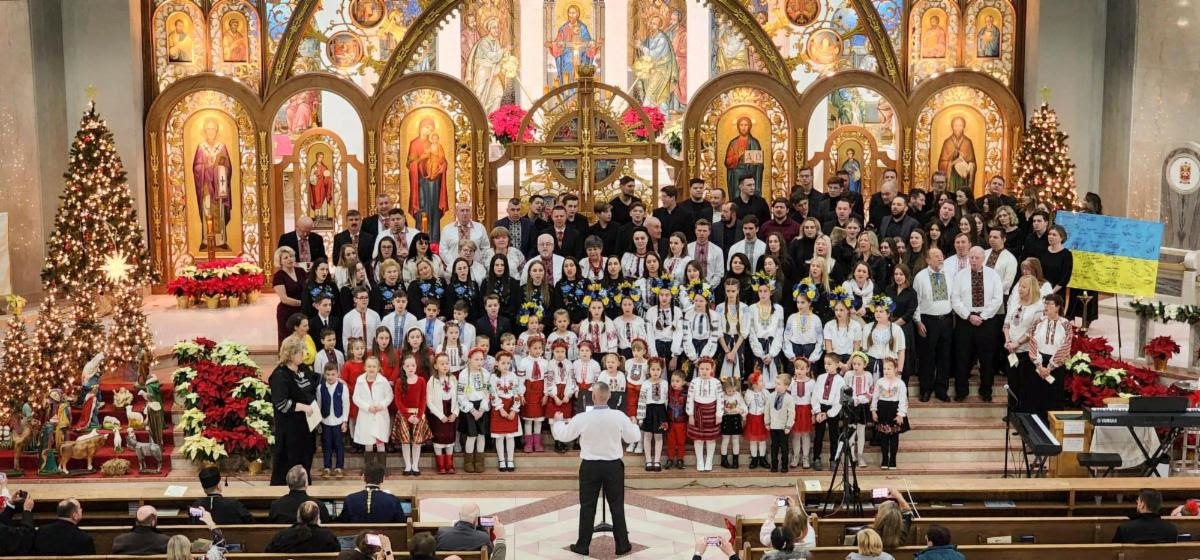
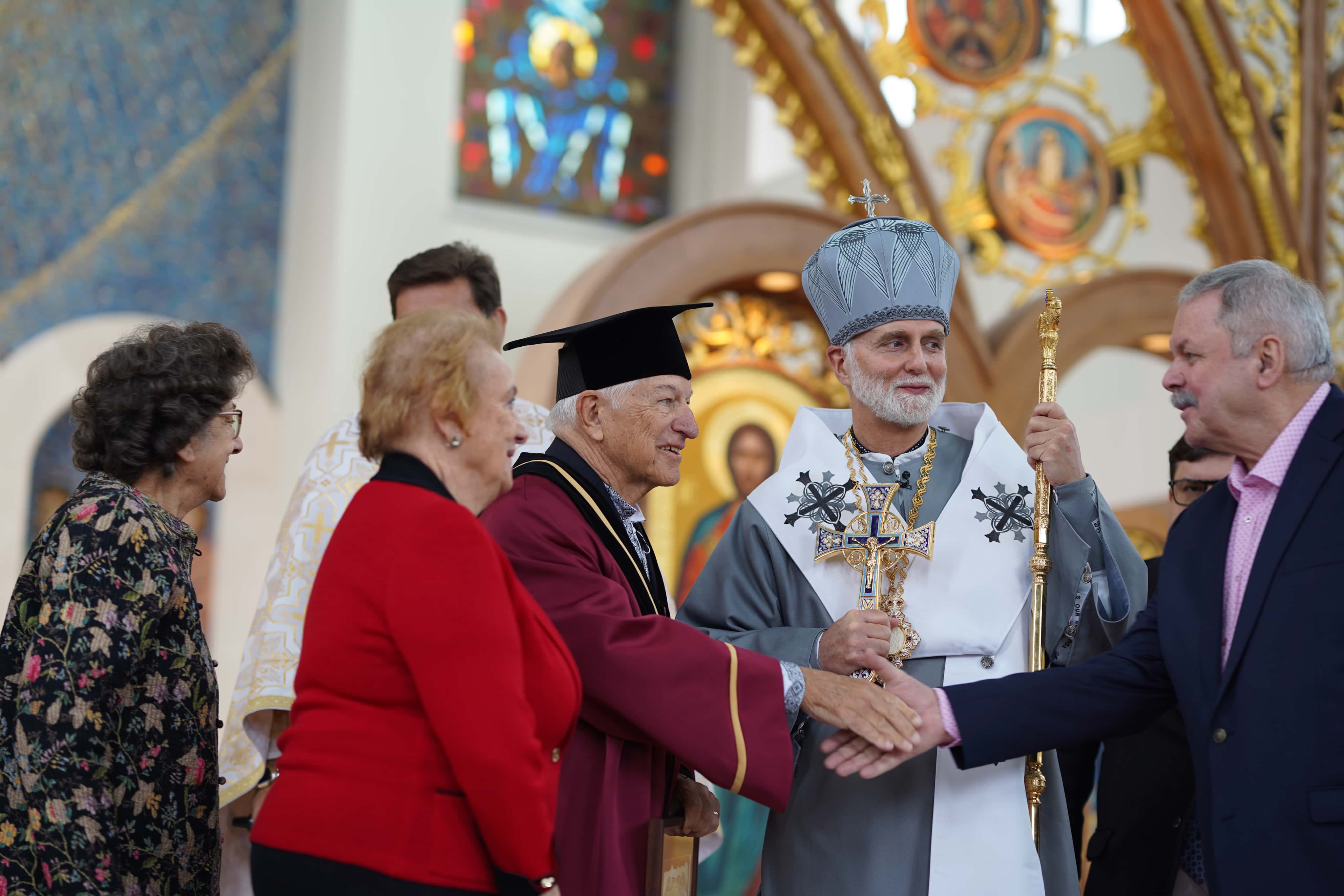
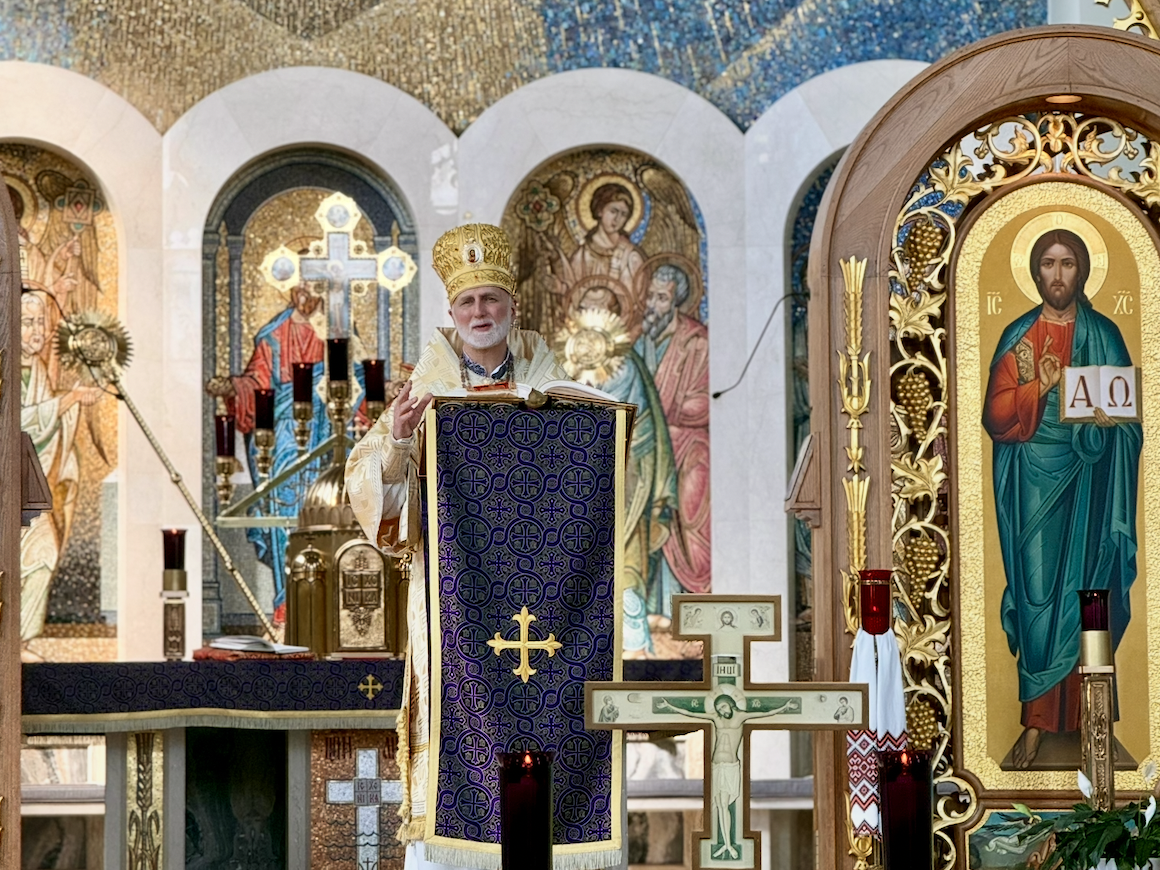
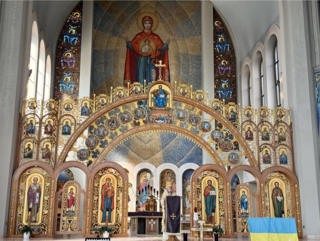
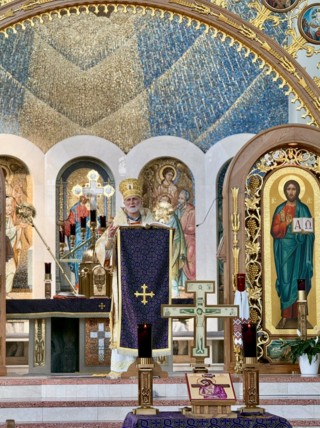
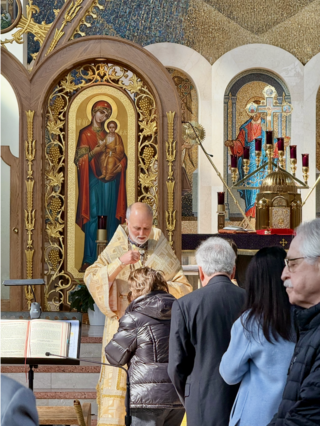
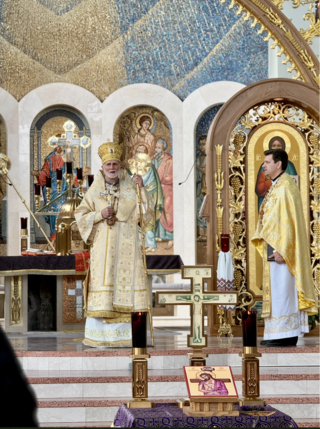
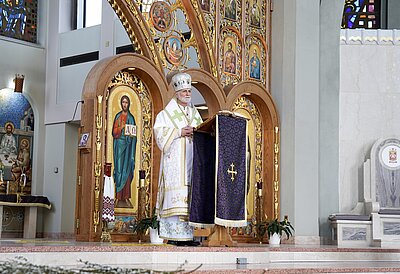
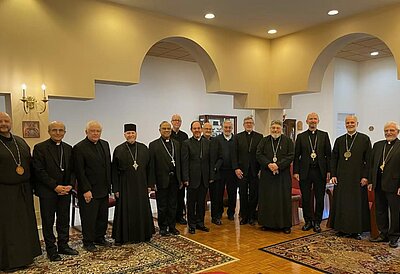
On March 1st, the Second Sunday of Great Lent, Metropolitan Borys Gudziak presided over the Divine Liturgy, delivering a homily based on the Gospel reading from the Evangelist Mark (Mk 2:1–12), centered on Christ’s words: “But that you may know that the Son of Man has authority to forgive sins on earth” (Mk 2:10).
In his reflection, Metropolitan Borys invited the faithful to enter imaginatively into the Gospel scene set in Capernaum — an ancient city on the northern shore of the Sea of Galilee, marked by a strong Roman presence and known as the place where the Apostle Peter lived. It was there, the Metropolitan noted, that Jesus spent significant time, went out to preach, and worked wonders, making the city a central place of His ministry.
The Gospel recounts how Jesus was teaching in a house filled to capacity, surrounded by people eager to hear Him. Unable to enter because of the crowd, the friends of a paralyzed man dismantled the roof and lowered him directly into the center of the house before Christ. This bold act, Metropolitan Borys emphasized, was an expression of deep love and faith — faith not only in Jesus as a teacher, but in His unique, life-giving power.
At the heart of this Gospel passage, the Metropolitan stressed, are Christ’s first words to the paralyzed man: “Your sins are forgiven.” Only afterward does Jesus command him to rise, take up his mat, and go home. This sequence is decisive. Sin is not merely a psychological burden or a sense of guilt; it is bound to death itself. By forgiving sins, Christ disarms the power of sin — and in doing so, disarms the power of death.
Reflecting on the title “Son of Man,” Metropolitan Borys explained that while the phrase can simply mean “a human being,” Sacred Scripture gives it a deeper theological meaning. In the Book of Daniel, the Son of Man is the one to whom God grants authority to establish justice — the authority to judge, which belongs to God alone. Yet in the Gospel, Christ exercises this authority not through condemnation, but through mercy. He reveals Himself as the Son of Man who forgives, heals, and restores.
The Metropolitan recalled that from the earliest pages of the Book of Genesis, human sin consists in the desire to claim what belongs to God alone — the final determination of good and evil. Jesus reveals divine authority in a radically different way: not by taking life, but by giving it; not by judgment, but by forgiveness. The miracles that fill the Gospel of Mark are not meant merely to amaze or even to heal, but to reveal the truth about Christ: only God can forgive sins, and through His words and actions, Jesus reveals Himself as God.
Also on March 1, 2026, the faithful marked the 45th anniversary of the episcopal ordination of Stephen Sulyk of blessed memory. A prayer was offered during the Divine Liturgy in gratitude for his life, episcopal service, and enduring witness to the Church.
At the conclusion of the Divine Liturgy, Metropolitan Borys shared reflections from his recent pastoral visit to Ukraine. He reported visiting thirteen cities and meeting with thirteen bishops, clergy, monastics, students and faculty of the Ukrainian Catholic University, as well as representatives of civil society, entrepreneurs, and local authorities, including Kyiv Mayor Vitali Klitschko.
He spoke of a nation deeply exhausted by war, cold, and the latest peak of Russian terror. At the same time, he testified to witnessing heroic expressions of Gospel love and sacrificial service.
Metropolitan Borys urged the faithful not to forget that Ukraine is engaged in a struggle for life and death — for the survival of the nation and the Church, for freedom, democracy, and God-given human dignity. He called for continued prayer, truthful witness, explanation of events to the wider world, and concrete partnership with those who are giving their lives in defense of human dignity.
“This support helps Ukraine to stand,” Metropolitan Borys emphasized. “Today, Ukraine is at the epicenter of the struggle for freedom, democracy, and the dignity given by God to every human person.”