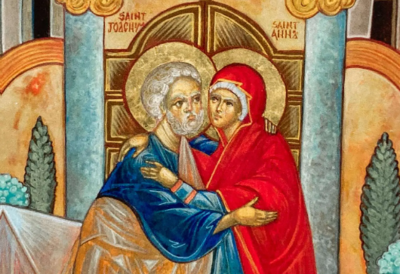
Following the Union of Brest in 1596, the Kyivan Church entered a period of profound renewal, but also growing tension and division. While many bishops, clergy, monastics, and faithful embraced communion with Rome while preserving the Byzantine tradition, others strongly opposed the union, leading to conflicts within both Church and society. One of the most important figures of this period was St. Josaphat Kuntsevych — a Basilian monk, reformer, preacher, and later Archbishop of Polotsk.
Josaphat Kuntsevych was born around 1580 in Volodymyr, Volhynia. He was still young when the Union of Brest took place. Drawn to prayer and the monastic life, he entered the Monastery of the Holy Trinity in Vilnius and later joined the Order of Saint Basil the Great.
Deeply immersed in Eastern monastic spirituality and literature, Josaphat became known for his ascetical life, pastoral discipline, and devotion to prayer. Although not formally educated in the Latin scholastic tradition, he became a powerful preacher and defender of the Union of Brest through writings and sermons in Ruthenian and Polish.
A close collaborator of Metropolitan Yosyf Rutsky, he played an important role in the reform and renewal of the Basilian monastic order, helping strengthen monastic discipline, education, community life, and pastoral ministry.
The decades following the Union of Brest remained deeply turbulent. In 1620, a parallel Orthodox hierarchy was restored within the Polish-Lithuanian Commonwealth, intensifying tensions between Orthodox and Greek Catholics.
One of the leading Orthodox figures opposing the union was Meletii Smotrytsky — a highly educated scholar, writer, and polemicist. The growing religious conflict became especially intense in Polotsk, where Josaphat served as archbishop. Known for his zeal, disciplined pastoral practice, and passionate commitment to Church unity, Josaphat became both admired and fiercely opposed. His efforts to strengthen ecclesial unity often unfolded in an atmosphere marked by political tensions, polemical writings, and public unrest.
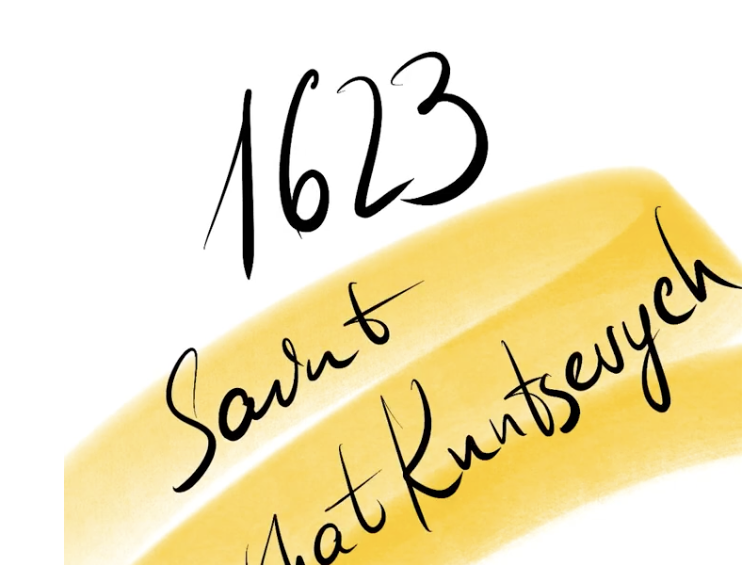
On November 12, 1623, while visiting Vitebsk, Archbishop Josaphat Kuntsevych was attacked and killed by an angry mob. His body was thrown into the Western Dvina River but was later recovered by the faithful. His death became one of the most significant martyrdoms connected to the struggle for Christian unity in Eastern Europe. Josaphat Kuntsevych was beatified in 1643 and canonized in 1867 by Pope Pius IX.
During the upheavals of the twentieth century, his relics were transferred from Eastern Europe to Vienna and later secretly brought to Rome after the Second World War. Today, his relics are venerated in Saint Peter’s Basilica. St. Josaphat remains one of the most important saints of the Ukrainian Greek Catholic Church, the patron saint of the Basilian Order, and a witness to fidelity to the Gospel and the unity for which Christ prayed.
Key facts:
• Josaphat Kuntsevych was born around 1580 in Volodymyr, Volhynia, shortly after the Union of Brest.
• He entered the Monastery of the Holy Trinity in Vilnius and joined the Order of Saint Basil the Great.
• Together with Metropolitan Yosyf Rutsky, he helped renew Basilian monastic life.
• As Archbishop of Polotsk, he became a leading defender of Church unity.
• In 1620, the restoration of a parallel Orthodox hierarchy intensified tensions in the Kyivan Church.
• On November 12, 1623, Josaphat was killed by a mob in Vitebsk and became a martyr for Christian unity.
• He was beatified in 1643 and canonized in 1867 by Pope Pius IX.
• Today, his relics are venerated in Saint Peter’s Basilica in Rome.
#BorysGudziak #history #ugcc_history