Today, technology influences so much of our daily lives.There is a tendency to adapt ourselves to what makes technology function more efficiently rather than asking whether technology is serving the human person. Pope Leo reminds us that these tools should always remain at the service of humanity.
He is also encouraging us to consider the broader consequences of technological development, including concerns about privacy, environmental impact, water usage associated with artificial intelligence and the extraction of minerals needed for devices. He invites us to look at the bigger picture.
Communication begins with ourselves. If we want peace in the world, we must first communicate in ways that build peace.
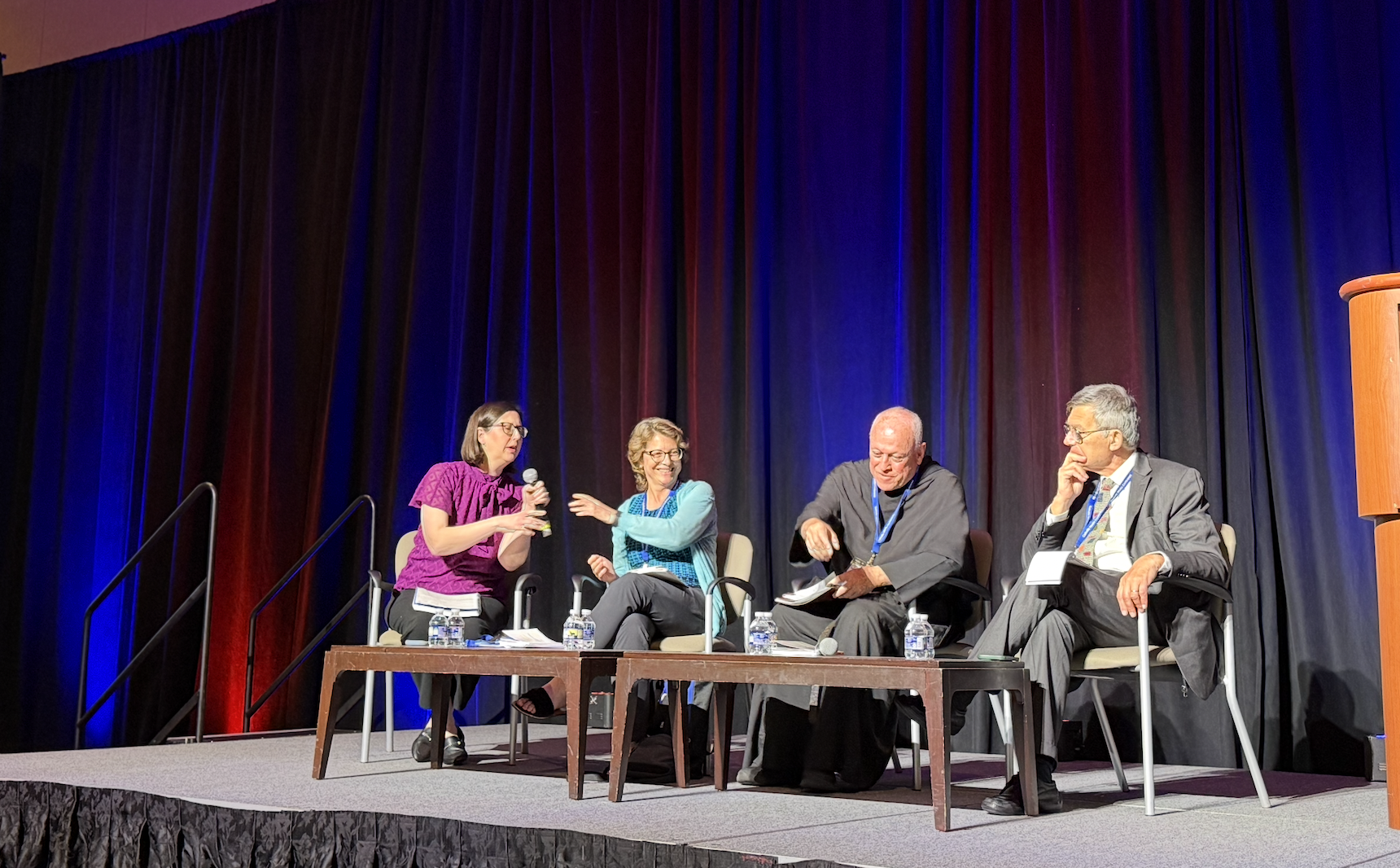
During one of the conference panels, you spoke about communication as community. Could you expand on that?
Pope Leo emphasizes personal responsibility. We often look outward and point fingers when conflicts arise, but he reminds us that every form of disharmony begins with what is in our own hearts.
The way we communicate with others should foster peace, dialogue, and communion. Building community starts with the choices we make every day in our conversations, our relationships, and our interactions with others.
As someone reporting from Rome, what message from Pope Leo XIV do you believe is especially relevant for people living through war and uncertainty?
One of the most striking aspects of Pope Leo's ministry is his closeness to those who suffer.
Whenever he has the opportunity — whether during the Angelus, a General Audience, or another public appearance — he uses his global platform to express solidarity with people experiencing conflict. Importantly, he not only speaks about the crises that dominate headlines but also remembers the many forgotten wars and forgotten victims around the world.
Like Pope Francis before him, Pope Leo continually calls attention to those on the margins: the poor, the displaced, and those suffering from violence and war. He reminds us that these people must remain at the forefront of our thoughts and prayers because Christ is present in their lives and experiences.
What gives you hope about the future of Catholic media?
Catholic media possesses something unique. Unlike much of the secular media landscape, its primary purpose is not profit, clicks, or metrics.
Certainly, there can be temptations to focus on visibility and audience numbers, but the mission of Catholic media continually calls us back to a deeper purpose. It reminds us that our work is ultimately about serving people and preserving human dignity.
We have the privilege of communicating a message that many people are searching for today. I see genuine interest in Pope Leo's message — not only among Catholics but among people of many different backgrounds.
That tells me that what we are sharing resonates with people and speaks to needs that are often unmet in today's world. Seeing that response gives me great hope.
This year marks the 25th anniversary of Saint John Paul II's visit to Ukraine. Do you see a possibility of Pope Leo XIV visiting Ukraine in the future?
That is a difficult question to answer.
What may be in a pope's heart is not always easily translated into reality. Many factors influence the possibility of a papal visit, including diplomatic considerations, security concerns and practical logistics.
Particularly during times of war, Church leaders must consider not only the safety of the Holy Father but also the safety of the many people who would gather for such a visit. Infrastructure, security arrangements, and broader circumstances all play a role.
These decisions involve far more than simply deciding where the Pope would like to travel.
Is there anything else you would like to share?
I think it is a blessing that we have a spiritual leader who continues to speak to the world with clarity and compassion.
Even amid ongoing conflicts, Pope Leo consistently reminds people not to forget those who are suffering. He continues to repeat a message that remains as important today as ever: war must not be accepted as inevitable.
"War no more. Never again."
Those words have been spoken many times throughout history, but what encourages me is that the Pope never stops repeating them. He never gives up calling the world to peace.
This interview was conducted during the 2026 Catholic Media Conference in Atlantic City, New Jersey.