Subdeacon David Wallace: “Formed by Family, Strengthened by Community”

Subdeacon David Wallace will be ordained to the diaconate on Sunday, May 17, 2026, at 10:30 AM during the Hierarchical Divine Liturgy at SS Joachim and Anna Ukrainian Catholic Church in Front Royal, Virginia.

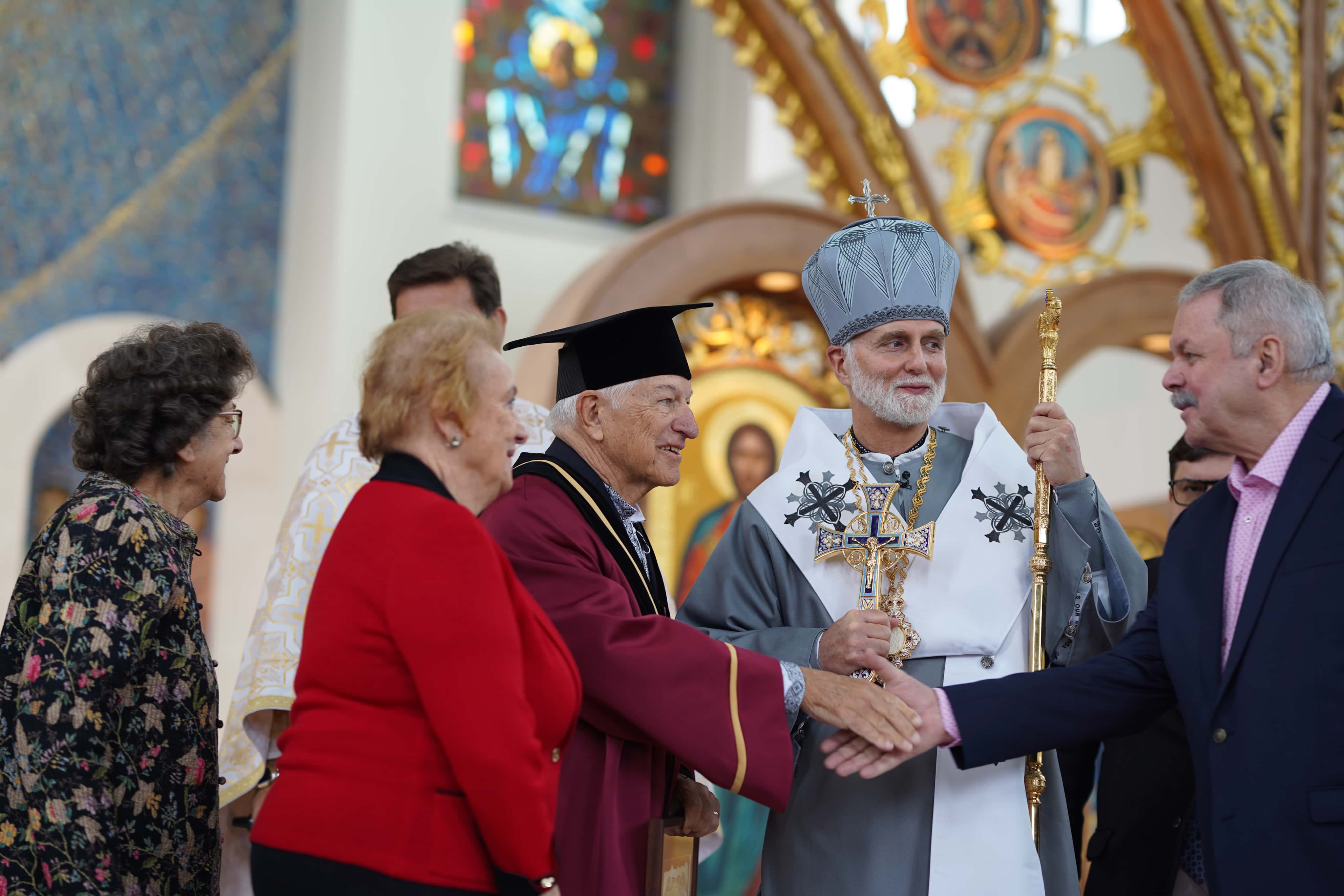
Subdeacon David was ordained a subdeacon by Metropolitan Borys Gudziak on Sunday, January 26, 2025, at his home parish in Front Royal, where he is actively involved in parish life.
 

When did you first begin to recognize a call to serve the Church as a deacon? Was it something sudden or a gradual journey?

     Even as a young person, I felt a desire to serve the Church in some way—as a catechist, a teacher, perhaps as a priest or monastic. Early in my professional life, serving first as a director of religious education and later as a formator of catechists and evangelists, I came to understand that this work was not simply a career, but a calling.

     It was during the 2020 COVID shutdown that I began the process of inquiring and seriously considering the diaconal call.


What role did your parish and family play in your vocation?

     What am I as a Christian without my parish community and my family, who nourish and form my relationship with Christ?

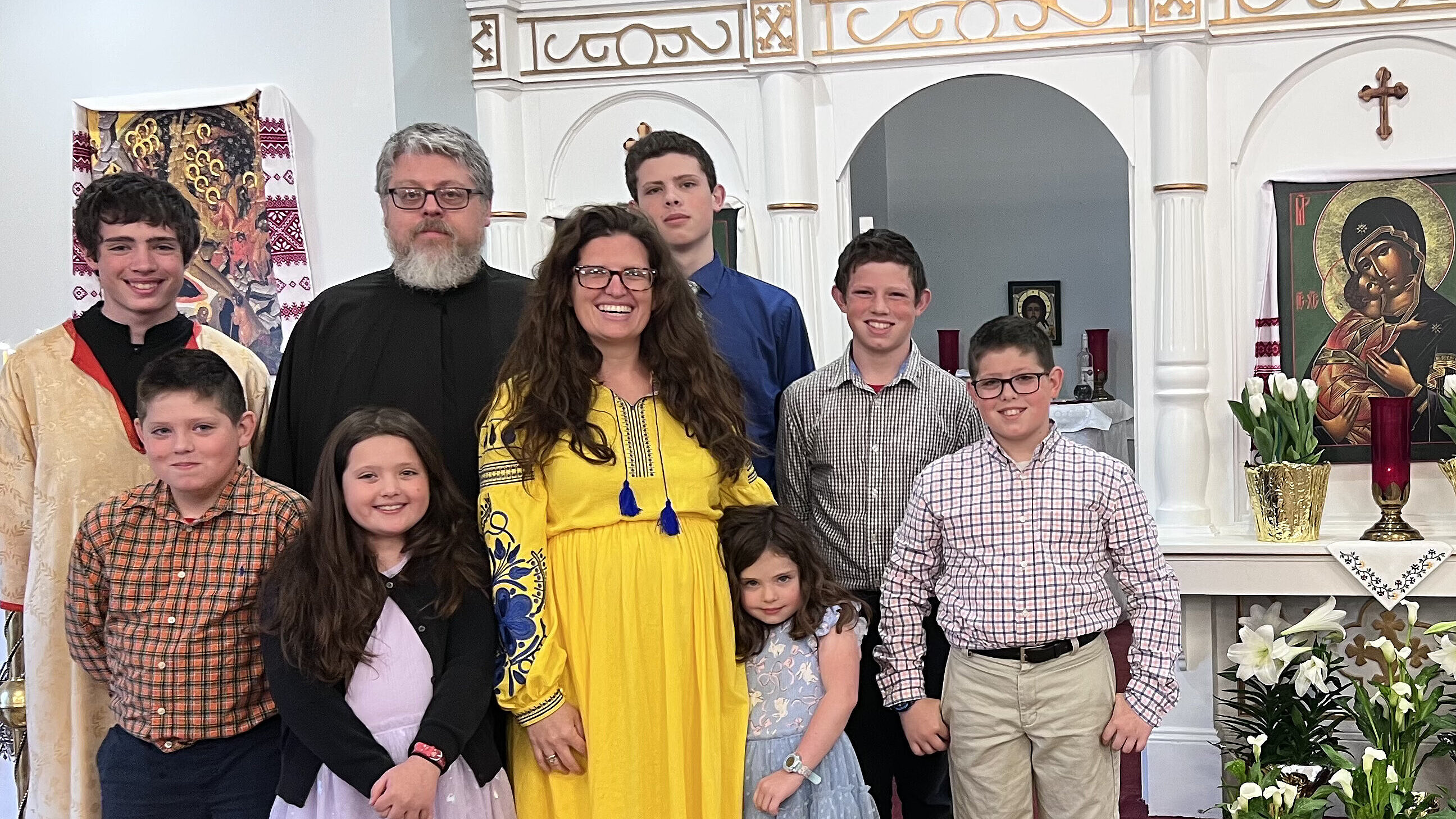
     For many years, friends abroad and fellow parishioners encouraged me to pursue formation and ordination, and my wife, Elizabeth, was especially supportive during times of doubt. She has been my rock throughout this period of formation.

    It has also been a great blessing to serve at the altar with my sons and to sing at the cantor stand with my daughters.


Was there someone in your life who especially inspired or supported you in this calling? If so, how? And who supports you the most today?

     When my family entered the Ukrainian Greek Catholic Church from the Latin Church, all of our children were chrismated—our youngest at the time only 18 months old. The image of Fr. Robert Hitchens kneeling down to chrismate the feet of our smallest children has remained with me ever since. In fact, a photo from that moment hangs in my office.

     One of the prayers of diaconal ordination recalls the words of Jesus: “Whoever wishes to be first among you shall be your servant.” It also speaks of the Lord “Who Yourself first fulfilled the ministry of a deacon.”

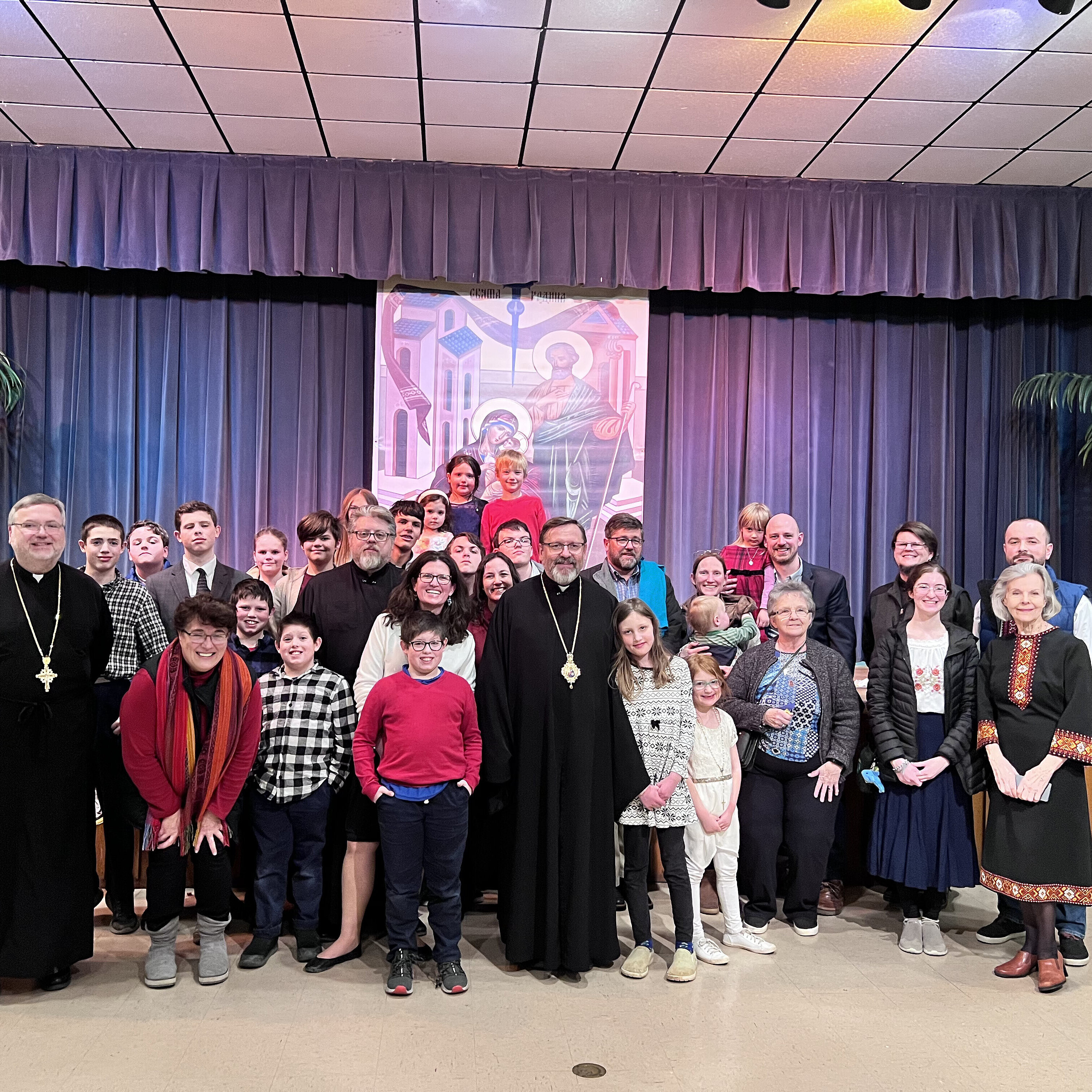
     I am deeply grateful to Fr. Robert for his wisdom, his quiet encouragement, and his joyful, visible witness—especially in the many hours he has spent driving each week to serve our community, something he has faithfully done for over ten years.

What have been the most meaningful lessons of your ministry in the Philadelphia Archeparchy? What has this experience taught you about the Church, about God, and about yourself?

     So far, my ministry—if it can be called that—has been focused on learning the liturgical tradition of our Church, especially its music. With no background in music or singing, this was initially quite daunting: learning to chant the readings, to master the tones and melodies well enough to cantor, and eventually to gain the confidence to lead Vespers and other services.

     I credit the intercession of the Mother of God for helping me overcome the challenges of singing in public. These years of formation have shown me that the Church is far larger and more diverse than our small community in Front Royal. It has been a gift to experience the communal worship of the Trinity within a lived and embodied culture—the Ukrainian tradition.

     Growing up, we had few traditions that connected our American culture to our faith—one of the limitations of the “melting pot” experience. Now, having encountered a form of Christianity shaped by rich Ukrainian traditions, I feel that my family and I have been welcomed—almost adopted—into a much larger family that supports us and helps us flourish.

What challenges do you see for your future ministry? Which of them are timeless, and which feel especially unique to our present time?

     Honestly, I don’t yet know. A stable order of deacons in our Archeparchy is still relatively new. Beyond serving in the liturgical services, I am not yet sure what my ministry will look like—preaching, evangelization, ministry to the sick and dying, or service to the poor. All of these belong to the diaconal vocation, and I expect much will be learned along the way.

     Historically and theologically, the deacon is the eyes and ears of his bishop. As an obedient servant of Metropolitan Borys, I am ready to do whatever is asked of me. Personally, I look forward to learning more about Ukrainian culture and language, and to helping welcome and support immigrants in our communities.

     I also look forward to the day when my family and I can visit a peaceful Ukraine and help strengthen the bonds between the Ukrainian Greek Catholic Church abroad and its ancestral homeland.

Prepared by Halyna Vasylytsia

Related News

More News
In Rome, Halyna Vasylytsia Defended a Licentiate Thesis on Women in the Catholic Church and Synodality

#U.S.

#Vatican

#Archeparchy

In Rome, Halyna Vasylytsia Defended a Licentiate Thesis on Women in the Catholic Church and Synodality

Christ the King Church Under the Patronage of Our Lady of Zarvanytsia

#U.S.

#Ukraine

#Archeparchy

#Parishes

Christ the King Church Under the Patronage of Our Lady of Zarvanytsia

Clergy of the Ukrainian Catholic Archeparchy of Philadelphia Gather for Spring Conference

#U.S.

#Archeparchy

#Parishes

Clergy of the Ukrainian Catholic Archeparchy of Philadelphia Gather for Spring Conference

The Meaning of the Vyshyvanka: Stories Shared by Our Parishioners and Friends

#U.S.

#Ukraine

#Archeparchy

#Parishes

#Interview

The Meaning of the Vyshyvanka: Stories Shared by Our Parishioners and Friends