Deacon Ihor Demydas: Fatherhood Taught Me to Trust in God

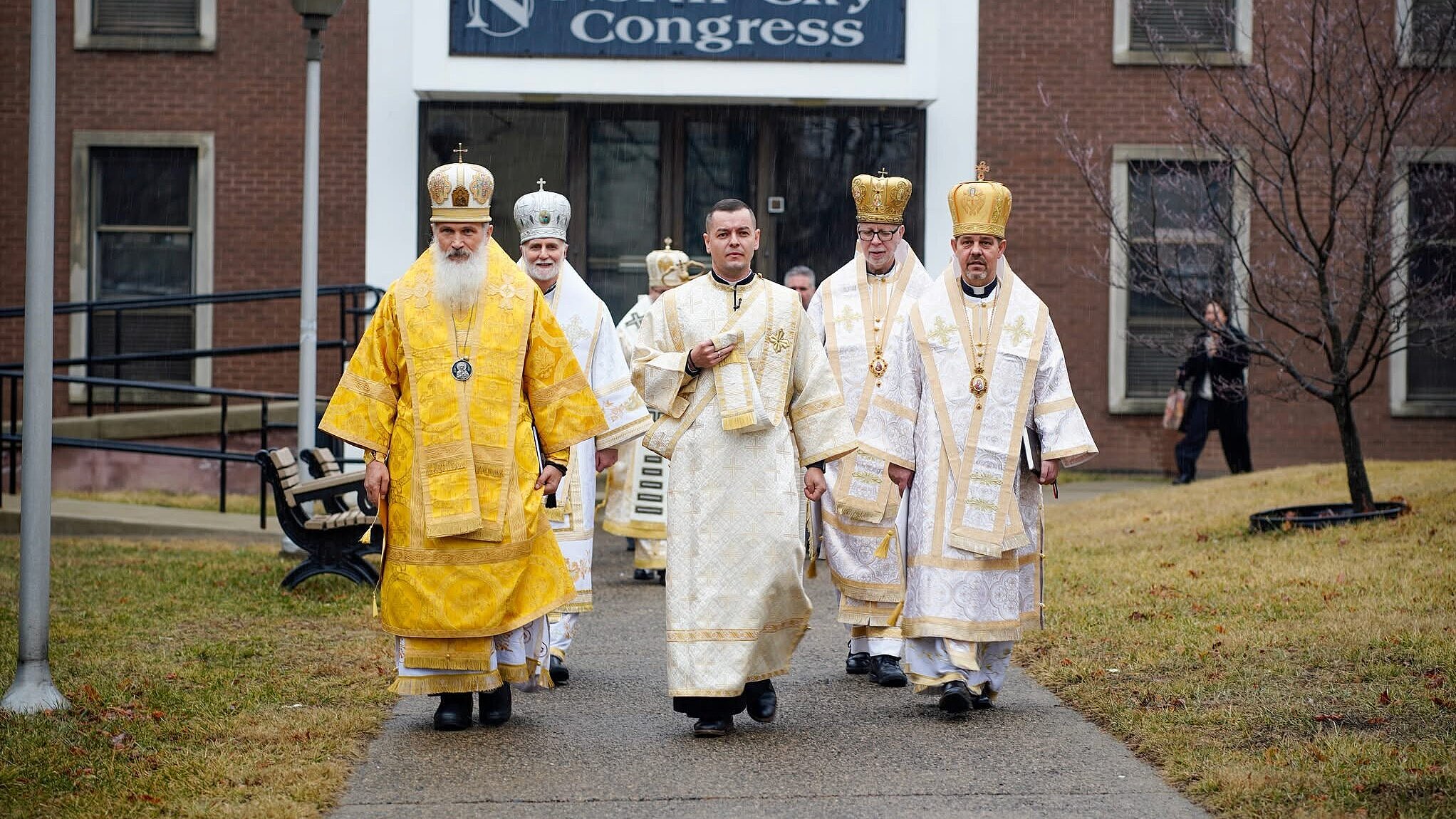
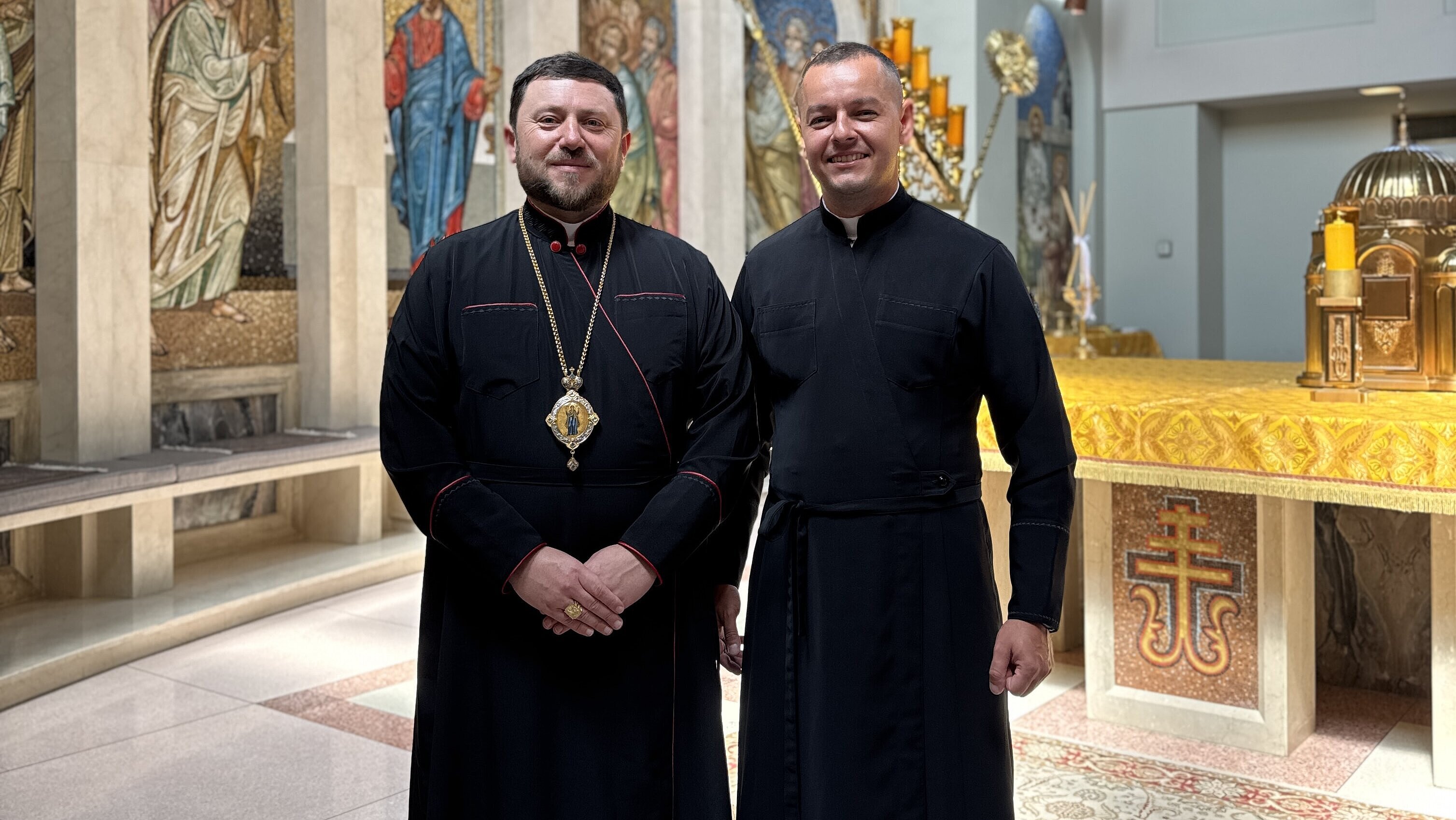
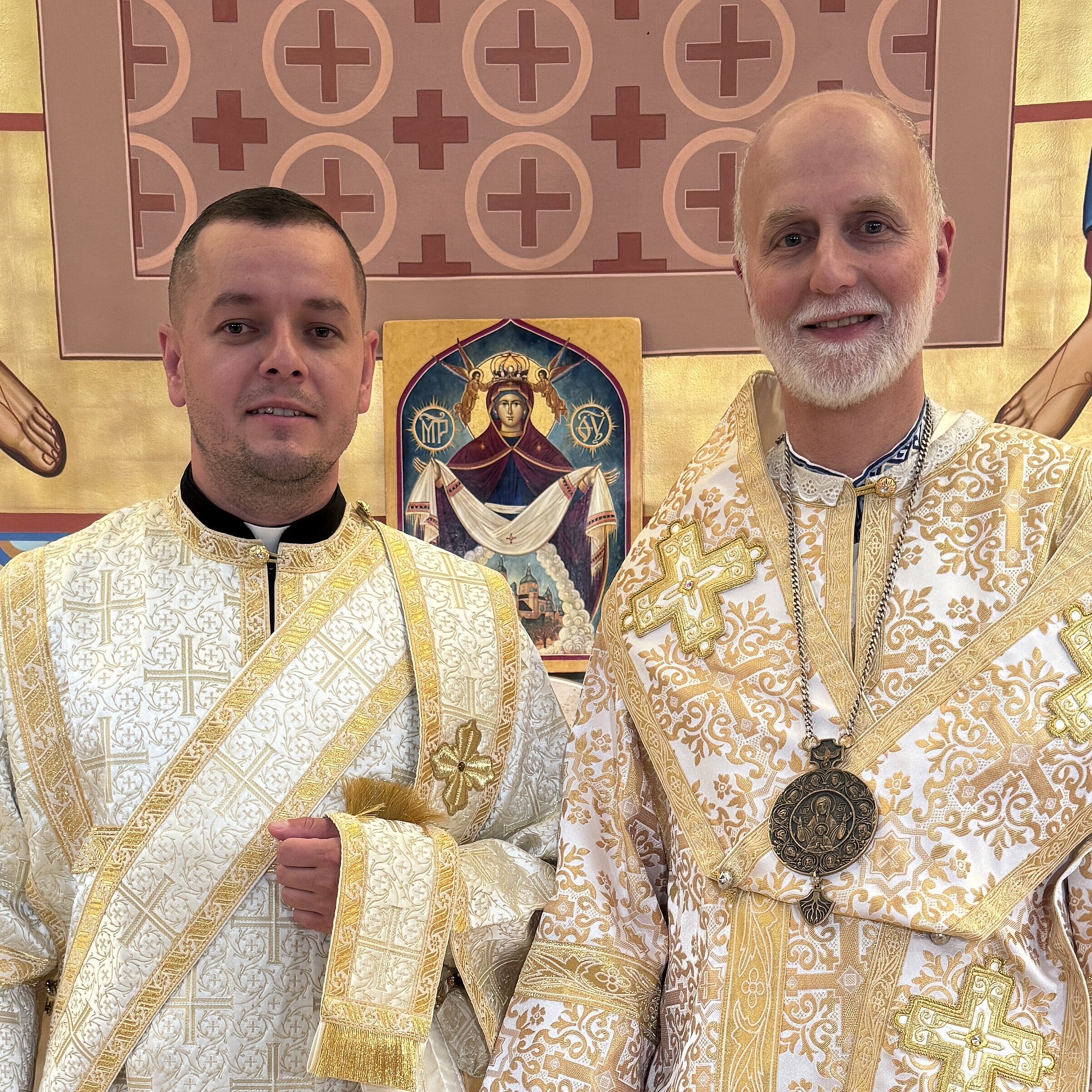
     Deacon Ihor Demydas will be ordained to the priesthood on the Feast of the Ascension, Thursday, May 14, 2026, at 12:00 p.m. at the Ukrainian Catholic Cathedral of the Immaculate Conception in Philadelphia, Pennsylvania.

     Deacon Ihor Demydas is a cleric of the Ternopil-Zboriv Archeparchy in Ukraine, a graduate of Ternopil Theological Seminary, and holds a licentiate from the Pontifical John Paul II Theological Institute for Marriage and Family Sciences in Rome, Italy. He currently serves as Assistant Director of the Archeparchy’s Office of Youth Ministry.

     In his ministry, Deacon Ihor combines his work with young people with his vocation as a husband and father. In this interview, he reflects on fatherhood, the responsibilities of priesthood, the challenges of evangelization in today’s world, and the importance of living an authentic witness of faith.

How do you experience the difference between who you were as a deacon and who you are preparing to become as a priest?

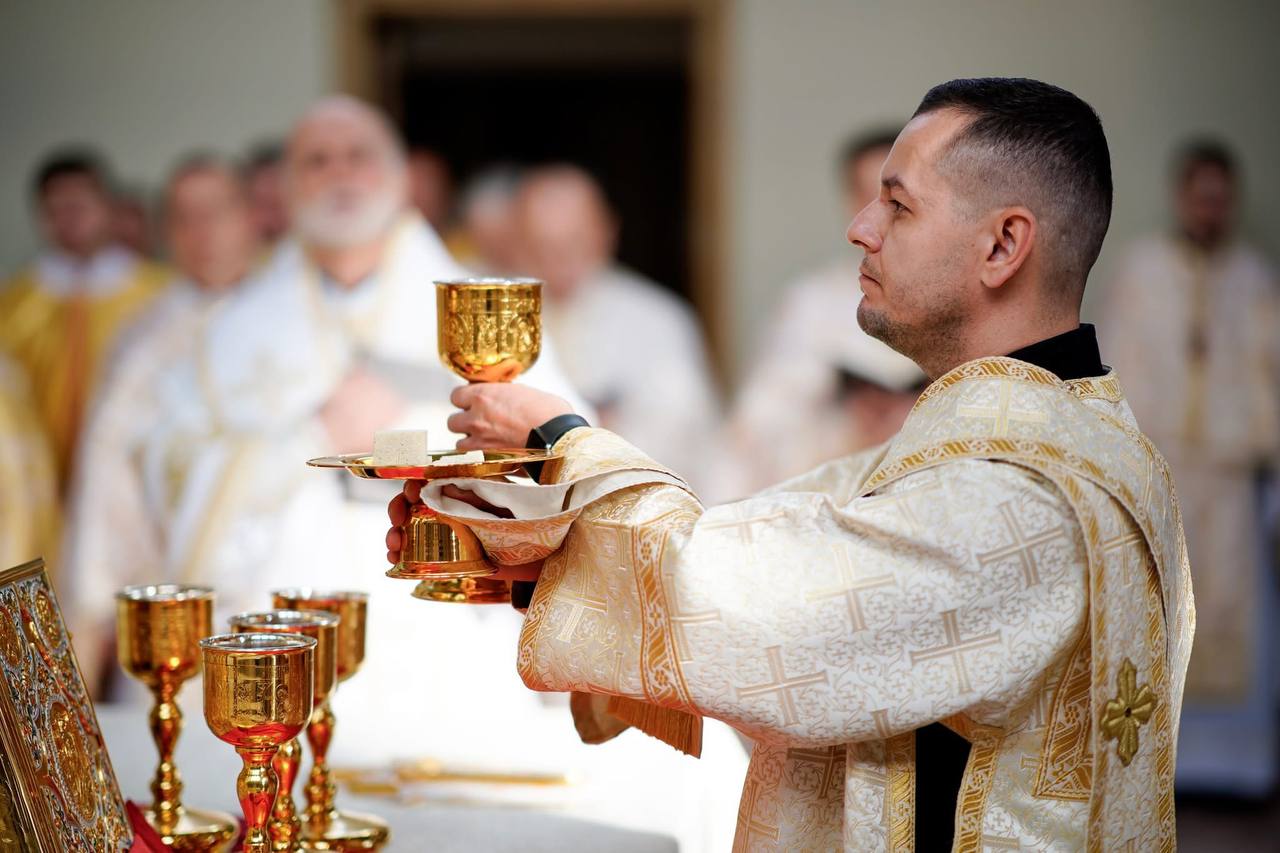
     For me, the diaconate and the priesthood are part of the same vocation — I would describe them as two stages of one and the same journey rooted in Christ. They flow from the same source of grace. As a deacon, I experienced my ministry primarily as one of service: being a servant and assistant, someone who points to Christ’s presence through humble ministry. There was a clear awareness that I was assisting in the mystery through which Christ acts in His Church.

     Now, as I prepare for the priesthood, that sense of vocation has become deeper and, at the same time, more demanding. If the deacon serves within the Mystery, the priest becomes the one through whom Christ acts directly — especially in the Eucharist and in the celebration of the Sacraments. It is no longer simply about standing beside the Mystery, but about becoming an instrument through whom Christ becomes truly present to His people. So I would not describe it as a change so much as a deepening — the same vocation, but lived with a greater interior responsibility and a more profound awareness that you are called to be a living and authentic sign of God’s presence among His people.

How has becoming a father changed your understanding of God as Father?

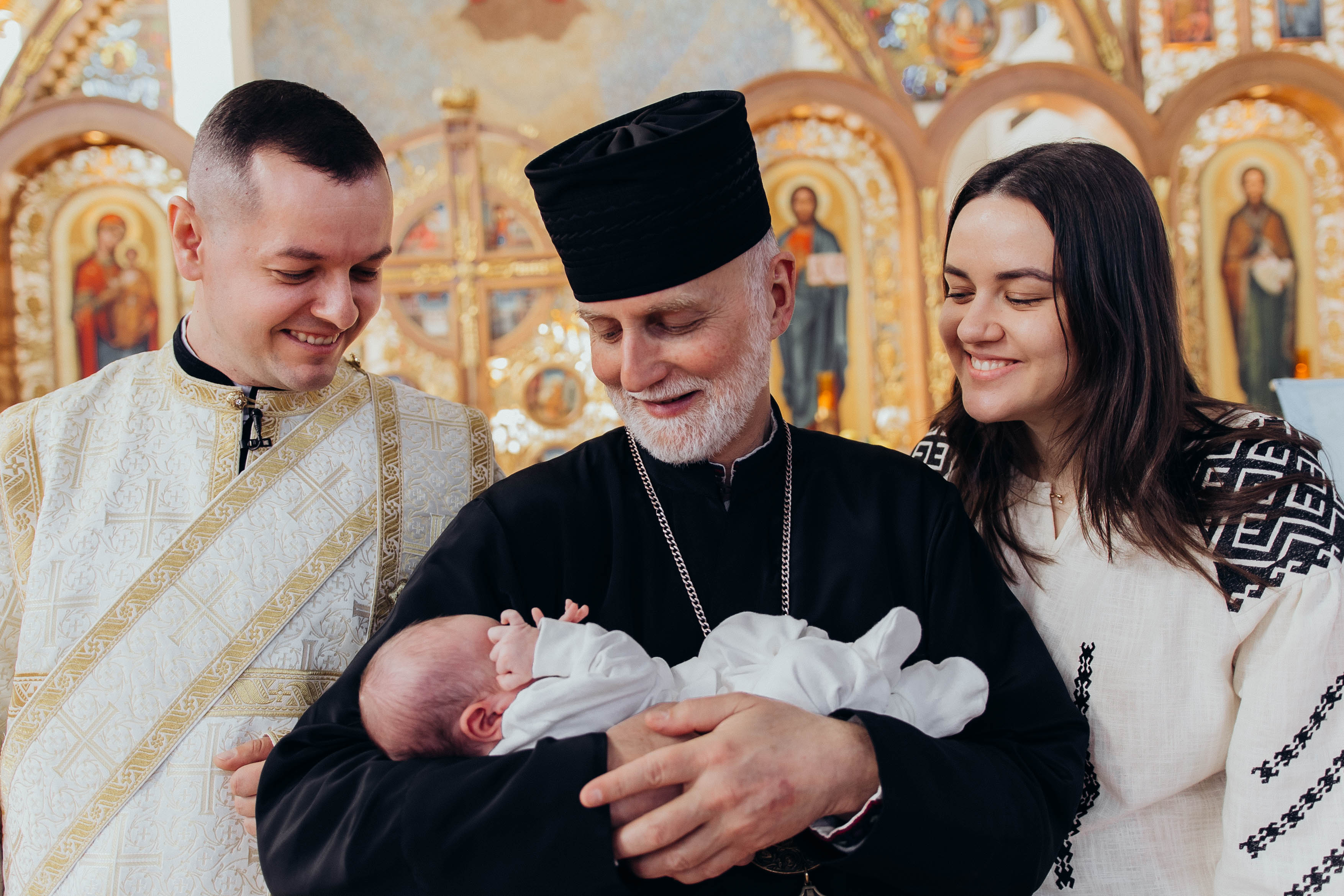
     Thank you for such a personal and profound question. Honestly, I never imagined that God could speak so deeply to my heart through such a small child. Since Mateiko entered our lives, my understanding of God as Father has truly changed — or rather, it has become something deeply real and tangible.

     When you look at your child, you begin to understand love differently: a love that is unconditional, patient, and not dependent on merit. Through that experience, I came to see more clearly how deeply Christ loves me — how He cares for me, remains close to me, and never abandons me even in moments of weakness. I experience this most profoundly in prayer, in the Word of God, and in the Holy Mysteries, where it feels as though God truly embraces you as a father embraces his child.


What changed in your priorities after becoming a father?

     This question really invites honest self-reflection. When our son was born, many things suddenly fell into place. Some things that once seemed important lost their weight, while other things — once pushed to the background — became central.

     First of all, my understanding of time changed. I began to value simple moments more deeply: being present, being attentive, being there not only physically but wholeheartedly. Children grow quickly, and you realize those moments will never come again.

     Second, responsibility became something very concrete. You no longer think only about yourself, but about what you will leave behind — what kind of faith you will pass on, what example you will give, and what kind of person your child will become.

     And third, faith itself became much more practical. Before, it may have remained something more personal and interior. But now I understand that I must live in such a way that my child can encounter God through my life — not only through words, but through daily actions, the atmosphere of our home, and the love shared between husband and wife.

Is there anything about the priestly vocation that seems more difficult to you now than it did during seminary formation?

     For me personally, my understanding of the priestly vocation has not fundamentally changed. Even during seminary, I was aware of the immense responsibility of this Holy Mystery. But life experience causes certain realities to be felt differently — no longer theoretically, but very concretely. If I am being honest, what seems more challenging today is not the vocation itself, but the way it is lived. In particular, learning how to properly order one’s day and one’s heart. Because now I am no longer alone. I have a family — a wife and a son — and I understand that they are not an “addition” to priesthood, but the first place where I am called to live out my vocation. The family truly is a “domestic church,” and as a father, I bear responsibility for the faith, love, and unity within it.

     This creates the challenge of balance: being fully dedicated to serving others while not neglecting those whom God has entrusted to me most closely. The challenge is not to become divided, but to learn how to be fully present both in parish ministry and at home.

     Another important aspect is interior discipline. In seminary, your life is structured — there is a schedule, a community, and ongoing formation. In real life, however, you are personally responsible for your prayer life, your spiritual discipline, and your faithfulness in small daily things. That requires a deeper maturity. So I would say this: the vocation itself has not become more difficult, but it has become more real. And at the same time, more profound — because now I live it not only as a personal calling, but as a vocation lived in love for the concrete people whom God has placed beside me.


What kind of priest do you hope never to become — and why?

     The words of King David in Psalm 69:6 have deeply shaped me: “Let not those who hope in You be put to shame because of me.” Those words struck my heart very deeply and have become something like a mirror for me as a future priest. I came to realize one important truth: people pay attention not only to what a priest says, but above all to how he lives. There is always the danger that through my weakness, my character, or my unfaithfulness, someone could be led away from God. So I would say this: I never want to become a priest who becomes an obstacle for others. I do not want to be someone through whom people grow disappointed, walk away, or lose trust in the Church.

     On the contrary, I hope to become a priest who leads people to Christ rather than to himself — someone who does not obscure God with his own personality, but reveals Him. Someone who does not wound, but helps heal. And someone who, even in his weakness, remains honest and humble before God and before others.


If you could say something to yourself at the beginning of your seminary journey — now with the experience of fatherhood and the diaconate — what would it be?

     I think it would be three simple but profound words: do not be afraid, trust, and remain faithful. Do not be afraid — because many things at the beginning seem uncertain and even frightening. But with time, you realize that God leads you step by step and never abandons you.

     Trust — because not everything depends on you. There are moments when you do not understand where you are going or why things unfold the way they do. Yet it is often precisely in those moments that God works most deeply. Fatherhood, especially, has taught me this: you cannot control everything, but you can learn to trust. And remain faithful — in the small things, in the daily routine, in the hidden moments. A vocation is not built on extraordinary experiences, but on constancy: prayer, service, love, and responsibility. That is where true maturity is formed.
As a future priest, what challenges and opportunities do you see in serving within the Ukrainian Catholic Archeparchy of Philadelphia?

     Honestly, it is difficult to give a definitive answer before living that experience personally. But even now, I can already see certain challenges as well as tremendous opportunities for ministry within the Archeparchy of Philadelphia.

     First of all, the parishes here are incredibly diverse. They differ in language, mentality, cultural background, and even across generations. Some families arrived after the Second World War, while others belong to more recent waves of immigration — and each group brings its own perspective, expectations, and way of living the faith. On one hand, that is certainly a challenge. It requires the ability to truly listen to different people, to preserve unity, and to find a language that speaks meaningfully to everyone. It calls for sensitivity, openness, and a willingness to continue learning. But at the same time, I see this as a tremendous opportunity. It is a rich field filled with many different gifts. If a priest remains open, he can receive so much: the deep faith and traditions of the older generations, as well as the vitality and spiritual searching present among young people and newly arrived immigrants.

     Another challenge is the increasingly secularized culture around us. Faith is no longer something automatically assumed or taken for granted. Because of this, priests are called not only to minister, but also to witness — to show that God is alive today and truly present in human life. So I see my future ministry as a calling to become a bridge: between generations, between cultures, between tradition and modern life. Not to divide, but to unite. Not to impose, but to open doors. And perhaps the greatest opportunity of all is helping build living communities where people come to church and genuinely experience themselves as a family in Christ.


In your opinion, what is the most effective way to evangelize people today?

     I believe everything must begin with ourselves. And by that, I mean prayer — becoming a person of prayer. Because if you do not speak with God, then in many ways you do not truly know Him. And if you do not know Him, how can you share Him with others?

     Evangelization is not simply about speaking about Christ; it is about sharing Him. And we can only share what we ourselves have experienced. For me, the most effective form of evangelization is the personal witness of a living relationship with Christ. People today are deeply sensitive to authenticity. They may not immediately accept words, but they can always sense sincerity. When they encounter a faith that is not merely theoretical, but visible in daily decisions, in love, in patience, and in the way we treat others — that speaks far more powerfully than any sermon. It is also important simply to be present with people: to listen, to understand their pain, their questions, and even their doubts. Evangelization means walking with others. As Pope Francis beautifully reminds us in Amoris Laetitia, accompaniment is essential.

What approaches to evangelization are most effective when it comes to young people?

     I have had some experience working with children and youth through many summer camps in Ukraine, Italy, and now here in the United States. Through that experience, I have come to realize one very important thing: if we want to evangelize young people, we must be sincere and willing to meet them where they are — to learn how to speak their language. That does not mean watering down the Gospel. Rather, it means understanding what young people are living through, what concerns them, and what questions they carry in their hearts. Only then can real dialogue begin. Because today’s youth, in my experience, are genuinely searching for God in a deep way. Often, they simply lack someone they feel safe opening their hearts to. They need not so much lectures, but real people — honest, approachable, authentic people whom they can trust.

      That is why one of the most important approaches is presence and accompaniment: being close to them, listening without judgment, and not being afraid of their questions or even their doubts. A second essential element is personal witness. Young people quickly recognize insincerity. They will not follow someone who merely says the right things, but they will listen to someone who truly lives what he proclaims. And third, it is important to create community. Young people long to belong, to be accepted, and to become part of something alive. That is why we must create spaces where they can not only hear about God, but truly encounter Him — through friendship, shared prayer, service, and simply spending time together. So I would say this: the best approach to evangelizing young people is not a strategy, but a relationship. When trust is present, hearts begin to open. And when hearts open, God can begin to work.

   How do you think evangelization within our Archeparchy could be strengthened?

     I believe the first step is truly living what we already speak about: beginning with ourselves, becoming people of prayer, living authentic witness, and learning how to accompany others. But speaking more concretely about the Archeparchy of Philadelphia, I see several important areas.

     First, we need to focus on building living communities, not simply maintaining structures. People should come to church not only for the Divine Liturgy, but with the sense that they are part of a family — a place where they are known, welcomed, and awaited. Second, there needs to be greater attention to personal accompaniment. As Pope Francis often emphasizes, today it is not enough simply to teach; we must walk alongside people. This is especially important for young people, families, and newly arrived immigrants. Third, there is the question of language and communication. The Gospel itself never changes, but the way we communicate it must remain understandable to contemporary people. That means speaking in a living and accessible way, using modern forms of communication, and being present wherever people are — even on social media. And finally, openness is essential. The Church cannot simply wait for people to come to her; she must also go out to meet those who are searching, doubting, or have drifted away.

Prepared by Halyna Vasylytsia

Related News

More News
Metropolitan Borys Gudziak Participated in the Permanent Synod of the UGCC in Madrid

#U.S.

#Ukraine

#Archeparchy

Metropolitan Borys Gudziak Participated in the Permanent Synod of the UGCC in Madrid

Visit from Holy Trinity Province Sisters

#U.S.

#Ukraine

#Archeparchy

Visit from Holy Trinity Province Sisters

Where the Mother of God Gathers Her Children: The Story of 95 Years of Pilgrimage

#U.S.

#Ukraine

#Archeparchy

Where the Mother of God Gathers Her Children: The Story of 95 Years of Pilgrimage

In Rome, Halyna Vasylytsia Defended a Licentiate Thesis on Women in the Catholic Church and Synodality

#U.S.

#Vatican

#Archeparchy

In Rome, Halyna Vasylytsia Defended a Licentiate Thesis on Women in the Catholic Church and Synodality