- Support the Seminary
- Archeparchy
- Our faith
- Offices and ministries
- News and Updates
- Events
- Parishes
- Child Protection
- Ways to Give
- Subscribe to "The Way"
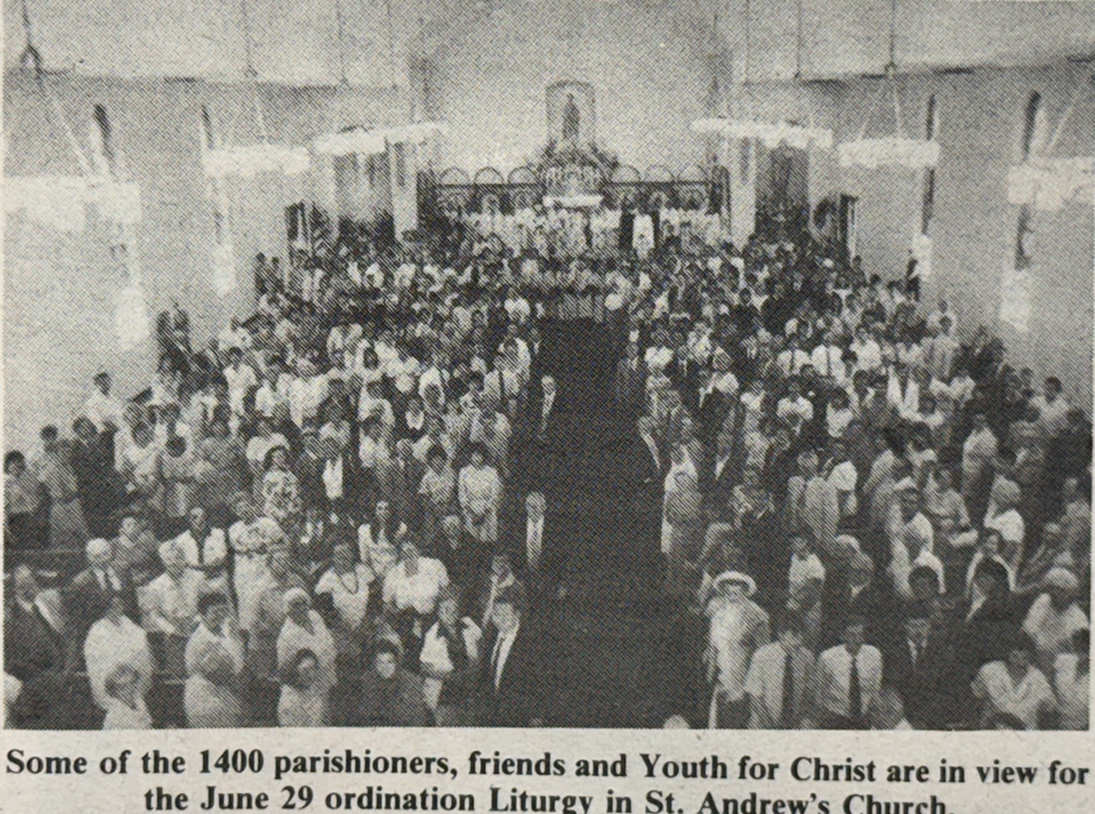
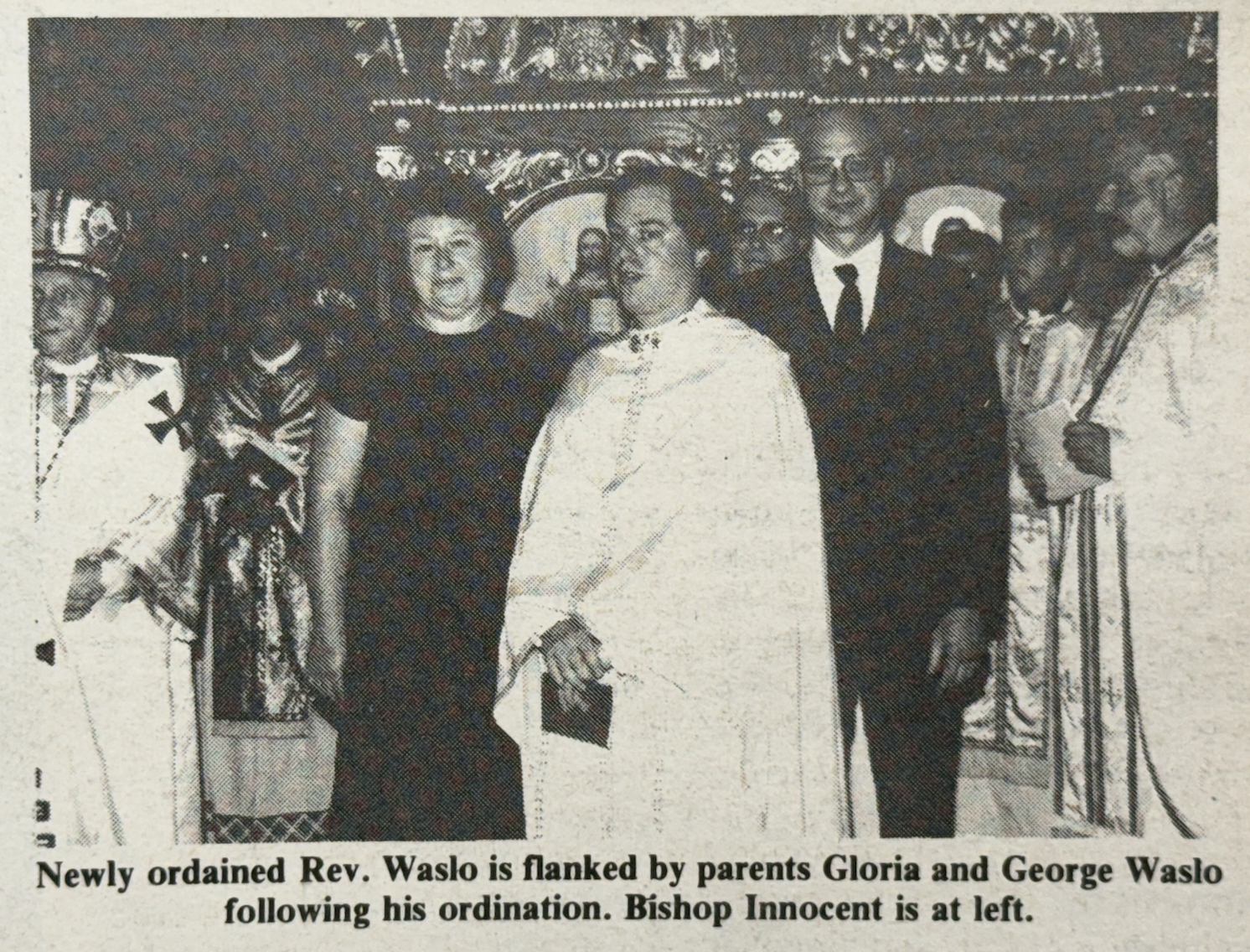
On June 29, 1986, more than 1,400 faithful filled St. Andrew Ukrainian Catholic Church in Parma, Ohio. Clergy, family, friends and pilgrims gathered for the closing Divine Liturgy of the annual Youth for Christ celebration. During that joyful liturgy, a young seminarian, Rev. Peter Damian Waslo, was ordained to the priesthood.
Forty years later, Monsignor Peter Waslo remembers that day with remarkable clarity.
"It was packed," he recalls with a smile. "Bishop Robert wanted to ordain me during Youth for Christ because he wanted to foster vocations. He wanted young people to see that here was a young man saying yes to Christ."
Yet that joyful celebration was not the beginning of his vocation, but the culmination of a journey that had begun years earlier through the quiet witness of his family, parish and prayer.
Growing up, faith was never something reserved for Sundays. It shaped the rhythm of daily life and the Church stood at the very heart of his family.
A Family Rooted in Faith
For Monsignor Peter, the roots of his vocation were planted long before he entered the seminary. They were nurtured in a home where faith was woven into everyday life and where the parish was an extension of the family.
"My parents were always active and involved in the parish," he recalls. "We came to church, worshipped together, and whenever there was something to do in the parish, we were always there to help."
As a teenager, however, the priesthood was not his first career plan, "Up until I was about sixteen, I thought I wanted to become a pharmacist because I wanted to do something where I could help people."
Even then, the desire to serve others was already taking shape. Over time, that desire found a deeper expression as he watched the priests in his parish accompany people through every stage of life. "They were always there for the people. They knew them, cared for them and took time to be present with them. I always admired that. I thought, 'That sounds pretty good. I can do that.'"
Alongside the example of those priests, several people gently encouraged his vocation. He speaks with particular gratitude about Monsignor Michael Cokmolany and Father Peter Podoliak, whose pastoral witness left a lasting impression, as well as Sister Tekla, who took the time to speak with him about the priesthood during his high school years. "Even today I tell her, 'I'm a priest because of you. You took the time to talk with me and encourage me."
Yet no influence was greater than that of his parents. "My father was just a regular working man. He was an electrician. He worked hard, but he was also a man of prayer."
One childhood memory has remained with him throughout the years. "Sometimes I'd accidentally walk into my parents' bedroom and see him sitting there praying. I never wanted to disturb him. I would just think, 'Wow... he's very solid in his prayer life.'"
Prayer was not simply an individual practice but the heartbeat of family life. "My mother and father were always people of prayer. Before every meal and every evening we prayed together. The Church was truly the center of our life."
Looking back after four decades of priesthood, Monsignor Peter realizes those early experiences shaped far more than his vocation — they shaped his understanding of God Himself. "My father was fair. You could always talk to him. Even if you didn't agree with his answer, you knew he had your best interests at heart."
That experience of fatherhood continues to influence his ministry today. "When people have fathers who truly love them and care for them, it becomes much easier to understand God as a loving Father."
Seminary: A Time of Formation
After discerning his vocation, Monsignor Peter entered St. Basil's College Seminary in Stamford, Connecticut, and later continued his formation at Saint Josaphat Seminary in Washington, D.C. Those years demanded discipline, perseverance and a willingness to trust the process of formation.
"It was very demanding," he recalls. "There was a great deal of study and formation. Looking back now, though, I'm thankful for that time."
Four decades later, he views those years through a very different lens. What once seemed challenging became one of the greatest gifts God gave him in preparation for priestly ministry.
"It gave me time for prayer and taught me discipline. It taught me how to use my time well and to reflect more deeply."
His seminary education extended far beyond the classroom. It immersed him in the rich spiritual, historical and liturgical heritage of the Ukrainian Catholic Church. "I learned Ukrainian history, Church history, Byzantine tradition, Old Church Slavonic, Ukrainian — it was really the whole package. Looking back, I'm grateful for everything we received."
Today, whenever he meets seminarians, Monsignor Peter encourages them to embrace every aspect of their formation, even when it feels demanding or difficult.
"If I could speak to my younger self I'd simply say, 'Accept what they're giving you. You may not appreciate it now, but it's going to help you in the long run.'"
That perspective, gained through forty years of priestly ministry, reflects one of the enduring lessons of his vocation: God's formation often bears its richest fruit only with time.
"It Was a Happy Day"
By the summer of 1986, years of discernment and formation had led Monsignor Peter to the day he had long awaited.
Ordained during the closing Divine Liturgy of the annual Youth for Christ celebration, he entered the priesthood surrounded by family, friends and more than 1,400 faithful who had gathered to witness the occasion. Even after forty years, the emotions of that day remain vivid.
"It was an emotional day because you realize you're going from one life to another."
Searching for words to describe that transition, he compares ordination to marriage. "You suddenly realize your life no longer belongs just to you. As a priest, you're called to care for the people wherever the Church sends you."
Yet above all, he remembers the overwhelming joy, "It was a happy day," he says. "It was the best decision I ever made in my entire life—to say yes."
One moment from the ordination liturgy remains especially dear to him.
"When they started singing Mnohaya lita, it suddenly struck me. I remember thinking, 'Why are they singing this for me?' I never thought of myself as anything extraordinary. I was just an ordinary guy who had said yes."
His family shared deeply in that joy, "My parents were very proud. My grandparents were just ecstatic. The Church had always been central to our family, so having someone ordained to the priesthood meant so much to all of them."
Even amid such a momentous celebration, there was room for family humor. His sister's birthday happened to fall on the day of his first Divine Liturgy as a newly ordained priest.
"I apologized to her," he says with a laugh. "I told her, 'Sorry your birthday has become my celebration.' We still joke about it today."
For Monsignor Peter, June 29, 1986, marked far more than the beginning of priestly ministry. It was the joyful fulfillment of a calling that had taken root years earlier in the faith of his family, the witness of devoted priests and religious, and a simple desire to spend his life serving God and His people.
"I've Always Wanted to Help People"
When asked about the greatest joy of priestly ministry, Monsignor Peter's answer comes without hesitation.
"Just the people."
For forty years, priesthood has meant accompanying people through every season of life — celebrating joyful milestones, offering comfort in times of suffering and simply being present when needed most.
"Whether they're welcoming a new baby, celebrating a wedding, facing illness, sitting in a hospital, or even nearing the end of life — you walk with them through all of it."
He considers this one of the greatest privileges of priesthood. "As a priest, the doors are always open for you. You're invited into people's lives at their happiest moments and their most difficult ones. To be able to walk with them — that's my greatest joy."
That commitment to accompaniment has shaped his ministry in countless practical ways. His work has never been limited to celebrating the Divine Liturgy or administering the sacraments. Instead, he has sought to remain actively involved in the lives of the people entrusted to his care.
"I like to visit newly married couples a few months after their wedding. I tell them I'm there to bless their home, but really I just want to see how they're doing."
The same pastoral concern extends to the youngest members of the parish, "I always buy a teddy bear. That's a gift from the parish. Every child should have a teddy bear. Then I sit down with the family and simply ask how they're doing."
For Monsignor Peter, these simple gestures often become opportunities for evangelization — not through programs or lengthy conversations, but through presence, attentiveness and genuine care.
"Sometimes you don't have to offer solutions. You simply listen."
Looking back, he sees a thread connecting his earliest dreams to his four decades of priestly ministry, "I've always wanted to help people. That's why I first thought about becoming a pharmacist. That's why I became a priest."
After forty years, that desire remains unchanged.
Learning From the People
While priests are called to teach and guide the faithful, Monsignor Peter believes that priests also learn from the people they serve, "Parishioners will tell you what they think. And I've always appreciated that."
Over the years, he has come to value that honesty as an essential part of pastoral ministry. Listening to people's experiences, struggles and hopes has helped him better understand how to serve them. "You have to meet people where they are. If you don't know where they are in life, how can you help them?"
For Monsignor Peter, ministry is not about imposing solutions or forcing change. Rather, it is about accompanying people with patience, compassion and understanding. "You can't force people. You teach them, you love them, you try to be an example, and you hope they eventually come to see what is best for them."
That approach has shaped his priesthood for four decades. Whether working with families, young people, the elderly or those facing personal struggles, he believes genuine pastoral care begins with listening.
As he reflects on the lessons he has learned through the years, Monsignor Peter remains grateful for the countless people who have shared their lives, their faith and their experiences with him. In many ways, they have helped shape the priest he has become.
A Changing Church
Monsignor Peter has witnessed significant changes within the Ukrainian Catholic Church in the United States.
"When I was growing up, our church was primarily English-speaking. Many of the children and grandchildren of immigrants had become fully integrated into American life."
The arrival of new immigrants following Ukraine's independence, and later the full-scale war, transformed parish life in many communities. New generations brought renewed energy to parishes while strengthening ties to the language, traditions and spiritual heritage of the Ukrainian Catholic Church.
"Today our church is a Ukrainian-speaking church. You have to know Ukrainian to be able to serve the people, be bilingual, basically."
For Monsignor Peter, these changes have highlighted the importance of responding to the needs of those arriving in a new country and searching for a sense of community and belonging.
"The big change is the language. It's being able to meet people where they're at and help them in whatever they need — whether it's spiritually, with immigration, economically, whatever it is."
While the Church today looks different from the one he knew as a young man, Monsignor Peter sees these changes as a sign of life and renewal. He believes that welcoming new generations and accompanying them in their faith journey will continue to strengthen parish communities and help ensure the future of the Ukrainian Catholic Church in the United States.
The Priest Today
When Monsignor Peter was ordained in 1986, the expectations placed on priests were different from those of today. Over the years, he has seen the role of the priest become increasingly focused on outreach, presence and personal connection.
"In the past, people simply came to church. Today we have to go out to them."
He believes priests can no longer wait for people to find their way to the parish. Instead, they must actively seek opportunities to encounter people where they live, work and gather.
"We can't wait for people to come to our doorstep. We have to be present in the community."
For Monsignor Peter, that presence extends far beyond parish activities. A priest should be visible not only within the church, but also throughout the wider community.
"If there's a Memorial Day service, a Fourth of July celebration, an ecumenical prayer service — you should be there. People should know who you are."
At the heart of this approach is a simple conviction: people respond to genuine care and authentic relationships.
"If the priest truly has an interest in people, they respond to that. They know when someone genuinely cares."
He often describes today's priest as someone called not only to preach the Gospel, but also to build relationships, foster community and accompany people in their daily lives. In a society filled with distractions and competing priorities, he believes the Church must remain present, approachable and engaged.
For Monsignor Peter, priesthood today is not about waiting behind parish doors. It is about going out to meet people, listening to their stories and helping them encounter Christ in the midst of everyday life.
A Life Sustained by Prayer
Monsignor Peter does not hesitate when asked what continues to sustain him.
"Prayer, prayer, prayer, prayer, prayer."
He laughs after repeating the word five times, but his message is unmistakable.
"If you don't pray, you can't do this."
From his earliest days in the seminary to his decades of parish and chancery ministry, prayer has remained the foundation of his vocation. It is not something reserved for church services or special occasions, but a constant presence throughout the day.
"It can be while you're driving. It can be sitting quietly at home. It can be during the Divine Liturgy."
For Monsignor Peter, prayer is what keeps a priest grounded and focused on the purpose of his ministry. It is also where he turns when faced with situations that seem beyond his own wisdom or ability.
"Sometimes someone comes with a difficult situation, and I simply pray, 'Lord, help me know how to help this person.'"
Over the years, he has learned that priests are not expected to have all the answers. What they are called to do is remain close to God and trust in His guidance.
Prayer, he believes, is not simply one aspect of priestly life — it is the source from which everything else flows. Whether celebrating the Divine Liturgy, accompanying families, visiting the sick or offering counsel to those in need, his ministry begins and ends in prayer.
After four decades of priesthood, Monsignor Peter remains convinced of one simple truth: without prayer, it is impossible to remain faithful to the vocation God has entrusted to you.
Looking Back With Gratitude
As Monsignor Peter reflects on forty years of priestly ministry, he speaks less about accomplishments than about gratitude.
"When I look back on my life, I've gone places and done things I never imagined possible."
The years have brought challenges, unexpected opportunities and countless encounters with people whose lives became part of his own. Yet when asked what he hopes others will remember about him, his answer is simple and deeply personal. "I hope they can say that I really loved my people, that I really loved God, and that I served well." Those words reveal the heart of a priest who has spent four decades accompanying others through moments of joy, sorrow, celebration and loss.
Monsignor Peter is also quick to remind people that priests are not perfect. "We're not saints. We're human beings just like everyone else. We make mistakes. But we try our best to offer ourselves to the Lord."
For him, priesthood has never been about recognition or achievement. Rather, it has been a lifelong effort to remain faithful to God's call and to serve the people entrusted to his care. Monsignor Peter remains grateful for the journey that began with a simple "yes" and continues each day through prayer, service and trust in God's providence.
A Message for Young People
When asked what advice he would offer young people today, Monsignor Peter's answer is both simple and direct.
"Don't discount the Lord."
He understands the many pressures young people face today — education, careers, relationships, social media and uncertainty about the future. Yet he believes that faith remains an essential source of strength and guidance amid life's challenges.
"But you're not alone. Keep prayer in your life. Seek advice from people you trust. We were never meant to do life by ourselves."
Throughout the interview, Monsignor Peter repeatedly returns to the importance of community. Just as his own vocation was nurtured by family members, priests, religious sisters and parishioners, he believes young people need trusted mentors and companions who can help guide them through life's important decisions.
For those considering the priesthood or religious life, he offers simple but heartfelt encouragement. "You don't have to be a saint. If you love to pray and if you love helping people, this is a beautiful and rewarding life."
He hopes young people will remain open to God's call, whatever form it may take. Whether that call leads to marriage, family life, the priesthood, religious life or another path of service, he believes God continues to guide those who seek Him with sincere hearts.
Monsignor Peter remains convinced that no one walks life's journey alone. God is always present, offering guidance, strength and hope to those willing to listen.
Forty Years of Saying "Yes"
From a teenager inspired by the example of his parents, priests and religious sisters to a priest who has spent four decades serving God's people, Monsignor Peter's vocation has been shaped by faith, prayer and a willingness to answer God's call.
His journey has taken him through parish ministry, leadership, challenges, joys and countless encounters with people whose lives became part of his own. Through it all, he has remained guided by the same conviction that first led him to the priesthood: a desire to serve God by serving others.
Today, Monsignor Peter continues to offer the same witness that inspired him as a young man — one rooted in prayer, compassion and presence. His story is a reminder that a vocation is not a single moment of saying "yes" to God, but a lifelong response renewed day after day.