- Strategic Resources
- Archeparchy
- Our faith
- Offices and ministries
- News and Updates
- Events
- Parishes
- Youth Protection
- Subscribe to "The Way"
A delegation from the Ukrainian Catholic University, which visited the Ukrainian Catholic Archeparchy of Philadelphia during the Strategic Working Session dedicated to evangelization, shared reflections on the life of Ukrainian Catholic communities in the United States, the challenges facing the Church today, and the role of parish communities in the future of the Ukrainian Catholic presence in America.
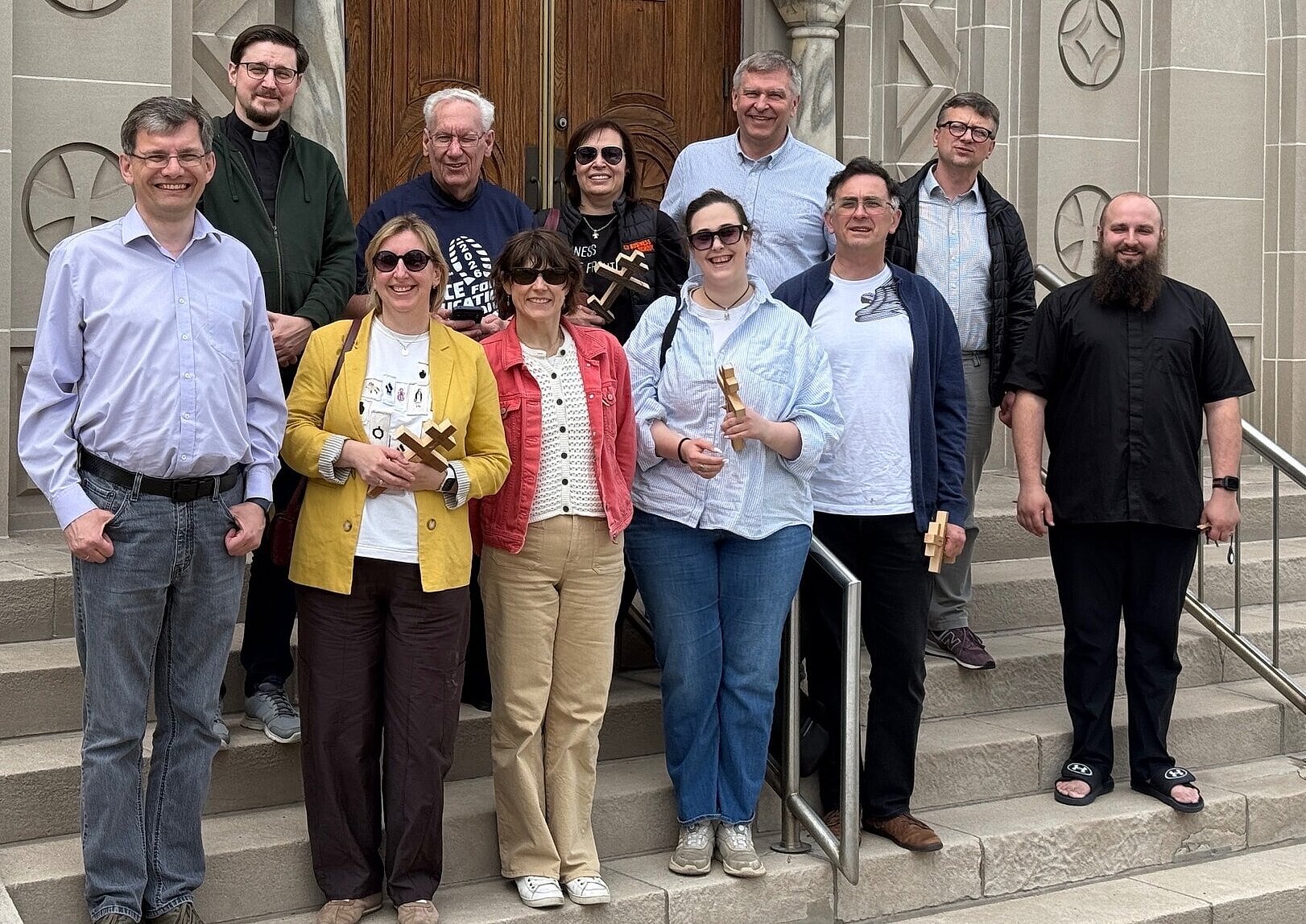
The delegation included UCU Rector Taras Dobko; Founding Dean of the UCU Faculty of Applied Sciences Yaroslav Prytula; Dean of the UCU Faculty of Social Sciences Volodymyr Turchynovskyy; UCU Vice-Rector for Strategic Development, Founding Dean and Chair of the Supervisory Board of the UCU Business School Sophia Opatska; Director of the UCU Business School Yaryna Boychuk; Head of the UCU Student Recruitment Office Hannusia Turchynovska; as well as Research Fellow at the Institute of Church History and UCU lecturer Anatolii Babynskyi. During their visit, the guests participated in the Strategic Working Session dedicated to evangelization and visited parishes of the South Anthracite Deanery.
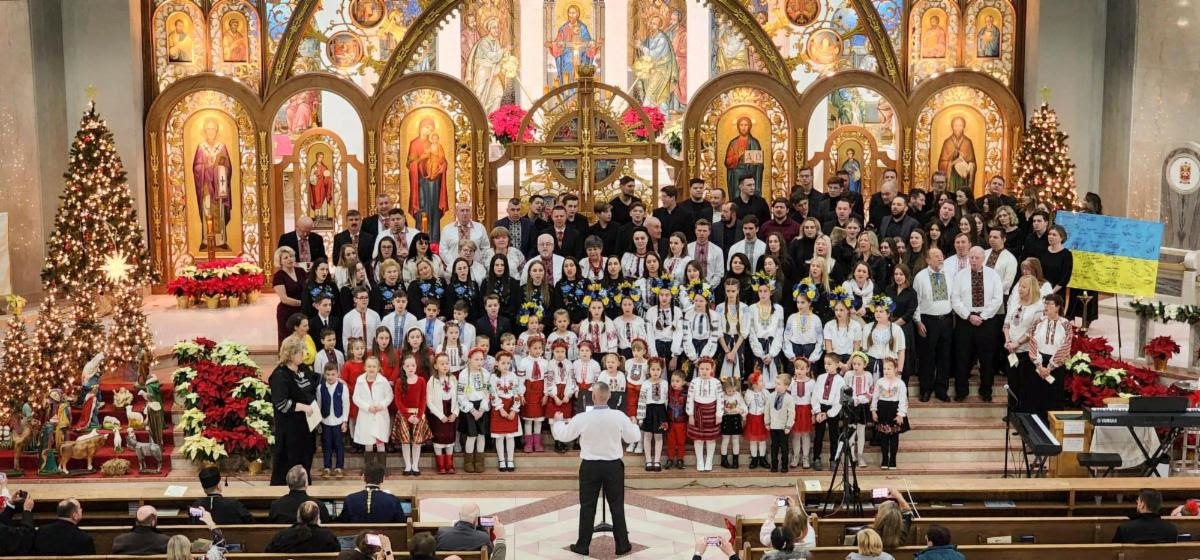
One of the first strong impressions for the UCU representatives was the Cathedral of the Immaculate Conception in Philadelphia.
UCU Rector Taras Dobko noted that the grandeur of the cathedral immediately draws attention as a testimony to the deep faith of Ukrainian immigrants and their desire to build Church life far from their homeland.
“A magnificent work of art and an expression of the desire of Ukrainian faithful in America to live with God in their hearts and communities,” he remarked.
According to Taras Dobko, it became especially clear through acquaintance with the life of the Archeparchy why evangelization is one of the key priorities for its development today.
The historic Ukrainian parishes of Pennsylvania and the churches built by the first generations of Ukrainian immigrants also left a profound impression on the delegation.
“For the first Ukrainians in America more than one hundred years ago, the Church was at the same time a state, a school, and a community,” said Yaroslav Prytula. According to him, parishes became places where Ukrainians could preserve their faith, culture, and sense of belonging even far from their homeland.
Yaroslav Prytula also emphasized the active role of the laity in parish life and the responsibility communities carry for the development of Church life.
According to him, many processes at the Ukrainian Catholic University are built upon the principles of the Social Doctrine of the Church, particularly the principle of subsidiarity, which emphasizes the responsibility of communities for their own life and development.
“Here in America, I saw this principle in action — in the organization of Church management and parish life,” he noted.
Yaroslav Prytula stressed that the people who built and continue to build parish communities carry genuine responsibility for their full functioning — from financial support to fostering vibrant parish life.
“This is not a delegated function from above; it is personal responsibility and personal dignity,” he emphasized.
Sophia Opatska noted that visiting the parishes of the South Anthracite Deanery helped her better understand the important role the Church played in the lives of different generations of Ukrainian immigrants. According to her, churches served not only as spiritual centers, but also as centers of cultural, educational, and community life for Ukrainians in North America.
“The Church truly was the center of life, coexistence, and community for Ukrainians,” she remarked, reflecting on the experience of the first generations of Ukrainian immigrants in the United States.
Members of the delegation repeatedly emphasized that these historic parishes carry not only religious significance, but also historical and cultural importance for the Ukrainian presence in the United States.
“These parishes absolutely cannot be lost,” stressed Hannusia Turchynovska, speaking about the need to seek ways to preserve churches and communities even amid modern demographic challenges.
She also shared that she was deeply moved by the dedication of people who continue to sustain parish life despite difficult circumstances.
“The communities that remain there are doing so much to preserve their parishes, their churches, and this living parish life,” she noted.
The UCU representatives also reflected on the role of priests in the life of parish communities.
Sophia Opatska noted that much depends on the energy and openness of the priest, even in communities where many generations of parishioners no longer speak Ukrainian.
“A priest is the promoter and driving force behind any change in a parish — to a great extent, it depends on him whether the parish comes alive or begins to stagnate,” she emphasized.
Yaryna Boychuk also shared that she was especially impressed by the dedication of priests serving small communities under difficult circumstances.
“These encounters will never fade from memory, but instead will remain examples of humility, leadership, and patriotism,” she said.
At the same time, Yaryna Boychuk pointed out that even fully English-speaking clergy and parishioners continue to preserve the life of their parishes and the identity of the Ukrainian Greek Catholic Church.
“Here in the United States, the Church and the community are something so important that people must fight and sacrifice for them, because otherwise they can literally be lost,” she emphasized.
According to her, generations of Ukrainians in the United States cultivated the Church as the foundation of their daily life and community.
At the same time, the guests observed that the Church in the United States today faces new challenges connected with changes in society, migration, and evolving ways of life.
Volodymyr Turchynovskyy noted that parishes today are called not only to preserve the legacy of previous generations, but also to seek new forms of presence and evangelization in the modern world.
“America has, to a large extent, become missionary territory,” he stated, emphasizing the importance of cultivating a missionary spirit and the ability to create new communities.
He also stressed that the Church is called to remain alive.
“The Church is called to remain alive — a Church that shares love and inspires faith,” said Volodymyr Turchynovskyy.
Another important topic of discussion was the formation of vibrant parish communities and a sense of belonging among the faithful.
Taras Dobko emphasized that evangelization today is impossible without personal witness and authentic human relationships.
“Evangelization must also be an invitation into community,” he stressed, noting that modern people especially need support, closeness, and a sense of belonging within a living Church community.
Taras Dobko also emphasized the importance of interparochial cooperation and diverse spiritual initiatives for the development of Church communities.
“People are very different, and each person has a different dynamic of spiritual life. We need to offer a broad range of spiritual opportunities,” he said.
According to the UCU Rector, such cooperation is especially important for smaller parishes, which often do not have sufficient resources on their own to develop various initiatives.
Members of the delegation positively reflected on the Strategic Working Session dedicated to evangelization and noted the openness of clergy and laity to engage together in discerning future directions for the Archeparchy.
Sophia Opatska remarked that she was impressed by people’s willingness to dedicate time to serious conversations about the future of the Church.
“Probably any corporation would envy the way people gathered to speak about strategy,” she observed.
Hannusia Turchynovska also emphasized the importance of flexibility in strategic planning and the ability to respond to the new challenges of the modern world.
The UCU representatives expressed hope for continued cooperation between the university and the Ukrainian Catholic Archeparchy of Philadelphia in the areas of evangelization, youth ministry, formation, and the development of parish initiatives.
“Our experience — the experience of the entire university, its faculty, team, and students — can truly be valuable,” noted Hannusia Turchynovska.
By Oksana Loziak