“I Am Able to Be Here Today Only Because of One Reason. My Great-Grandmother Survived the Holodomor”: Victims of the Holodomor Genocide Remembered in New York

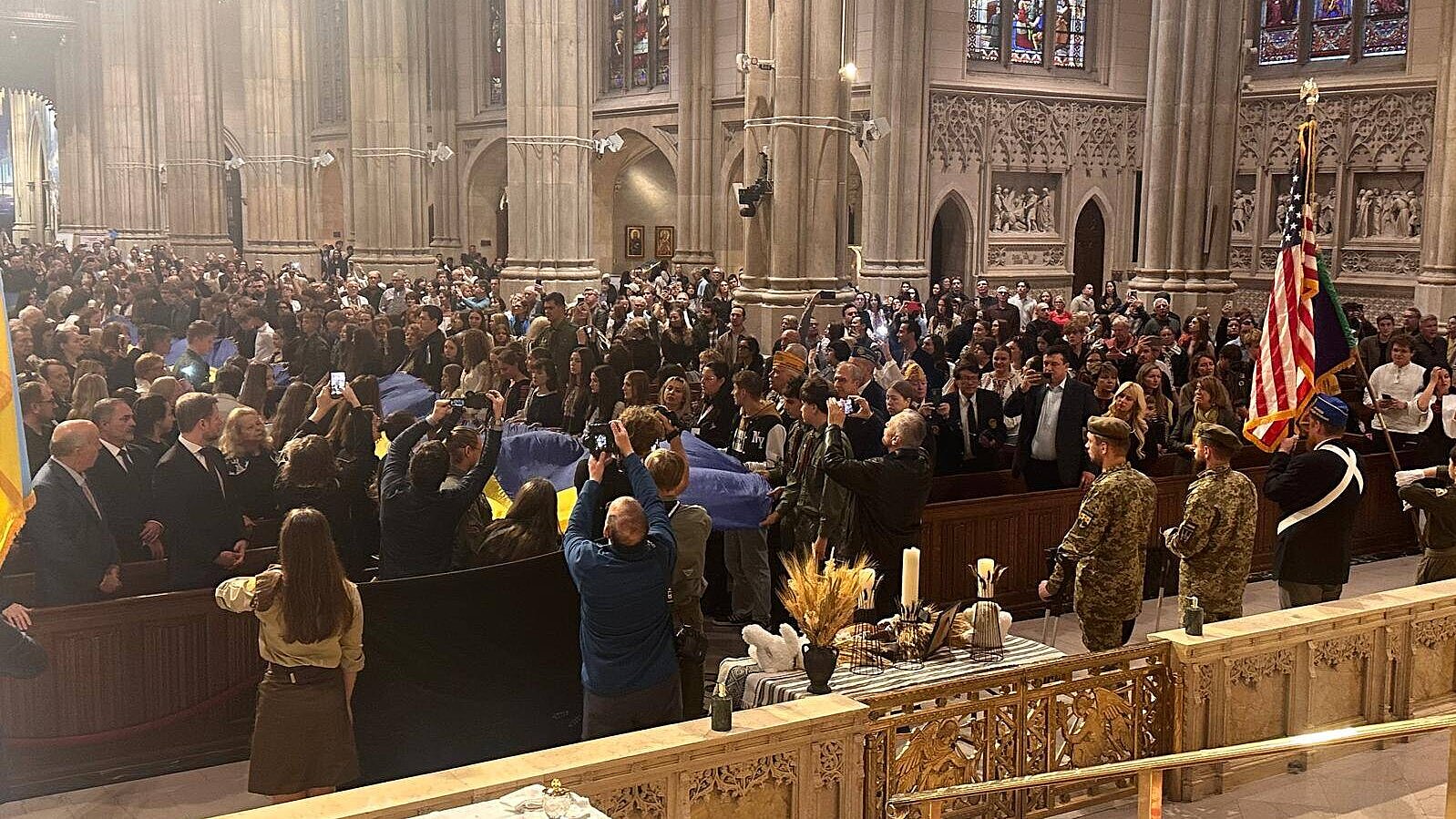
On Saturday, November 21, 2026, the annual commemoration of the victims of the 1932–1933 Holodomor Genocide in Ukraine took place at St. Patrick’s Cathedral in New York City. Clergy, diplomats, veterans, members of community organizations, Ukrainian families, children, and youth took part in the commemoration. During the procession, children and young people carried stalks of wheat into the cathedral in memory of the millions of victims of the Holodomor.

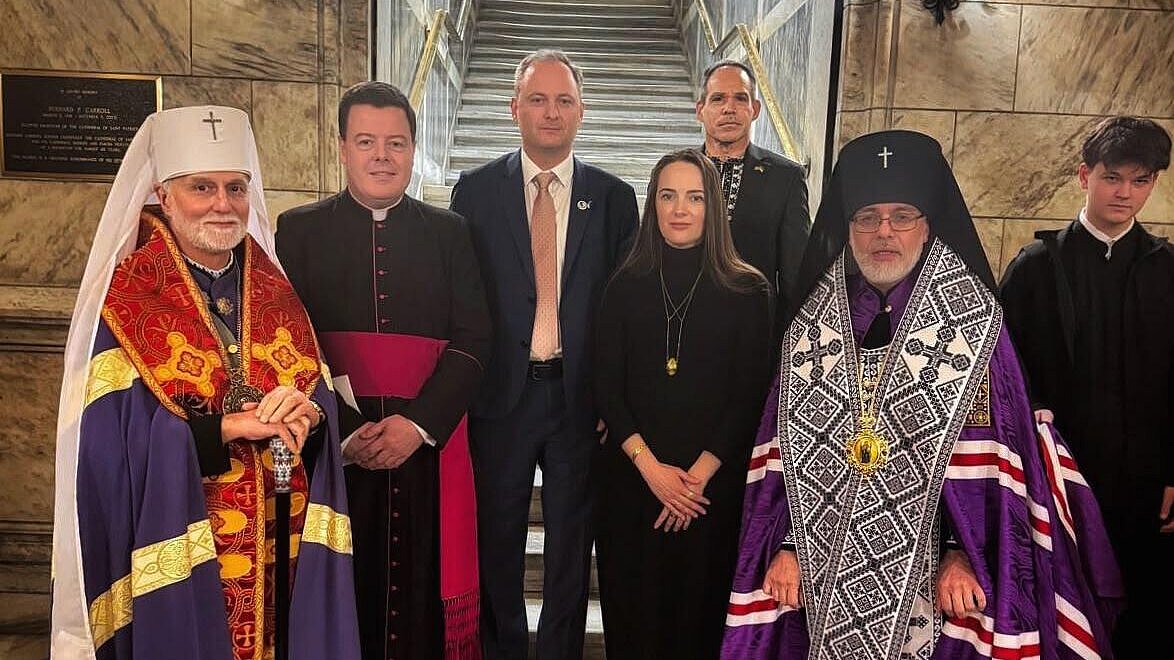
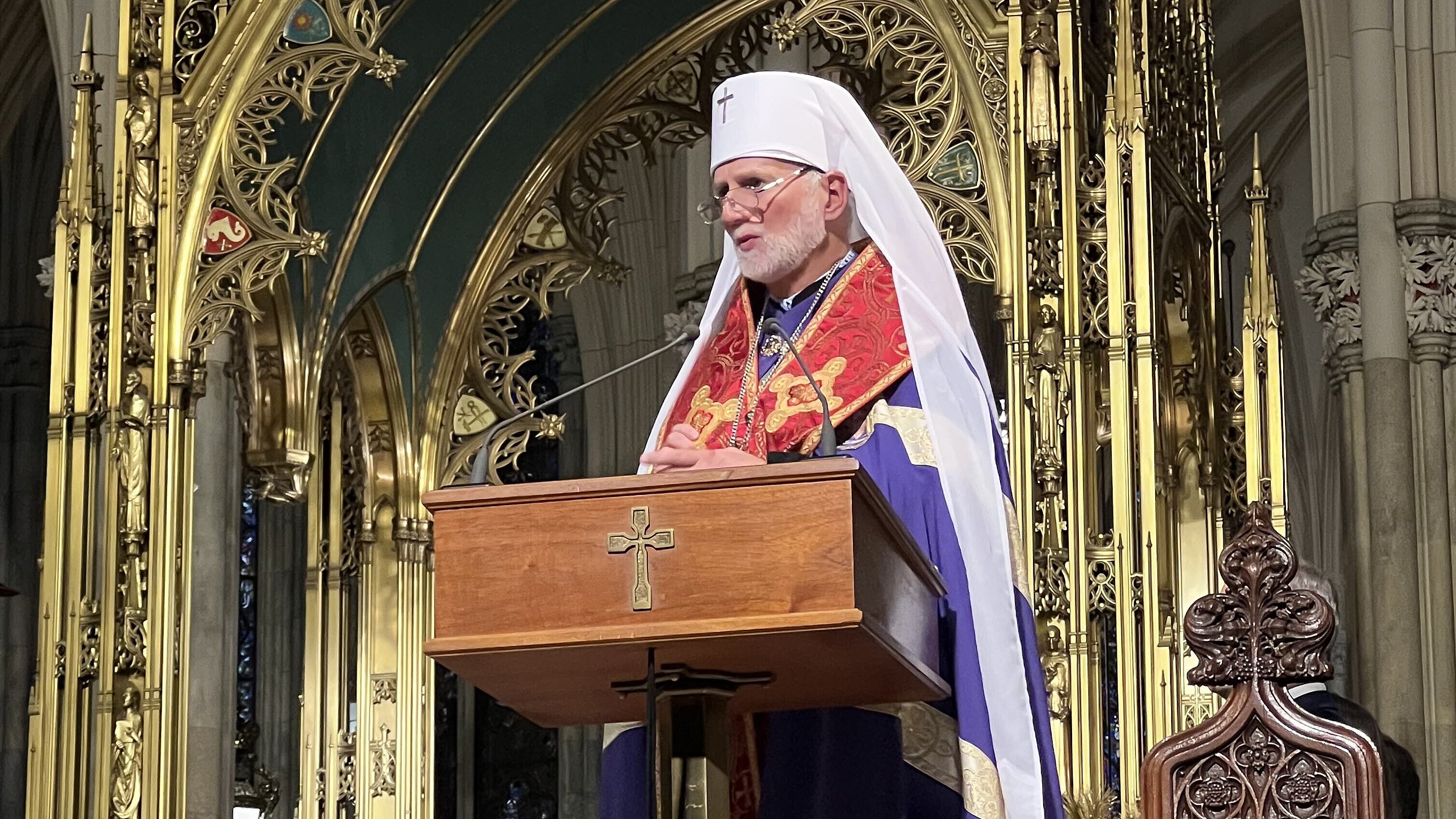
The ecumenical memorial service (Panakhyda) was led by Metropolitan Borys Gudziak, Archbishop of Philadelphia, and Archbishop Daniel Zelinsky of the Ukrainian Orthodox Church of the USA, who addressed those gathered before the memorial service began: “Today, our duty is to speak the truth with clarity. The Holodomor was a deliberate crime against the Ukrainian people, intending to break their resistance and enforce their submission. It was genocide. Here, within this cathedral, we affirm that every victim reflects the image of God. No political objective could justify the suffering of people. No ideology could diminish their sacred worth. Their lives remain precious, even where their names and burial places have been lost in the world until this day.”

Michael Sawkiw, Jr., president of the Ukrainian Congress Committee of America (UCCA), served as master of ceremonies. He called on the international community to hold Russia accountable for its crimes against Ukraine: “This is why remembrance without accountability is insufficient. The Soviet crimes of the Holodomor must remain exposed in the historical record, their archives open, their victims honored, and Stalinism condemned without qualification. For today's crimes, Russia's political and military leadership must face prosecution for war crimes, crimes against humanity, the crime of aggression, with charges for genocide pursued appropriately. There can be no immunity for those who commit genocide because there can be no peace that rewards aggression. And there can be no reconciliation without justice.”

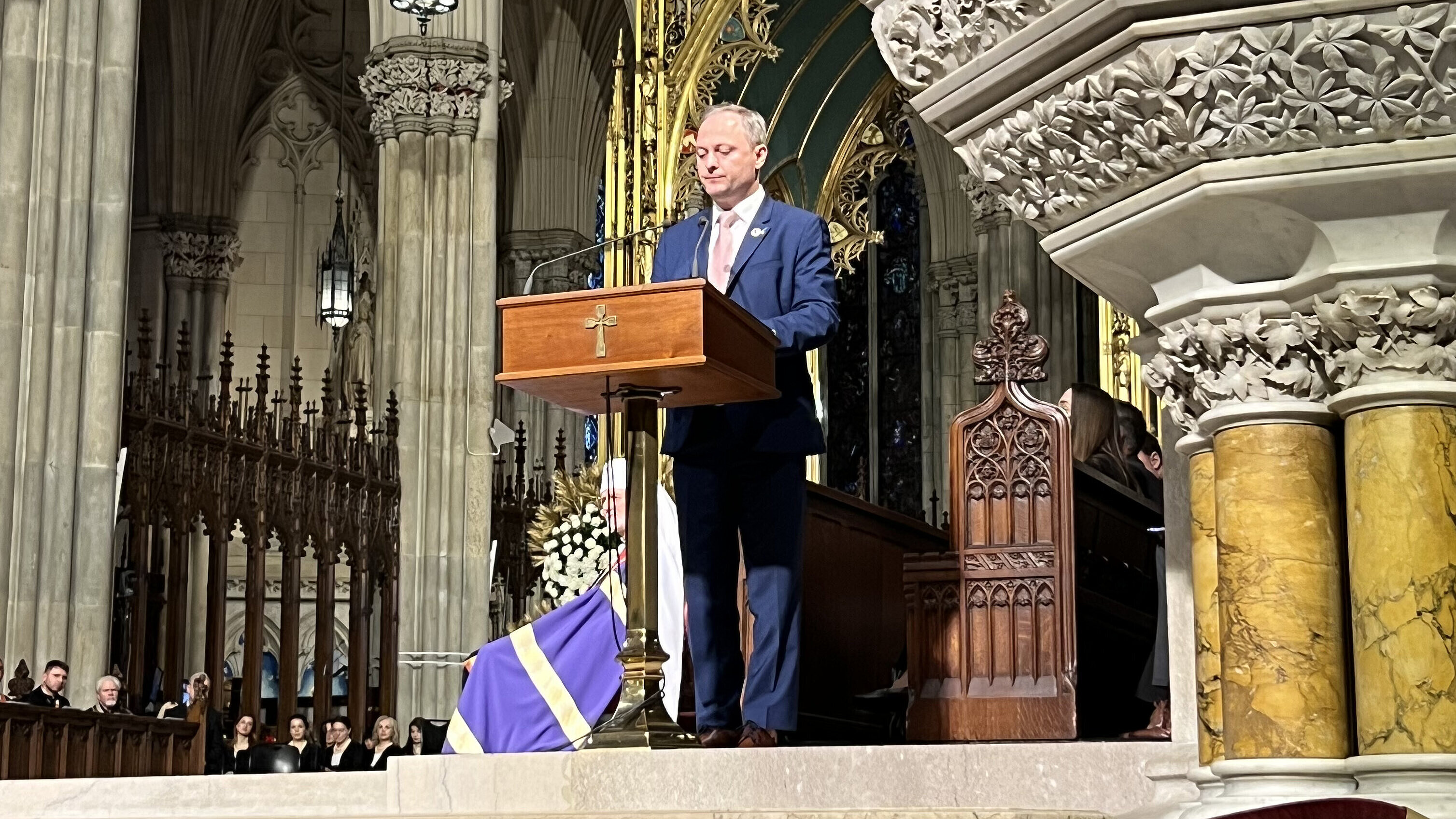
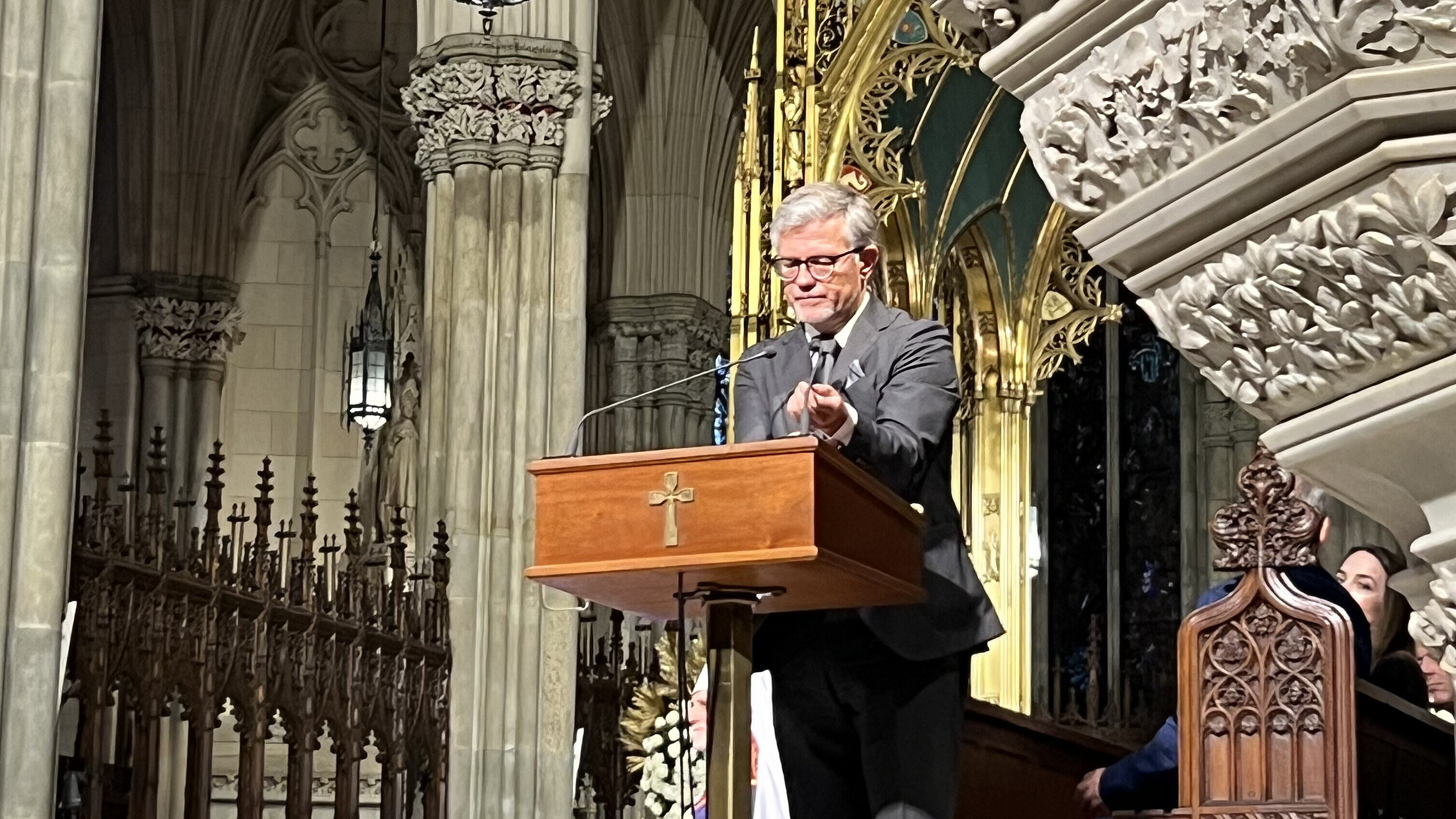
Andrii Melnyk, Permanent Representative of Ukraine to the United Nations, called on the U.S. House of Representatives to adopt a resolution recognizing the Holodomor as genocide against the Ukrainian people: “The Ukrainian people remain grateful to the U.S. Senate for adopting Resolution 435 in October 2018, recognizing that Joseph Stalin and those around him committed genocide against the Ukrainian people in 1932–1933. And today, from this very pulpit in America's parish church, I wish to appeal once again to the U.S. House of Representatives. Let us finally see the adoption of House Resolution 915, recognizing the Holodomor as genocide. It is still hidden somewhere under the carpet in the Committee on Foreign Relations.”

Denys Sienik, Chargé d’Affaires of Ukraine to the United States, also addressed those gathered: “Today, watching Ukrainian-American veterans, young children from Plast, SUM, and local Ukrainian schools with wheat stalks in their hands walk down the center aisle of this cathedral, we saw the living proof that Stalin failed. Every candle we lit today is a testament to our survival. It is our tribute to the grandparents who buried their children in silence, and to the mothers who risked their lives to hide a handful of grain so that the next generations might live.”

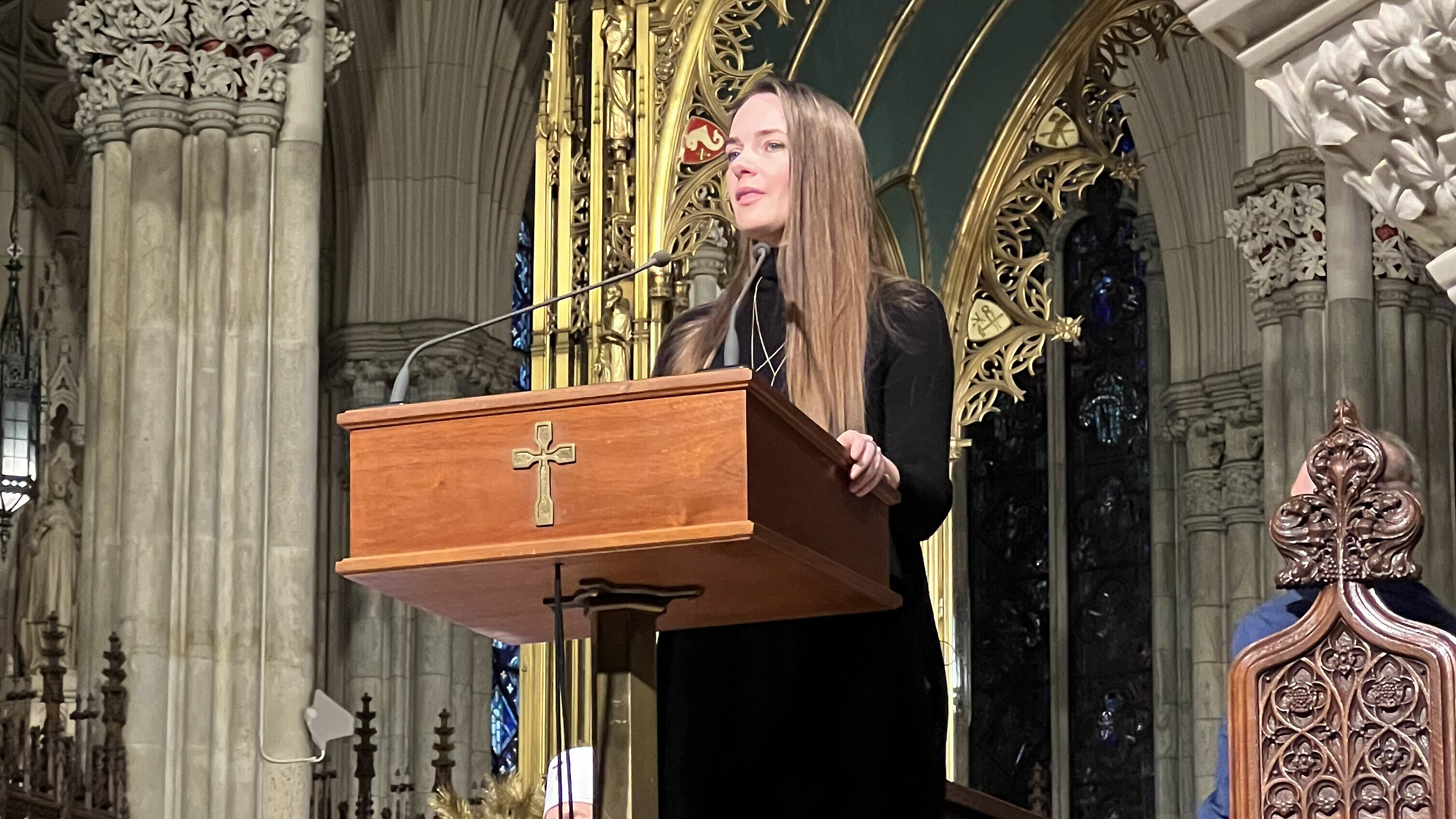
Oleksandra Matviichuk, a Ukrainian human rights lawyer and head of the Center for Civil Liberties, an organization that shared the 2022 Nobel Peace Prize, recounted her family’s story. “I am able to be here today only because of one reason. My great-grandmother survived the Holodomor. It was a difficult task for her. The vast majority of her family died, and only she and her little sister remained. I know this story from my mom because my great-grandmother refused to share her experience. Being a child, I asked her several times, but it was too painful for her to speak. And today, all together, we are remembering our dead. The Holodomor is a story about pure horror, but it's also a story about unbelievable strength to continue to fight for life, even in unbearable conditions. Current generations have to do two tasks in parallel: to remember the dead and to protect the living, because Russia's war of aggression against Ukraine is also genocidal.”

Metropolitan Borys Gudziak opened his closing remarks with a quotation from St. Paul’s Letter to the Romans: “Hope does not disappoint, because the love of God has been poured out into our hearts through the Holy Spirit that has been given to us” (Romans 5:5). “And yet, dear sisters and brothers, we need to depart from here reaffirmed, convicted, renewed in hope. In 1932–33, Ukrainian dignity and hope was to be quashed. In World War II, when seven million inhabitants of Ukrainian lands were killed, we were to be finished. And in this current war, the goal is to cancel. Cancel our churches, our language, our identity, our very existence. And yet, dear brothers and sisters, we are alive. The world has never been so Ukrainian.”

The Metropolitan also explained why it is important for Christians to gather for such memorial services: “Why are we here? Because we believe. We have faith. We know that our victims are alive. They are in the bosom of Abraham. They're at the table of the Lord. And we know God's truth will prevail. These gatherings, which have become, at the end of November, throughout the world, wherever Ukrainians are, the most unifying gatherings of our brothers and sisters, are so not only because we are commemorating the dead, but because we believe they live and because we have faith in life and in God's solidarity with us.”
In conclusion, the Metropolitan urged those gathered to continue supporting Ukraine: “Pray, advocate, and help. Do what you can. […] Since the beginning of this war, I've been in Ukraine 58 times, and the people say, ‘Thank you, Americans, for your help.’ And they say, ‘Thank you for being close to our pain, and tell them we're not giving up. We're exhausted. We're not giving up. We have no choice, and yet we choose to stand, to fight, to defend.’

“Pray, advocate, and help. Dear brothers and sisters, hope does not disappoint because the love of God has been poured into our hearts through the Holy Spirit. The Holy Spirit is in your heart. Feel it, and his hope will prevail.”

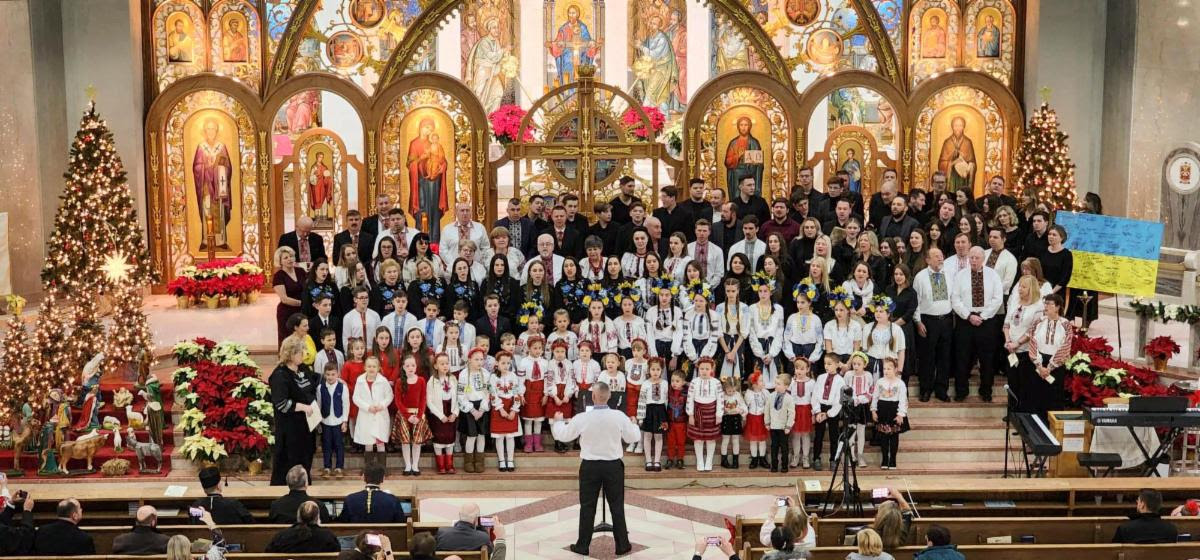
Following Metropolitan Borys Gudziak’s closing remarks, the Ukrainian Chorus Dumka of New York, under the direction of Vasyl Hrechynsky, performed the spiritual hymn “Bozhe Velykyi, Yedynyi” (Prayer for Ukraine). As the choir sang, Ukrainian youth unfurled a banner reading “Different weapon 1933, same genocide 2022.” The commemoration concluded with a performance of Myroslav Skoryk’s “Melody.”

Watch the full livestream recording from St. Patrick’s Cathedral.

By Halyna Vasylytsia

Related News

More News
Delegation from Ukrainian Catholic University Visits the Ukrainian Catholic Archeparchy of Philadelphia

#U.S.

#Ukraine

#Archeparchy

#Parishes

Delegation from Ukrainian Catholic University Visits the Ukrainian Catholic Archeparchy of Philadelphia

Metropolitan Borys Gudziak Honors Sister Sharbel and Father Brian Kolodiejchuk with the 2026 Metropolitan's Lifetime Service Award

#U.S.

#Archeparchy

Metropolitan Borys Gudziak Honors Sister Sharbel and Father Brian Kolodiejchuk with the 2026 Metropolitan's Lifetime Service Award

Ukrainian Catholic Archeparchy of Philadelphia Holds Strategic Planning Session on Evangelization, Co-responsibility and Vocations

#U.S.

#Archeparchy

Ukrainian Catholic Archeparchy of Philadelphia Holds Strategic Planning Session on Evangelization, Co-responsibility and Vocations

“A Crisis of Vocations or a Crisis of Understanding One's Own Calling?” by Bishop Benedict Aleksiychuk

#U.S.

#Archeparchy

#Sermon

“A Crisis of Vocations or a Crisis of Understanding One's Own Calling?” by Bishop Benedict Aleksiychuk