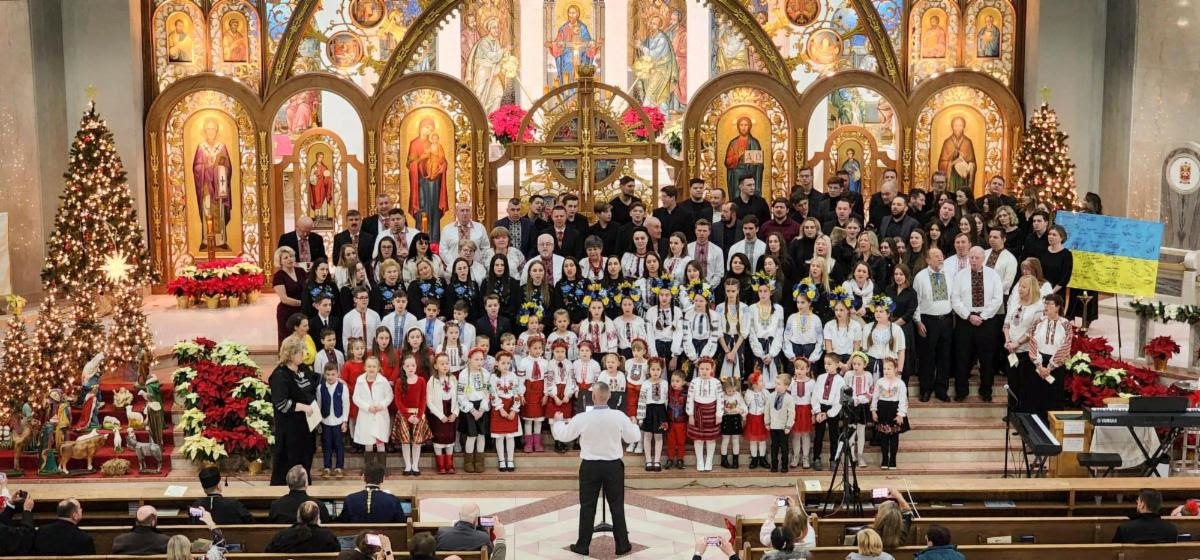
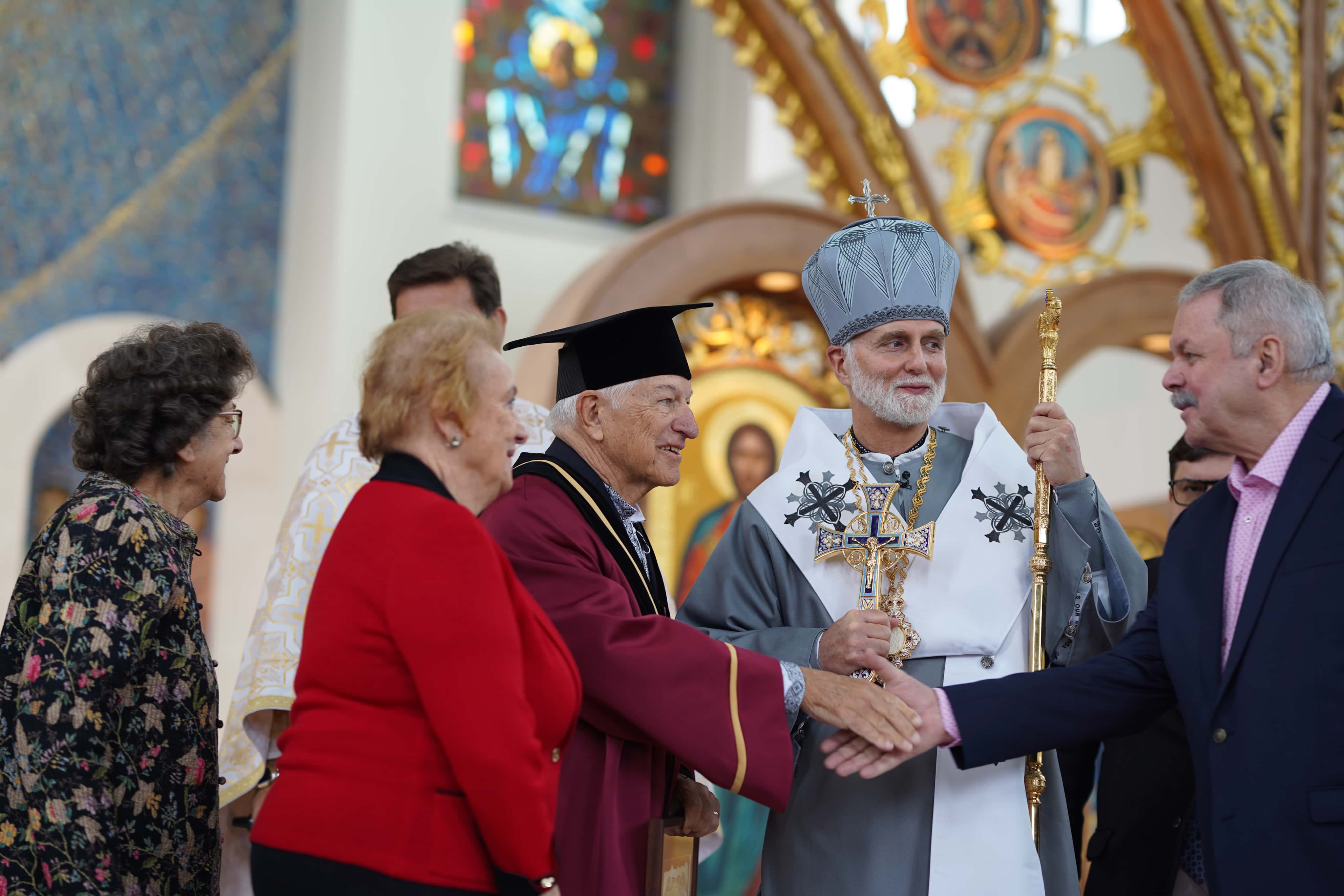
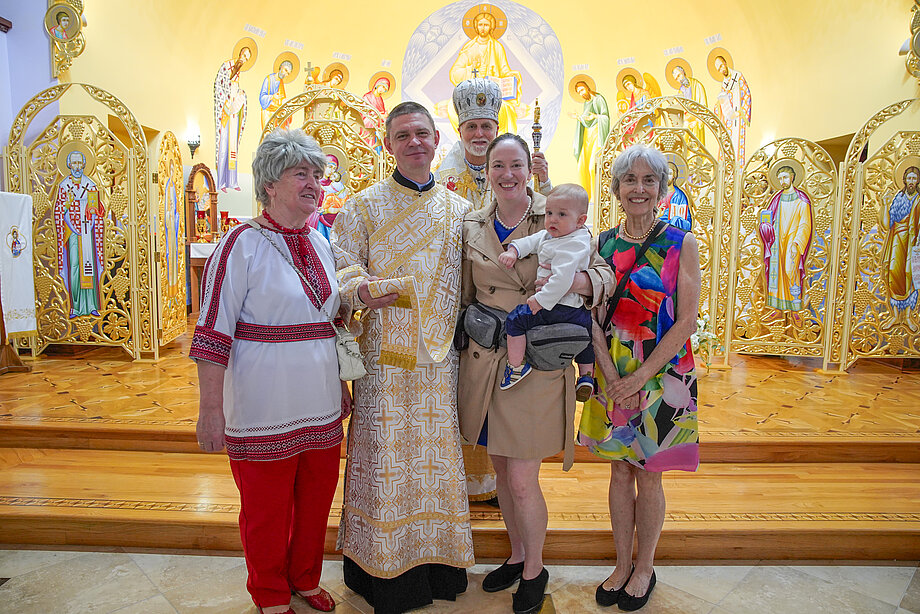
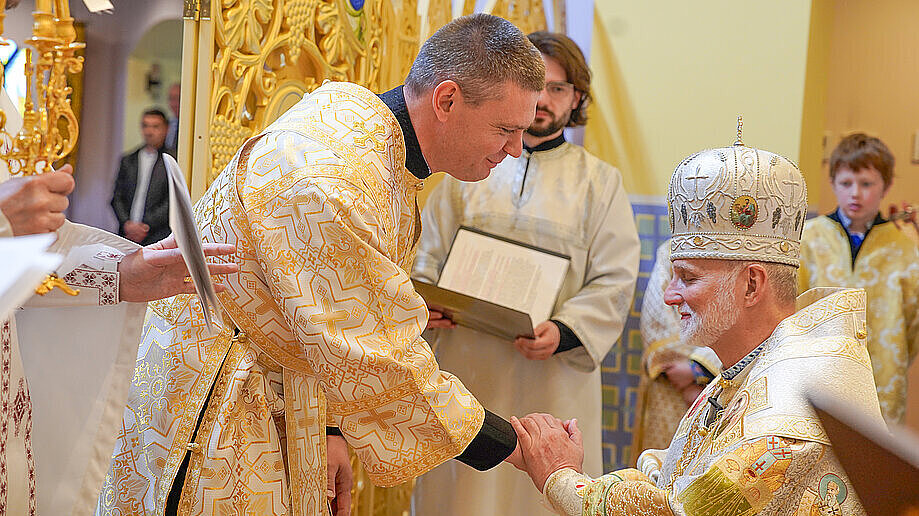
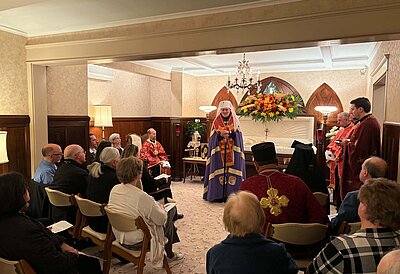
We invite our readers to learn more about the life journey and vocational discernment of Deacon Vitaliy Kit, who was ordained to the diaconate by Metropolitan Borys Gudziak of Philadelphia on May 10, 2026, and was appointed to serve at St. Paul Parish in Ramsey, New Jersey, effective June 1, 2026.
When did you first begin discerning a vocation to serve in the Church, whether as a deacon or a priest? Was it a sudden moment or a gradual journey?
In my case, it was very much a gradual journey, stretching from early childhood through my school years. Looking back, I see it as a combination of many different factors that eventually led me to the decision to enter the seminary. The beginning of my vocation was rooted in the very environment in which I was raised. My family—my parents and grandparents—taught me how to recognize goodness and form my character. We were a deeply Christian family that sought to live out its faith in everyday life.
My grandmother had a profound influence on me. She survived the Second World War and endured many hardships, sustained by her faith and by her desire to pass that faith on to the next generation—first to my mother, and then to my brother and me. I remember hearing many stories about wartime bombings and military attacks carried out by both German and Soviet forces. Through it all, prayer and faith remained a constant source of support. It was this quiet and deeply personal witness of faith that sustained her throughout her journey from the eastern regions of Poland to Lviv, where my mother and later I were born.
In our home, we have an icon of the Most Holy Mother of God known as the Hodegetria, which my grandparents brought with them. This icon held special significance for our family. During the war, when my grandparents and other families hid in underground shelters, they would place the icon at the entrance. They often recounted that they were never harmed by bullets or bombs while they were sheltered there. Praying before this icon as a child helped form my earliest understanding that God remains present with His people, especially in times of suffering, persecution, and hardship.
Another important influence on my vocation was my mother, Teodozia. She often told me how, as a schoolgirl during the Soviet era, she continued to attend church services despite the risk of being reported by Communist Party members who closely monitored students involved in religious life. Some of her teachers even filed reports documenting her attendance at church services. At times, her parents were summoned for questioning and threatened with consequences if their daughter continued practicing her faith. Yet such persecution neither intimidated nor defeated my grandparents or my parents. On the contrary, it strengthened and deepened their faith. In many ways, that witness became the foundation of my own vocation. As I grew older, it was further shaped by my personal choices and experiences throughout school, seminary formation, and university studies.
Was there someone in your life who inspired or supported your vocation? If so, how?
I have already mentioned my grandmother and my mother, and it is truly to them that I owe the foundation of my Christian and moral outlook. My grandmother taught me my first prayers, the truths of the Christian faith, and the catechism. I still remember kneeling beside her as a young child, reciting my morning prayers while she patiently guided me line by line. To this day, the image of my grandmother Emilia remains vivid in my memory as someone who cared deeply about how I began each day—and for her, every day should begin with prayer. Emilia was also a professional seamstress. She lovingly sewed and donated more than ten dalmatics for altar servers in our parish, where my brother Nazarii and I served. It was my parents, Volodymyr and Teodozia, who first encouraged me to become an altar server and to remain close to God.
I remember that in the early years of Ukraine’s independence, as the Church was emerging from decades of underground existence, our parish priest announced the formation of an altar servers’ group. That very day, my parents spoke with me and encouraged me to join. Later, when I began discerning a call to the seminary, my mother frequently spoke with me about it. She encouraged me and expressed her joy at my decision. My father was also supportive, though in a different way. He wanted to be certain that I had carefully considered such a significant life choice, and he often asked thoughtful questions about my future studies and career path. Once he was convinced, he became a strong supporter, including financially.
I would also like to acknowledge the unwavering support of my brother Nazarii and, later, his wife Orysia. My brother continually reminded me of my vocation throughout different stages of my life, encouraging and inspiring me in his own unique way. His support was a constant source of encouragement throughout my journey. Orysia also spoke with me often about my vocation, and I am convinced that she prayed for me and for my discernment. I would also like to mention my wife, Kaitlin—whom I affectionately call Katrusia. Once she came to understand my vocation, she consistently encouraged me to embrace it more fully, especially through ordination to the diaconate and eventually the priesthood. At the time, I had already been working in education for many years, and that work itself was an expression of my vocation. Yet I continually found myself returning to thoughts about priestly ministry. Katrusia encouraged me not to postpone responding to this call, whether through our conversations or during pilgrimages and visits to holy places. She became a source of strength in my final decision, and I am profoundly grateful to her for that support.