- Archeparchy
- Our faith
- Offices and ministries
- News and Updates
- Events
- Parishes
- Youth Protection
- Ways to Give
- Subscribe to "The Way"
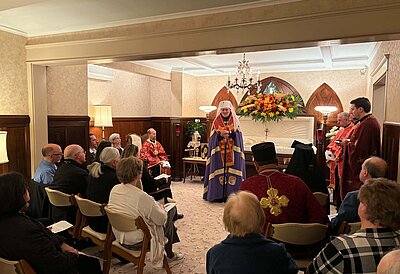
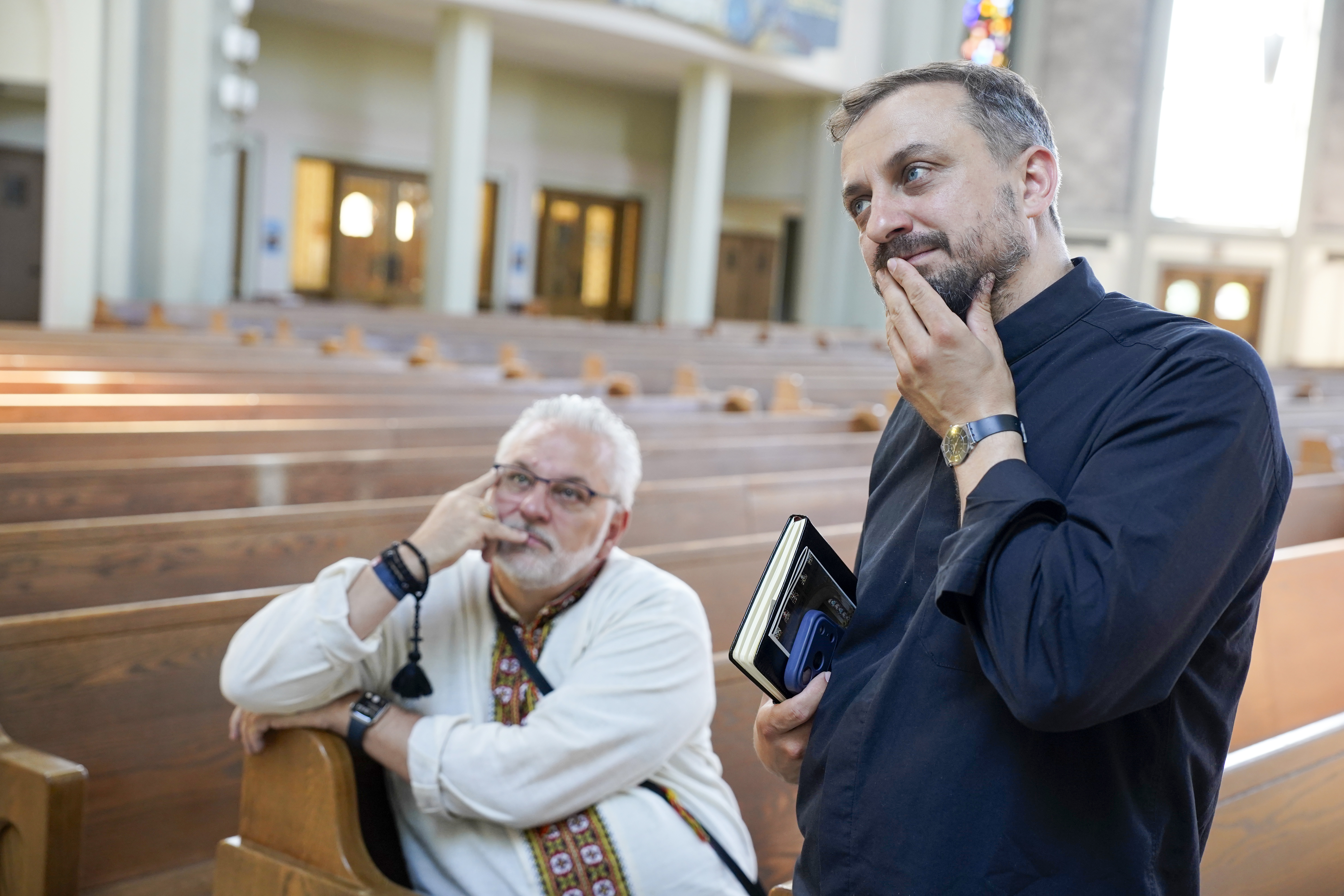
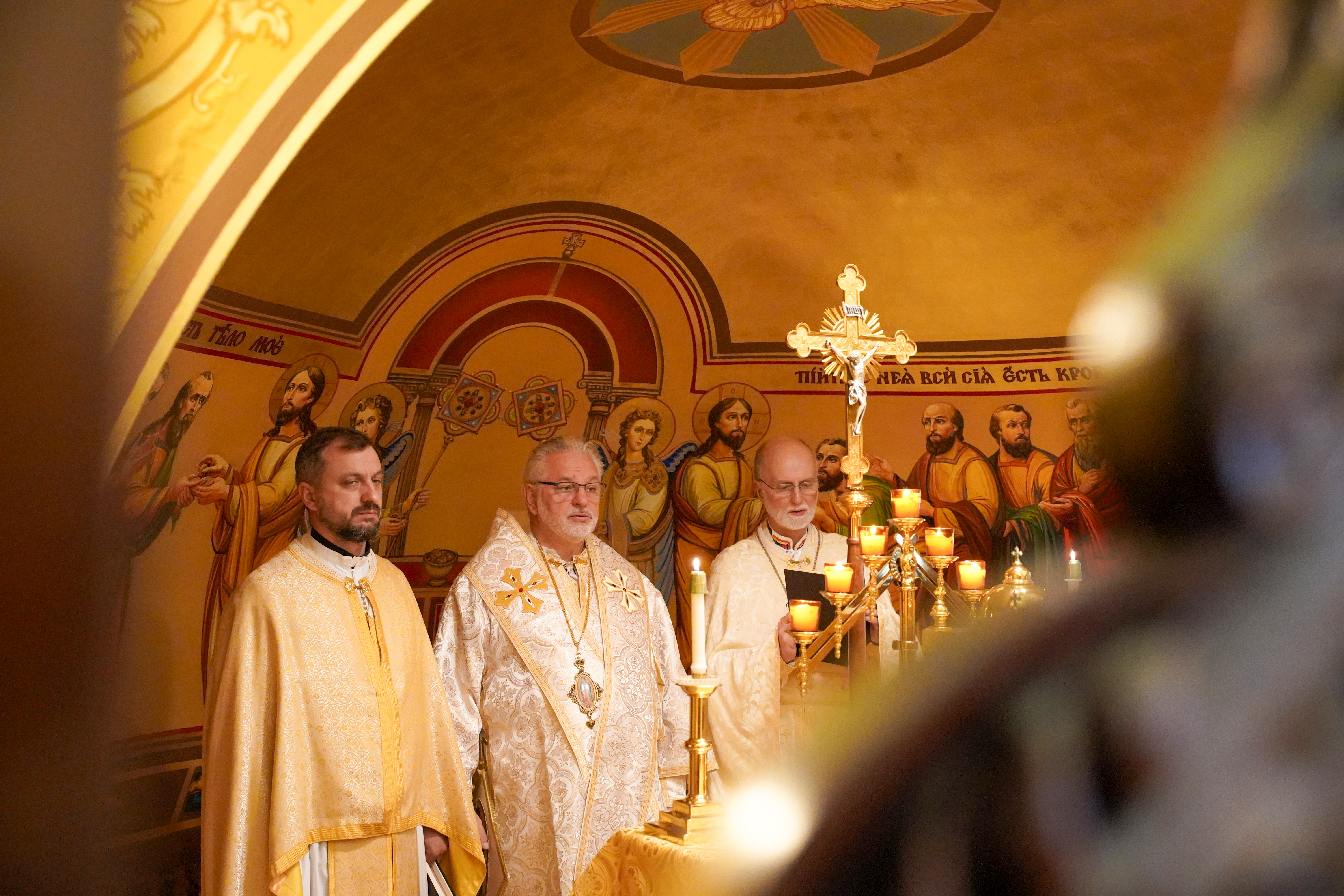
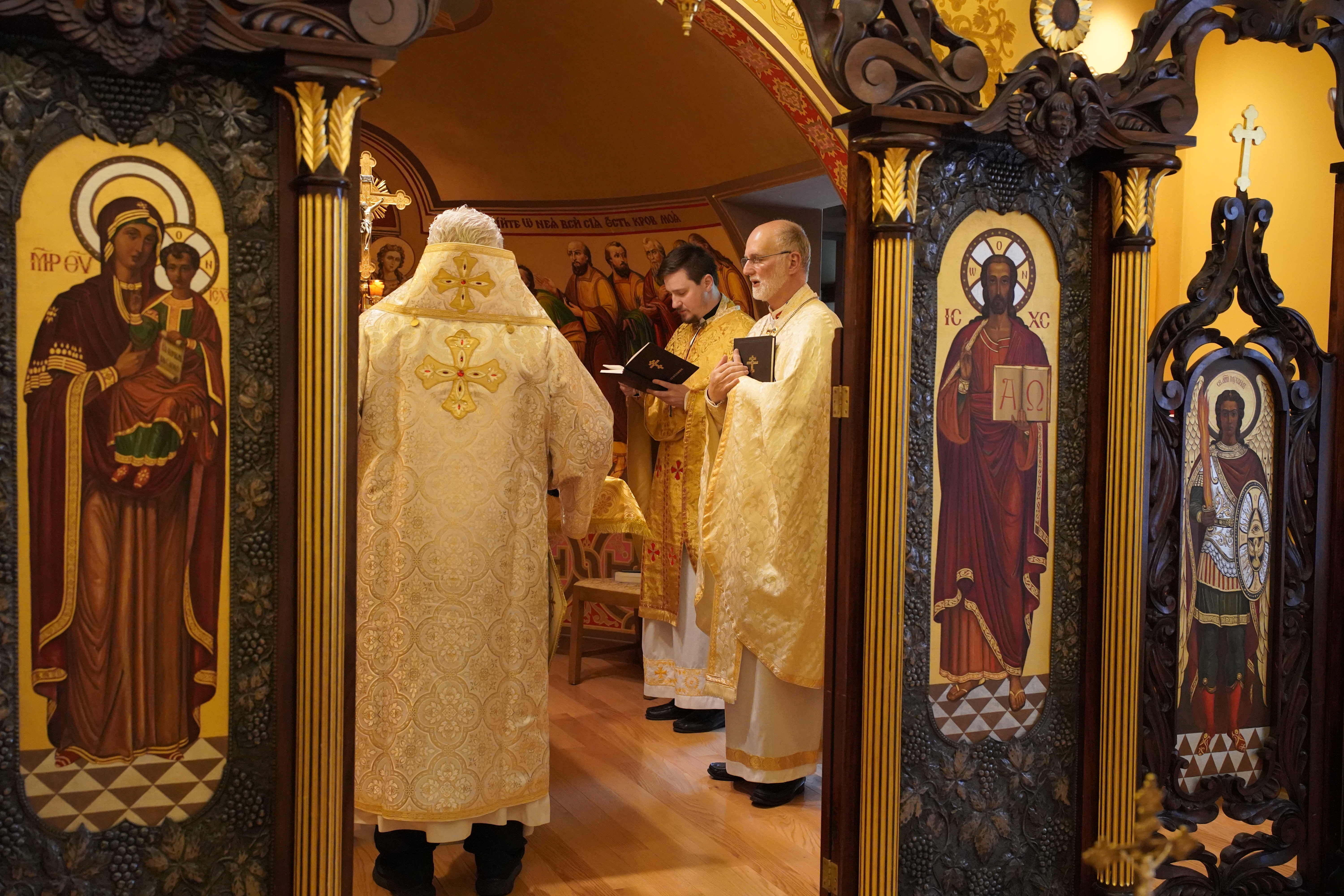
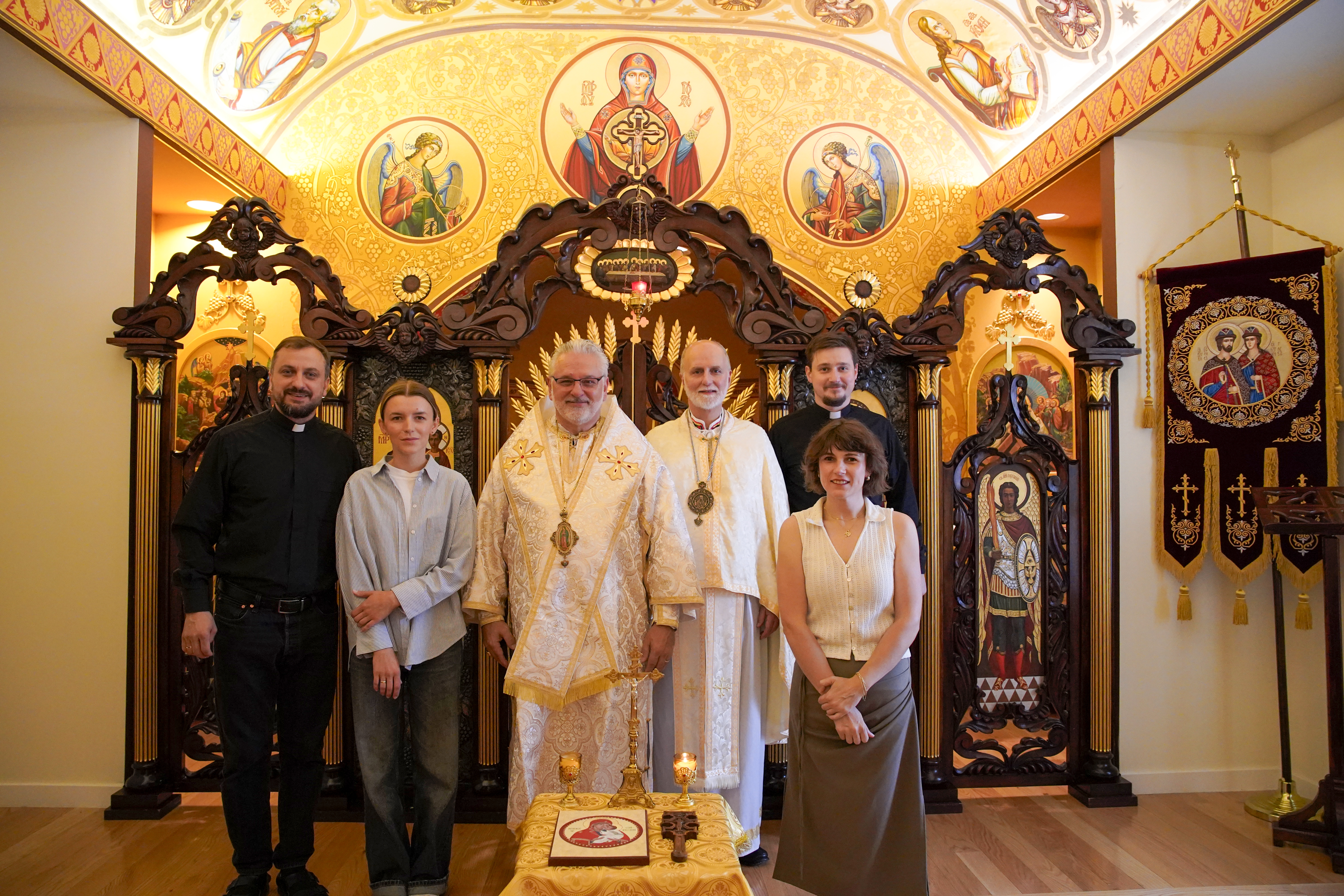
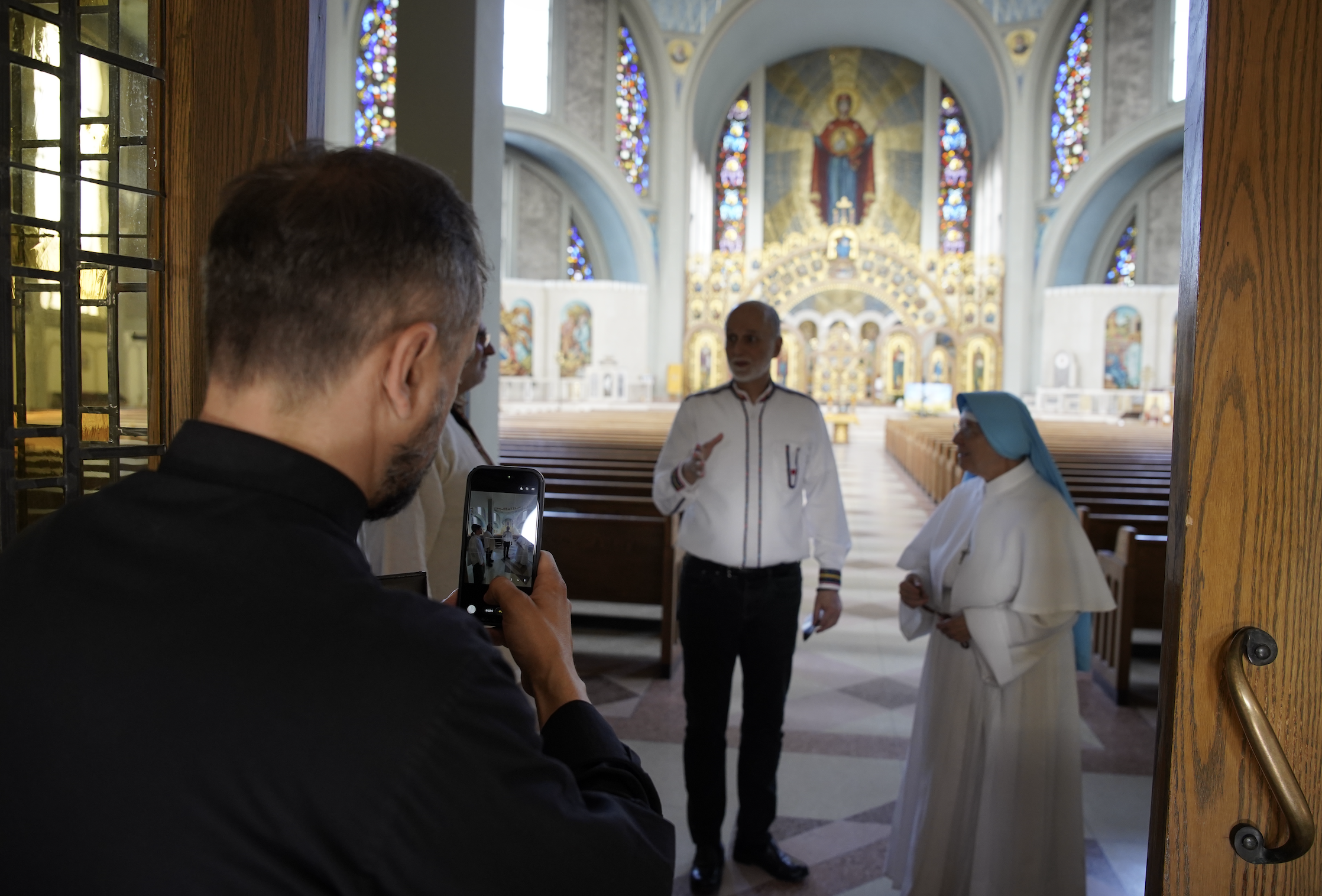
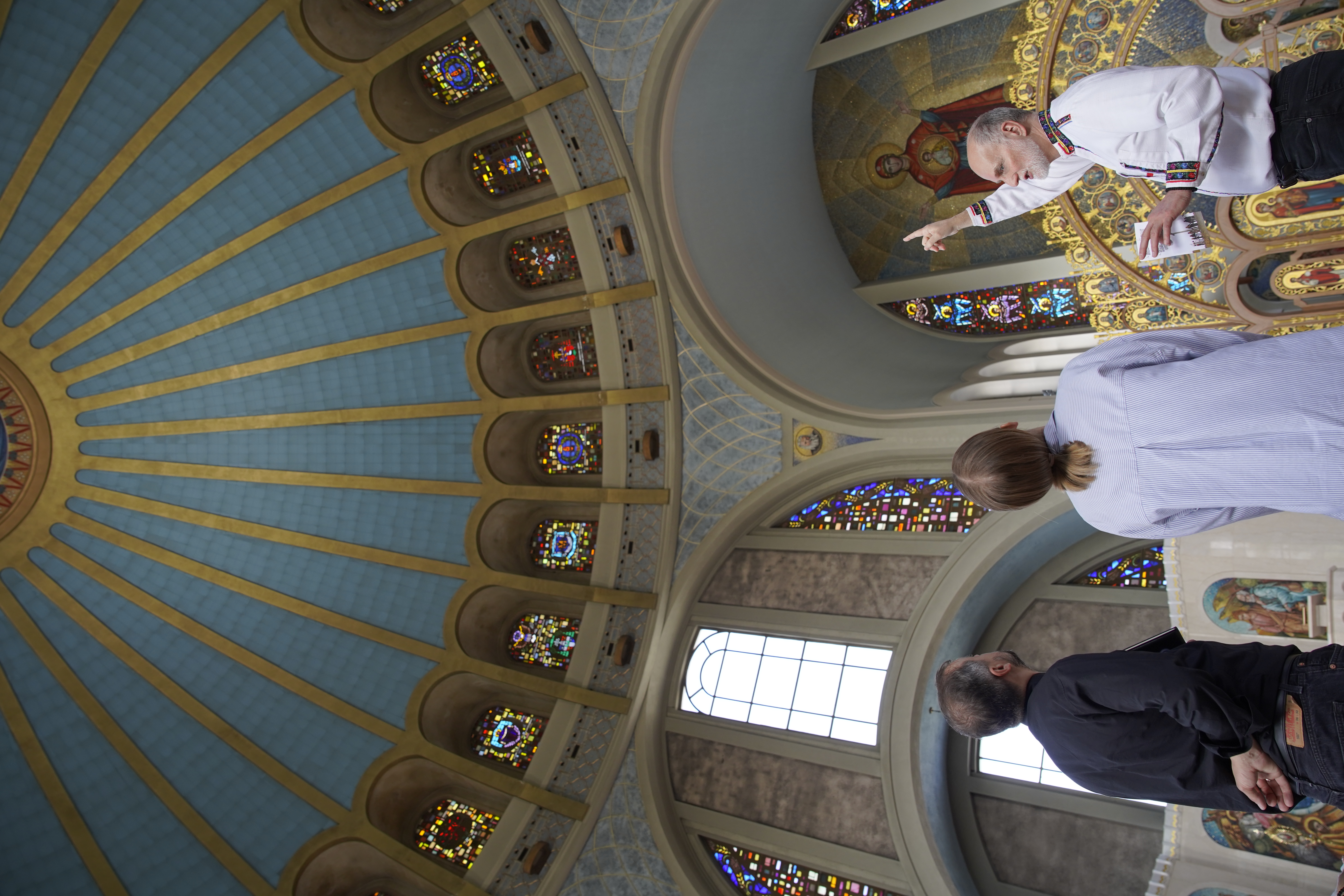
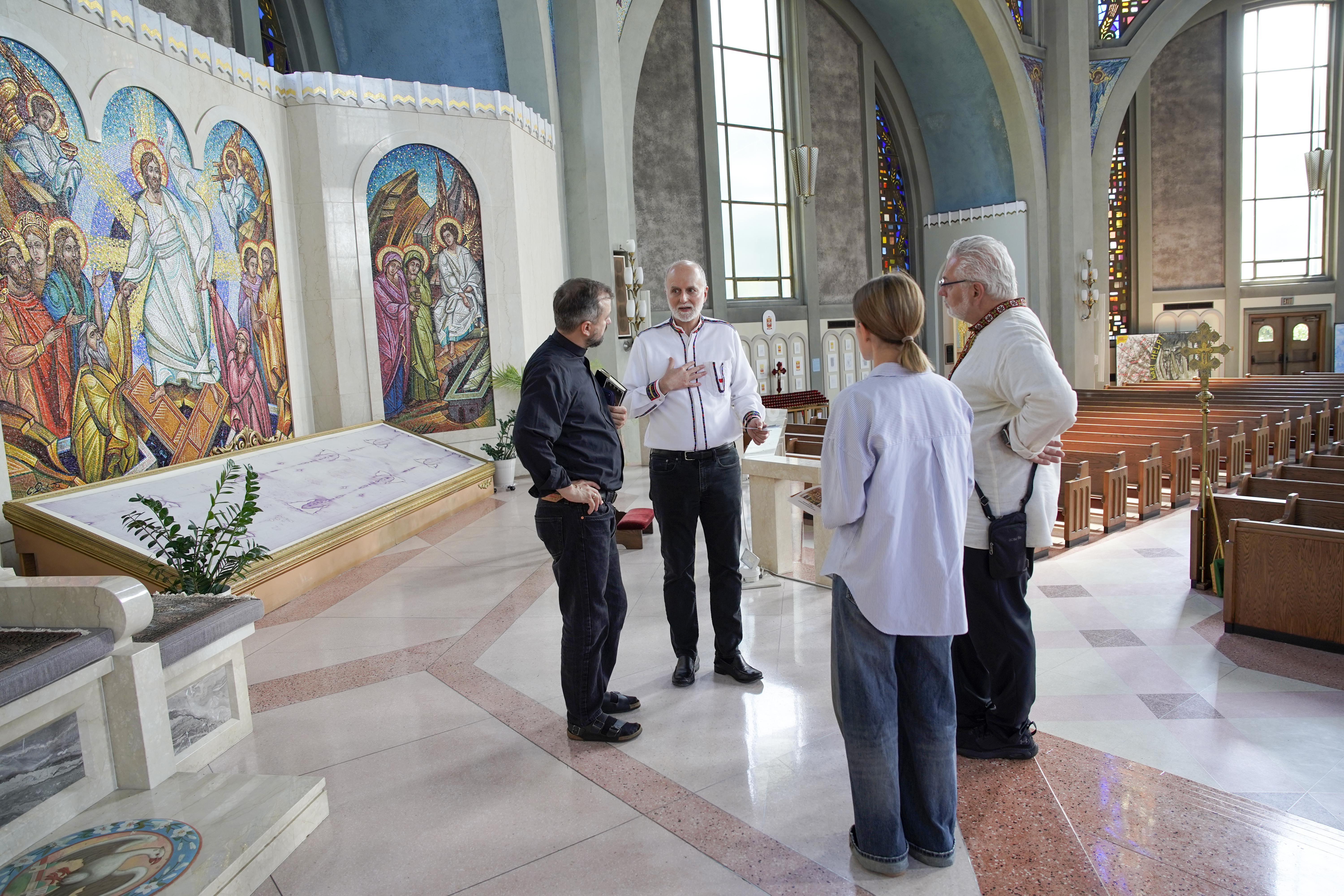
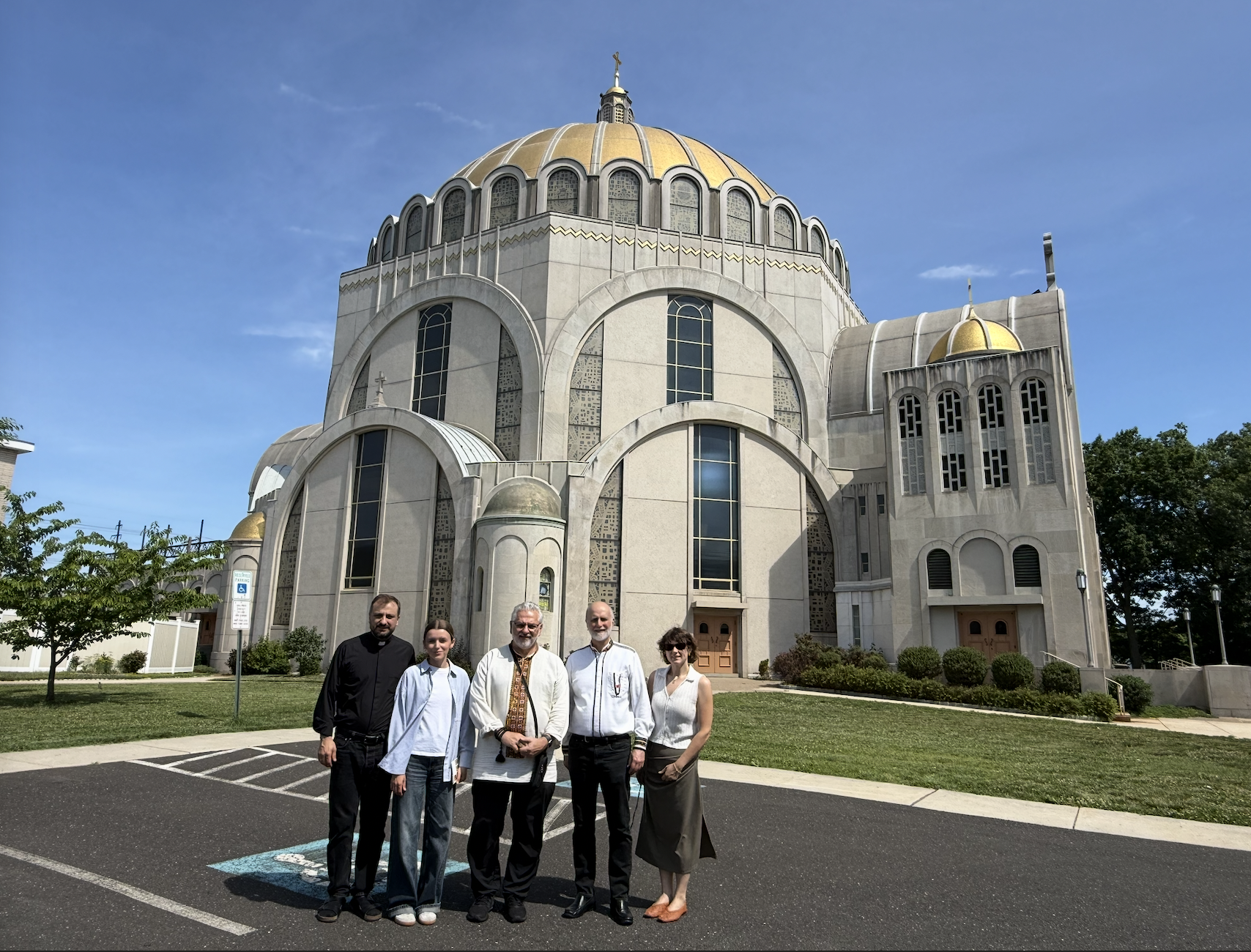
During the visit of Bishop Bryan Bayda, Eparch of Toronto and Eastern Canada and Chairman of the Major Archbishop’s Commission for Youth of the Ukrainian Greek Catholic Church, and Fr. Roman Demush, Deputy Chairman of the Commission, the Ukrainian Catholic Archeparchy of Philadelphia had the opportunity to discuss the challenges facing Ukrainian youth today, the role of the Church in accompanying them, and the generation that will help rebuild Ukraine after the war.
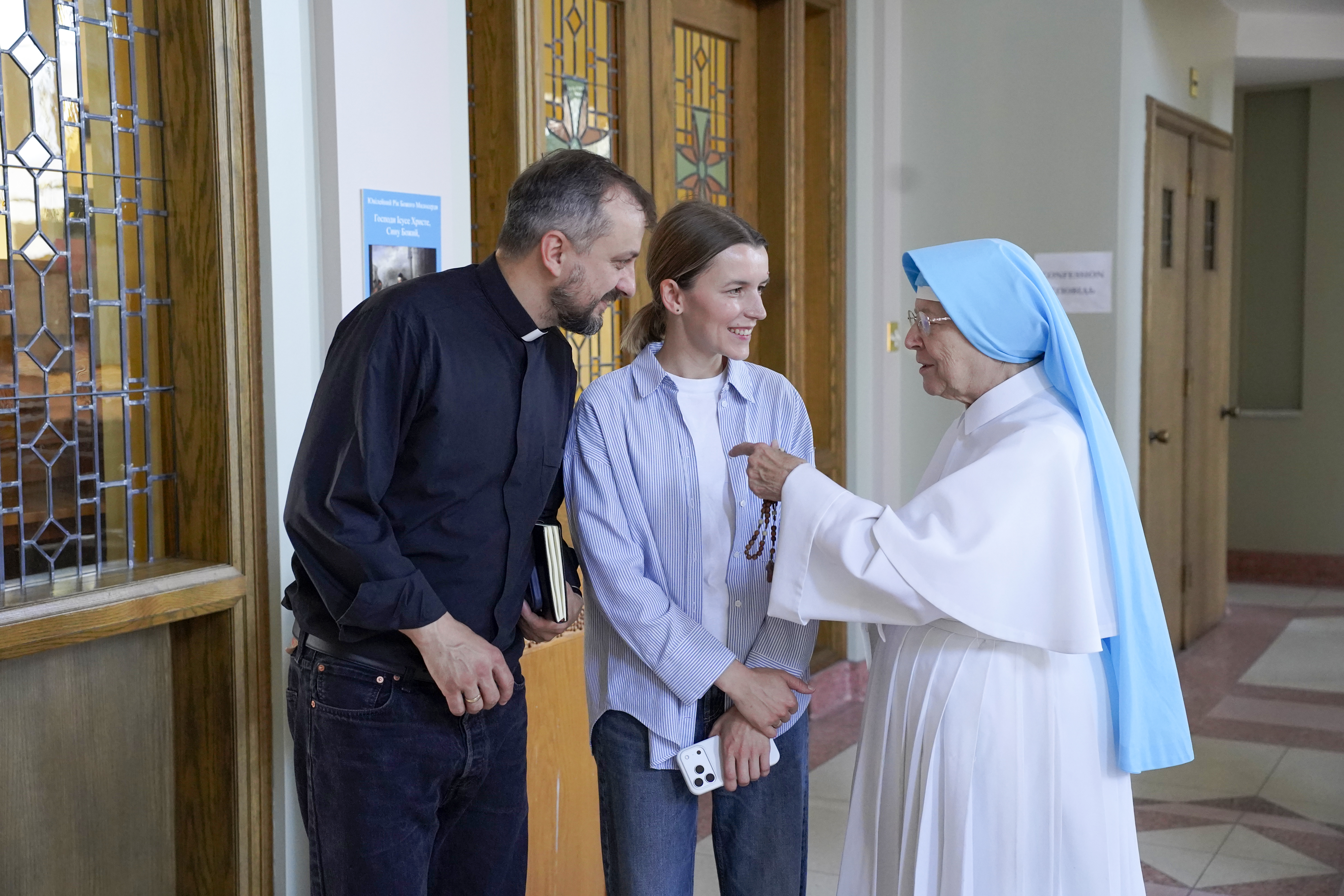
Fr. Roman was accompanied by his wife, Anna. Their visit provided an opportunity to meet with Ukrainian communities in North America and to participate in the Youth Pilgrimage to Parma.
The conversation focused on contemporary youth ministry, the impact of the war on the younger generation, the lives of Ukrainian youth in Ukraine and throughout the diaspora, the preservation of national identity, the search for vocation, and the responsibility of young people for the future of both the Church and Ukraine.
A Generation That Knows Its Worth
Reflecting on how today’s Ukrainian youth differ from those of a decade ago, Fr. Roman Demush noted that young people are increasingly characterized by openness, initiative, and a willingness to take responsibility for their own lives and for the future of their country.
“Today’s youth are more focused and more open. They are not afraid to voice their questions and seek answers. We see many initiatives and activities that originate among young people themselves.”
According to Fr. Roman, Ukrainian youth have always been active, but what stands out today is their readiness not only to propose ideas but also to take responsibility for bringing them to life.
“Ukrainian youth are ready to take responsibility. This is very encouraging because responsibility is one of the most important qualities needed for the future of our nation.”
He also emphasized that today’s generation increasingly recognizes its own dignity and worth.
“Too often we struggle with a sense of inferiority. But today’s heroic Ukrainian youth know their worth. We still need to help them realize just how valuable they are—not only for Ukraine, but for the entire world.”
In Fr. Roman’s view, this confidence, shaped in large part by the experience of war and the sacrifice of the Ukrainian people, will become one of the most important resources for Ukraine’s postwar recovery.
“The fact that Ukrainian youth do not suffer from a sense of inferiority is extremely important. It is a tremendous resource that will be needed as we rebuild Ukraine in the postwar period.”
Bishop Bryan Bayda, for his part, observed that every generation of young people faces its own unique challenges. For some, those challenges have been wars; for others, economic hardships or social upheavals. Yet one thing remains constant: young people always bring new ideas and hope.
“Young people have always been bearers of hope. Every generation has its challenges, but youth always come with a new vision for the future.”
At the same time, Bishop Bryan acknowledged the complexity of the present moment. War, social instability, psychological trauma, and moral challenges place an additional burden on the younger generation.
Even so, he remains convinced that young people are called to shape the future, seek new solutions, and move society forward.
“Our task is to help them not lose hope, to support their growth, and to prepare them for the responsibilities they will carry in the future.”
For this reason, both speakers believe that investing in young people today is also an investment in the future of the Church, the Ukrainian people, and the rebuilding of Ukraine after the war.
The Mission of the the Major Archbishop’s Commission for Youth
During the conversation, Fr. Roman Demush spoke about the work of the Major Archbishop’s Commission for Youth of the Ukrainian Greek Catholic Church, which since 2024 has held the status of a Major Archbishop’s Commission and serves as a structural unit of the Patriarchal Curia of the UGCC.
The Commission’s primary mission is to coordinate the youth apostolate of the Ukrainian Greek Catholic Church and to collaborate with eparchial and exarchal youth commissions, youth ministers, youth organizations, and communities both in Ukraine and abroad.
“We strive to help young people find their place in the Church, discover something meaningful for themselves within the Church, and ultimately encounter Christ,” Fr. Roman explained.
At the same time, the Commission’s work extends far beyond coordination. It represents the UGCC in international Church settings, fosters connections among youth structures in different countries, and develops joint initiatives for Ukrainian youth throughout the world.
According to Fr. Roman, the Commission coordinates such international initiatives as World Youth Day, Ukrainian Youth Days, various formation programs, and evangelization projects that are offered in different languages for young Ukrainians across several continents.
“We seek to create common programs of spiritual formation and evangelization that can unite young people in different parts of the world and help them feel that they are part of one large ecclesial community.”
Bishop Bryan Bayda, who chairs the Commission, emphasized the importance of strengthening communication among Ukrainian youth around the world. In his view, one of the Commission’s priorities today is the development of a global network of cooperation among young Ukrainians.
“We need to learn how to communicate with one another more effectively and to understand one another better. That is why we now hold regular online meetings that bring together representatives from different countries around the world.”
According to Bishop Bryan, these weekly gatherings include participants from Ukraine, Canada, the United States, Europe, Australia, and Latin America. Such initiatives not only provide opportunities to exchange experiences but also foster a sense of belonging to one global Ukrainian community.
“We want young Ukrainians, wherever they may live, to feel that they are part of one family and to be prepared to face the challenges of the future together.”
Bishop Bryan believes that once these connections have been strengthened, the next step is to support education, professional development, and the formation of a new generation of leaders.
“We must help young people gain the knowledge, experience, and opportunities they need for service. Ukraine and our Church need people who are ready to take responsibility, work for the common good, and help build the future.”
Both speakers emphasized that today the Major Archbishop’s Commission for Youth is called not only to organize events, but also to build meaningful relationships among young Ukrainians throughout the world, helping them preserve their faith, their Ukrainian identity, and their sense of responsibility for the future of both the Church and Ukraine.
Maintaining Connections with Young Ukrainians Abroad
Russia’s full-scale invasion has profoundly changed the lives of millions of Ukrainians. Among those forced to leave their homes are countless young people who are now studying, working, and building new lives in countries around the world.
For the Church, this has become both a new challenge and a new responsibility.
“Today, millions of young people have been displaced by the war and are living abroad. It is very important for us to help them remain connected to their Mother Church and to show them that the Church continues to care for them and accompany them,” Fr. Roman Demush emphasized.
According to him, one of the Commission’s priorities is finding new ways to maintain these connections through international initiatives, joint projects, and formation programs.
“We are seeking ways to strengthen these bonds of unity through global initiatives and projects, through programs that help preserve national identity, culture, spirituality, and a connection to Ukraine.”
Bishop Bryan Bayda believes that it is especially important today to help young Ukrainians, regardless of where they live, feel that they are part of one global Ukrainian community.
With this goal in mind, the Major Archbishop’s Commission for Youth fosters international cooperation among UGCC youth structures in different countries and organizes regular online gatherings for youth leaders from around the world.
“We want to understand one another better and remain connected. Today, participants from Ukraine, Canada, the United States, Latin America, Europe, and Australia join our meetings.”
Bishop Bryan also recalled international retreats that were offered with simultaneous translation in multiple languages, allowing young people from different continents to pray, learn, and build relationships together.
In his view, such initiatives help foster a genuine sense of communion and shared responsibility for the future.
“This is another step toward deeper unity among young Ukrainians of different countries and generations. We want them to be prepared not only to preserve their identity, but also to take part in rebuilding Ukraine and supporting our communities throughout the world.”
Both speakers agreed that it is critically important not to lose touch with the younger generation of Ukrainians living far from their homeland. Maintaining connections with the Church, Ukrainian culture, and the wider Ukrainian community is not only a matter of national identity, but also an essential investment in Ukraine’s future.
A Generation That Will Rebuild Ukraine
Speaking about the future of Ukrainian youth, Bishop Bryan Bayda repeatedly emphasized the importance of responsibility and leadership. In his view, one of the Church’s most important tasks today is to prepare a generation that will be capable not only of rebuilding Ukraine after the war, but also of helping society heal from its consequences.
“We must prepare young people for the great work of healing that will be needed in Ukraine and wherever Ukrainian migrants are living today.”
Bishop Bryan believes that after the war, Ukraine will need more than the reconstruction of cities, infrastructure, and the economy. Above all, it will need people who are ready to serve others, take responsibility, and work for the common good.
For this reason, he sees the development of education, professional formation, and the cultivation of a new generation of leaders as one of the next priorities of youth ministry. “We must provide young people with opportunities for education and employment. We need leaders for our Church and our people.”
According to Bishop Bryan, this involves more than preparing individuals for service within the Church. It also means forming people who can work effectively with government institutions, civic organizations, educational institutions, and businesses, using their knowledge and talents to strengthen society.
With this goal in mind, the Major Archbishop’s Commission for Youth continues to foster international cooperation and create opportunities for young Ukrainians from different countries to learn from one another and share their experiences.
Bishop Bryan also explained that this visit to North America provided an opportunity for representatives of youth ministry in Ukraine to experience the life of Ukrainian communities in Canada and the United States, learn from their experiences, and build new relationships.
“I brought a team from Ukraine so they could experience the North American context, meet our communities, and gain a deeper understanding of the challenges and opportunities facing Ukrainians in different parts of the world.”
In Bishop Bryan’s view, such encounters help build genuine unity among young Ukrainians across continents while forming a generation that is prepared to work together for Ukraine’s future.
“This is another step toward deeper unity within this generation, so that together we may build the future of Ukraine.”
The Wounds of War That Will Remain for Years to Come
The conversation also focused on the impact of war on the younger generation.
Reflecting on the consequences of Russia’s full-scale invasion, Fr. Roman Demush emphasized that many of its wounds will continue to be felt long after the fighting ends.
In his view, one of the deepest wounds is the damage inflicted on families. Over the years of war, millions of Ukrainians have been forced to leave their homes, countless families have been separated by borders, and thousands have lost loved ones.
“One of the deepest wounds of this war is the wound it has inflicted on families—on children, husbands, and wives. This wound is not always visible, but today we can already see its effects. Many families have been separated over these years, and the consequences are becoming increasingly apparent.”
For this reason, Fr. Roman believes that one of the important tasks facing the Church and youth ministry will be helping people rebuild trust, restore relationships, and strengthen family life.
“Our ministry will be called to help heal families, to encourage young people to embrace the vocation of family life, not to be afraid of responsibility, and to build their future with confidence.”
Fr. Roman also drew attention to the psychological impact of the war on young people. According to recent studies, many young Ukrainians living abroad experience profound emotional and psychological struggles, in some cases even more acutely than those who remained in Ukraine.
He explained that people in Ukraine often have opportunities to take action—whether by serving in the Armed Forces, supporting the front lines, volunteering, or contributing to society in other ways. Many of those who are far from home, however, struggle with feelings of helplessness, guilt, and inner uncertainty.
“These feelings of guilt, fear, and uncertainty are among the deepest wounds of the war. We must help heal them in every Ukrainian, because in one way or another, we have all been wounded by this experience.”
In Fr. Roman’s view, the process of healing will require time, patient accompaniment, and ongoing support. For this reason, youth ministry today is called not only to organize events and gatherings, but also to become a place where young people can find support, feel heard, experience authentic community, and rediscover hope.
He is convinced that after the war, the Church will face the immense task of helping Ukrainians heal both the visible and invisible wounds that the war has left in people's hearts.
Bishop Bryan also pointed to the broader challenges facing society today—the lasting consequences of war, psychological trauma, the crisis of a culture of life, and the need to accompany those who have endured profound hardship.
Different Circumstances, the Same Search: Youth in Ukraine and the Diaspora
When asked whether the needs and concerns of young people in Ukraine differ from those of young people in the diaspora, Fr. Roman Demush responded, “Yes and no.”
According to him, life circumstances may vary greatly, but the deepest questions and longings of the human heart remain the same, regardless of where a young person lives. At the same time, he emphasized that youth ministry should not be viewed merely as a form of recreation or as a structure that provides services.
“The Church is called to respond to the needs of young people, but youth ministry is not a service organization, nor is it simply a provider of recreational activities. Its primary purpose is to help young people encounter Christ.”
According to Fr. Roman, that encounter with Christ takes place in different ways depending on a person’s circumstances in life.
In Ukraine, young people often experience war, loss, and suffering. It is within these difficult realities that they discover God’s presence.
“In Ukraine, we encounter Christ in the wounded, in those who suffer, in those who have lost loved ones, homes, or possessions. We encounter Him in the lonely person who carries the pain of war.”
Outside Ukraine, however, young people often face different challenges — loneliness, forced migration, the search for community, and the need to find their place in an unfamiliar environment. “Abroad, we encounter Christ in the person who arrives alone, knows no one, and is searching for support and acceptance. We encounter Him in those who were forced to leave their homes and begin life anew.”
For this reason, Fr. Roman believes that youth ministry is called to foster authentic encounters between people, to help individuals recognize the dignity of every person, and to discover the presence of Christ in one another.
An important part of this mission is also helping young people discern their vocation.
“It is so important to understand what we are called to in this life, what makes us truly happy, and what gives meaning to our lives. One of the tasks of youth ministry is to help young people discover the answers to these questions.” Fr. Roman emphasized that this is why youth ministry is inseparably connected to vocation ministry. The goal is not merely participation in Church events, but above all helping young people discover God’s plan for their lives.
Vocation as the Fundamental Question in a Young Person’s Life
According to Fr. Roman Demush, despite all the changes in the world, technological advances, and new social challenges, the most important questions facing young people remain unchanged. “These questions remain the same because they are existential questions. They have been relevant for as long as humanity has existed.”
In Fr. Roman’s view, every young person eventually searches for answers to questions about the meaning of life, personal vocation, and the source of true happiness.
“What is God calling me to? What makes me truly happy? These are the fundamental questions that every young person faces.”
At the same time, Fr. Roman noted that young people are not always aware of these deeper searches. Many are caught up in the fast pace of daily life — studying, working, making plans for the future — and often do not take the time to ask themselves life’s most important questions.
For this reason, one of the tasks of youth ministry is not only to answer young people’s questions, but also to help them discover the questions themselves. “We are called to awaken these questions in young people, to help them ask them, and to create an environment in which they can find answers.”
Fr. Roman emphasized that the Church must accompany young people in this search, helping them discern God’s plan for their lives. In his view, the search for one’s vocation is inseparably connected to the search for happiness, meaning, and a sense of fulfillment. “It is so important to understand what we are called to in this life, what gives meaning to our lives, and what sanctifies them.”
For this reason, Fr. Roman explained, youth ministry is always closely connected to vocation ministry. Its purpose is not simply to involve young people in the life of the Church, but to help each person discover his or her unique path of service to God and others.
Recalling the words of Christ, he noted that the Lord has already provided an answer to these questions by showing humanity the path to true happiness through the Gospel and the Beatitudes. The mission of the Church is to help young people hear that call and find the courage to respond to it.
The Church in the Digital World
In today’s world, young people spend a significant portion of their lives in the digital environment. For this reason, Fr. Roman Demush believes that the Church cannot remain absent from this space.
“The Church must be present in the digital world, speak the language of today, and engage young people where they are.”
At the same time, he noted that the reasons young people do not always come to church are often complex and entirely understandable. Today’s young adults balance studies, work, housing concerns, career development, and many other responsibilities, making their time especially valuable.
“If we see that, because of the challenges of modern life or other circumstances, young people are not coming to church, then we must go where young people are.”
According to Fr. Roman, one response to this reality is the creation of youth centers, gathering spaces, and communities, as well as an active presence of the Church in the online world. “We enter the digital world where young people live and seek to proclaim Christ in the modern Areopagi.”
As an active user of social media, Fr. Roman sees digital platforms not only as tools of communication, but also as opportunities for personal witness. “For me, this is an opportunity to witness to the life I live, to make the Church more accessible to young people, and to make the life of a priest more understandable and transparent.”
At the same time, he emphasized that the Church’s presence in the digital sphere should never become a pursuit of popularity or come at the expense of the Gospel’s deeper truths.
“It is important to speak in a way that is respectful and authentic, without trivializing spiritual realities or watering down the Gospel in pursuit of greater popularity.”
In Fr. Roman’s view, young people are fully capable of engaging with profound and challenging messages.
“Young people are not satisfied with superficial answers. They are looking for substance. We must have the courage to speak the truth and not reduce the Gospel to something shallow. Christ calls us to a radical transformation of life, and it is precisely this kind of serious challenge that young people expect from the Church today.”
Young People Need Not Only to Be Taught, but Also to Be Heard
Speaking about what parishes can do to help young people remain active in the life of the Church, Fr. Roman Demush emphasized what may seem like a simple yet profoundly important principle: the ability to listen.
“First and foremost, we all need to learn how to listen.”
In his view, young people are exceptionally creative, innovative, and capable of seeing the world from a different perspective. Yet all too often, Church communities offer ready-made solutions without first taking the time to understand the real needs of young people.
“Sometimes our initiatives fail to resonate because we create them ourselves and then expect young people to respond. We offer what we think they need, rather than what they are actually looking for.”
For this reason, Fr. Roman believes that before creating new programs or initiatives, it is essential to ask young people about their needs, concerns, and expectations. “We need to listen to young people, give them the opportunity to speak, and encourage them to share their ideas and perspectives.”
At the same time, it is not enough simply to listen to young people; it is equally important to entrust them with responsibility.
According to Fr. Roman, young people should have not only a place in the pews, but also a meaningful place in the life and mission of the Church.
“This is not about having a seat in the first, second, or third row. It is about having a place in the work of the Church, participating in decision-making, bringing their own initiatives to life, and taking responsibility for the common mission.”
In Fr. Roman’s view, the combination of attentive listening, trust, and shared responsibility may be one of the keys to the growth of youth ministry today.
“Before proposing solutions, we should first ask about the needs of young people,” he concluded.
Guardians of Ukrainian Heritage
During his visits to Ukrainian communities in Canada and the United States, Fr. Roman Demush was particularly impressed by the way young people embrace their Ukrainian identity.
“What impresses me most is the preservation of traditions, language, and culture. Young people are not afraid or ashamed to call themselves Ukrainians.”
He also acknowledged the tremendous work carried out over decades by families, parishes, schools, and community organizations to preserve Ukrainian heritage outside the homeland.
According to Fr. Roman, many elements of Ukrainian culture and Church tradition have been preserved thanks to earlier generations of immigrants who carefully safeguarded them, even during periods when they were restricted or suppressed in Ukraine.
Today, however, a new responsibility rests on the shoulders of young Ukrainians in the diaspora — not only to preserve this heritage, but also to pass it on to future generations.
“Ukrainian youth throughout the world are called to be guardians of Ukraine beyond its borders — guardians of our traditions, culture, spirituality, and everything that shapes our national identity.”
“Without God, We Cannot Even Cross the Threshold”
Concluding the conversation about the challenges facing young people today, the future of Ukraine, and the mission of the Church, Bishop Bryan Bayda emphasized that at the heart of every program, initiative, and strategy must remain a living relationship with God.
In his view, young people are called not only to make plans for the future, pursue an education, or take responsibility for rebuilding society, but also to learn to trust in God’s guidance.
Bishop Bryan encouraged young people to cultivate a personal relationship with Jesus Christ, the Holy Spirit, and the Blessed Virgin Mary, allowing God to guide their decisions and direct the course of their lives.
“Our human plans are important, but they cannot be the foundation of everything. We must allow the Holy Spirit to lead us. As a Ukrainian proverb says, ‘Without God, we cannot even cross the threshold.’ If we do not have God, we cannot even take the first step forward.”
Throughout the conversation, both Bishop Bryan and Fr. Roman expressed a shared hope in the younger generation of Ukrainians. Despite the challenges of war, forced migration, and the many uncertainties of our time, they see in young people tremendous potential — a generation that is unafraid of responsibility, committed to preserving its faith and identity, ready to serve others, and prepared to help heal the wounds of war.
It is this generation that is called to help shape the future of Ukraine — both in their homeland and wherever Ukrainians live throughout the world.
By Oksana Loziak