Episode 10: 1596 — Union of Brest

The Church of Kyiv received its baptism from Constantinople in 988, at a time when Eastern and Western Christendom were still united. The tragic schism of 1054 — later deepened by the Crusades — widened into a chasm between what we now call the Latin West and the Orthodox East. 

The Kyivan Church, though a daughter of Constantinople, stood somewhat outside the sharpest conflicts of that division. Over the centuries, there remained within it a certain longing — a desire to remain in contact with Rome. One could say that the dispute between the “mother” Church and the “aunt” belonged to a different generation. 

By the sixteenth century, however, new challenges emerged. There was a cultural and religious crisis: a decline in ecclesiastical discipline, low levels of literacy among clergy, and weakened structures of Church life. At the same time, Europe was being reshaped by the Protestant Reformation and the Catholic Reform. These pressures forced difficult decisions. 

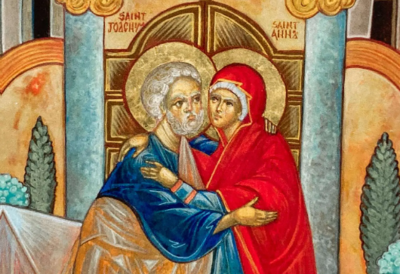
In this context, the bishops of the Kyivan Metropolitanate took a fateful step. In 1596, through what is known as the Union of Brest, they re-established communion with Rome. They entered once again into full communion with the Apostolic See and with the Pope, while preserving their Byzantine liturgical and spiritual tradition. 

This decision was not universally accepted. Some bishops withdrew. Numerous monasteries, nobles, and many of the faithful rejected the union. As a result, the Union of Brest became one of the most controversial events in the religious history of Eastern Europe. 

Yet for those who embraced it, communion with Rome was not a loss but a richness. It meant belonging not only to a local Church, but to the global Catholic communion. For Eastern Catholics, unity with Rome does not erase identity; rather, it affirms the gifts of the Byzantine tradition within the universal Church. 

The Union of Brest continues to be debated historically and theologically. But for Eastern Catholics, it remains a defining moment — a courageous decision made in a time of crisis, an attempt to respond faithfully to the Lord’s call to unity. 

It is possible to disagree about history. But it is also possible to give thanks. To give thanks for communion. To give thanks for the universal Catholic Church. And to live that communion with humility, fidelity, and gratitude. 

Keys:

  • The Union of Brest was proclaimed in 1596 in the city of Brest (in the Polish-Lithuanian Commonwealth). 
  • The bishops of the Kyivan Metropolitanate restored full communion with the Pope of Rome. 
  • The Church retained its Byzantine rite, liturgy, spirituality, and ecclesiastical traditions. 
  • Not all hierarchs accepted the Union, leading to division within the Kyivan Church. 
  • The Union of Brest laid the foundation for what is today the Ukrainian Greek Catholic Church. 

#BorysGudziak #history #ugcc_history 

Related News

More News
Episode 9: 1439 — Council of Florence

Episode 9: 1439 — Council of Florence

Episode 8: 1303 — Establishment of the Metropolia of Halych

Episode 8: 1303 — Establishment of the Metropolia of Halych

Episode 7: 1240 — The sack of Kyiv: The Church Without a Center (The Church survived.  But without Kyiv, it had no center).

Episode 7: 1240 — The sack of Kyiv: The Church Without a Center (The Church survived. But without Kyiv, it had no center).

Episode 6: 1054 — East-West Schism

Episode 6: 1054 — East-West Schism