Episode 6: 1054 — East-West Schism

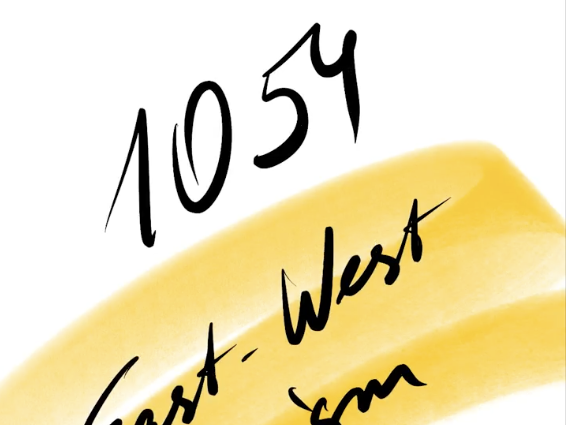
In the year 1054, a watershed moment occurred in the history of the Christian Church. This year marks the formal break of communion between the Western (Latin) Church centered in Rome and the Eastern (Greek) Church centered in Constantinople. Although Christians in the East and West had worshiped as one body for centuries, a series of long-standing differences only came to a head at this time.  

For generations, the Church of the Roman West and the Church of the Greek East had grown apart in language, culture, and practice. Latin was spoken in the West, Greek in the East; liturgical rites, theological emphases, and ritual traditions were shaped by their own histories. These differences did not become conflict all at once, but over time they made mutual understanding more difficult.  

At the heart of the dispute were questions of doctrine and authority. One theological controversy involved the procession of the Holy Spirit: should the Creed state that the Holy Spirit proceeds from the Father alone, or from the Father and the Son — the so-called filioque clause? Another concern was ecclesiology — the role and authority of the Bishop of Rome, the Pope, especially in relation to other patriarchs.  

In 1054, representatives of the Pope and the Patriarch of Constantinople issued mutual excommunications of one another — symbolic acts that signified a breakdown in communion. While this moment did not create a sudden rift felt uniformly by all Christians at once, it became the classical date historians use to mark what we now call the East–West Schism.  

This schism was not simply a remote event in church history. It had lasting consequences for the Christian world. Over the following centuries, the Eastern and Western Churches followed separate paths — shaping different traditions of theology, worship, and spiritual life that continue to the present day.  

Yet the story of 1054 is more than a historical divide; it is a reminder of how deeply Christians desire unity in Christ. Though the causes of the schism were complex — theological, cultural, and political — the longing for Christian communion remains a lasting concern. As Christians look back at these events, they are called to reflect on the meaning of unity, reconciliation, and shared witness to the Gospel of Jesus. 

Keys: 

  • 1054 — Conventionally marks the formal break between the Eastern Orthodox and Western Catholic Churches.  

  • Differences in language, worship, and theology grew over centuries before the schism.  

  • Filioque controversy and the role of the Pope were major points of dispute.  

  • Mutual excommunications in 1054 symbolized the break in communion.  

  • The schism shaped the future paths of Eastern and Western Christianity. 

#BorysGudziak  #history #ugcc_history 

Related News

More News
Episode 7: 1240 — The sack of Kyiv: The Church Without a Center (The Church survived.  But without Kyiv, it had no center).

Episode 7: 1240 — The sack of Kyiv: The Church Without a Center (The Church survived. But without Kyiv, it had no center).

Episode 5: 1037 — Saint Sophia Cathedral of Kyiv

Episode 5: 1037 — Saint Sophia Cathedral of Kyiv

Episode 4 - 1015 — Saints Borys and Hlib: martyrs of non-violence

Episode 4 - 1015 — Saints Borys and Hlib: martyrs of non-violence

Episode 3 - 988 — Baptism of Rus’-Ukraine

Episode 3 - 988 — Baptism of Rus’-Ukraine