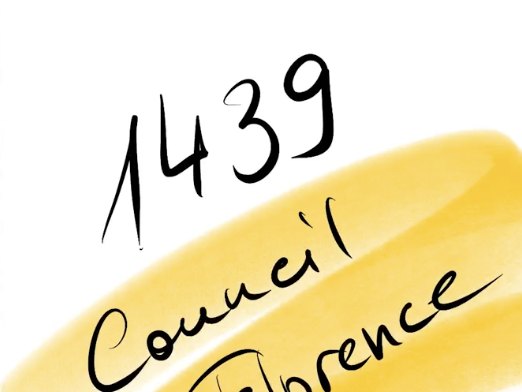
Episode 9: 1439 — Council of Florence

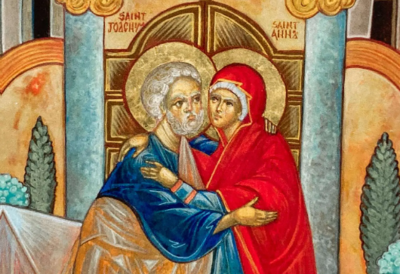
Although the Kyivan Church was a daughter Church of Constantinople, it was rarely directly engaged in the theological disputes between Constantinople and Rome. It was as if a distant disagreement among representatives of an older generation — the mother and the aunt — did not immediately involve the life of the younger branch. Yet, over time, the consequences of that division were inevitably felt. 

In response to the separation between Eastern and Western Christianity, a council was convened. It began in Ferrara in 1438 and later moved to Florence, where it continued until 1439. The purpose of the council was to heal the wound of division. The gathering was significant in scale; the Greek delegation alone numbered approximately 700 participants. 

The desire for unity was rooted in Christ’s own words. Before His Passion, the Lord fervently prayed that His disciples might be one — as the Father and the Son are one. This plea for unity stands at the center of His final words to His followers. 

In 1439, the Bull of Union was signed. Among the signatories was the Metropolitan of Kyiv, Isidore — Greek by origin, yet entrusted with the leadership of the Kyivan Church. His signature testified that the Kyivan Church was fully present in this historic effort to restore communion. 

After the council, Isidore returned to his ecclesiastical territory, which extended across political boundaries. In the Ukrainian lands, he appears to have been received positively. However, when he traveled to Muscovy, he was imprisoned, held for a time, and eventually expelled. He later went to Rome, where he died and was buried in the old Basilica of St. Peter — the structure that existed before the great Renaissance reconstruction. 

Centuries later, Cardinal Joseph Slipyj sought to locate and honor the remains of Cardinal Isidore in St. Peter’s Basilica. Because the original basilica had been completely rebuilt some five hundred years earlier, this proved impossible. 

Why is the Union of Florence important? Although the union proved short-lived in practice, it became a lasting source of inspiration for those who, in later centuries, sought to restore communion between East and West. 

In 1596, the Metropolitan and bishops of the Kyivan Metropolitanate re-established communion with Rome through the Union of Brest. The desire for unity — the desire to fulfill the Lord’s command — remained alive. 

The Union of Florence demonstrates that dialogue is possible, that coming together is possible. Yet it also reminds us that unity is not optional — it is a responsibility entrusted to every generation of Christians. Christians are called to live in a way that does not deepen division, but reflects the unity of the one Lord: Father, Son, and Holy Spirit. 

Keys:

  • The Kyivan Church was a daughter Church of Constantinople. 

  • The Council of Florence (1438–1439) was convened to address the division between East and West. 

  • The Greek delegation included approximately 700 participants. 

  • The decree of union was signed on July 5, 1439. 

  • Metropolitan Isidore of Kyiv was among the signatories. 

  • The Union of Florence became an important historical and theological precedent for later efforts at unity. 

 #BorysGudziak #history #ugcc_history 

Related News

More News
Episode 10: 1596 — Union of Brest

Episode 10: 1596 — Union of Brest

Episode 8: 1303 — Establishment of the Metropolia of Halych

Episode 8: 1303 — Establishment of the Metropolia of Halych

Episode 7: 1240 — The sack of Kyiv: The Church Without a Center (The Church survived.  But without Kyiv, it had no center).

Episode 7: 1240 — The sack of Kyiv: The Church Without a Center (The Church survived. But without Kyiv, it had no center).

Episode 6: 1054 — East-West Schism

Episode 6: 1054 — East-West Schism