- Support the Seminary
- Archeparchy
- Our faith
- Offices and ministries
- News and Updates
- Events
- Parishes
- Child Protection
- Ways to Give
- Subscribe to "The Way"
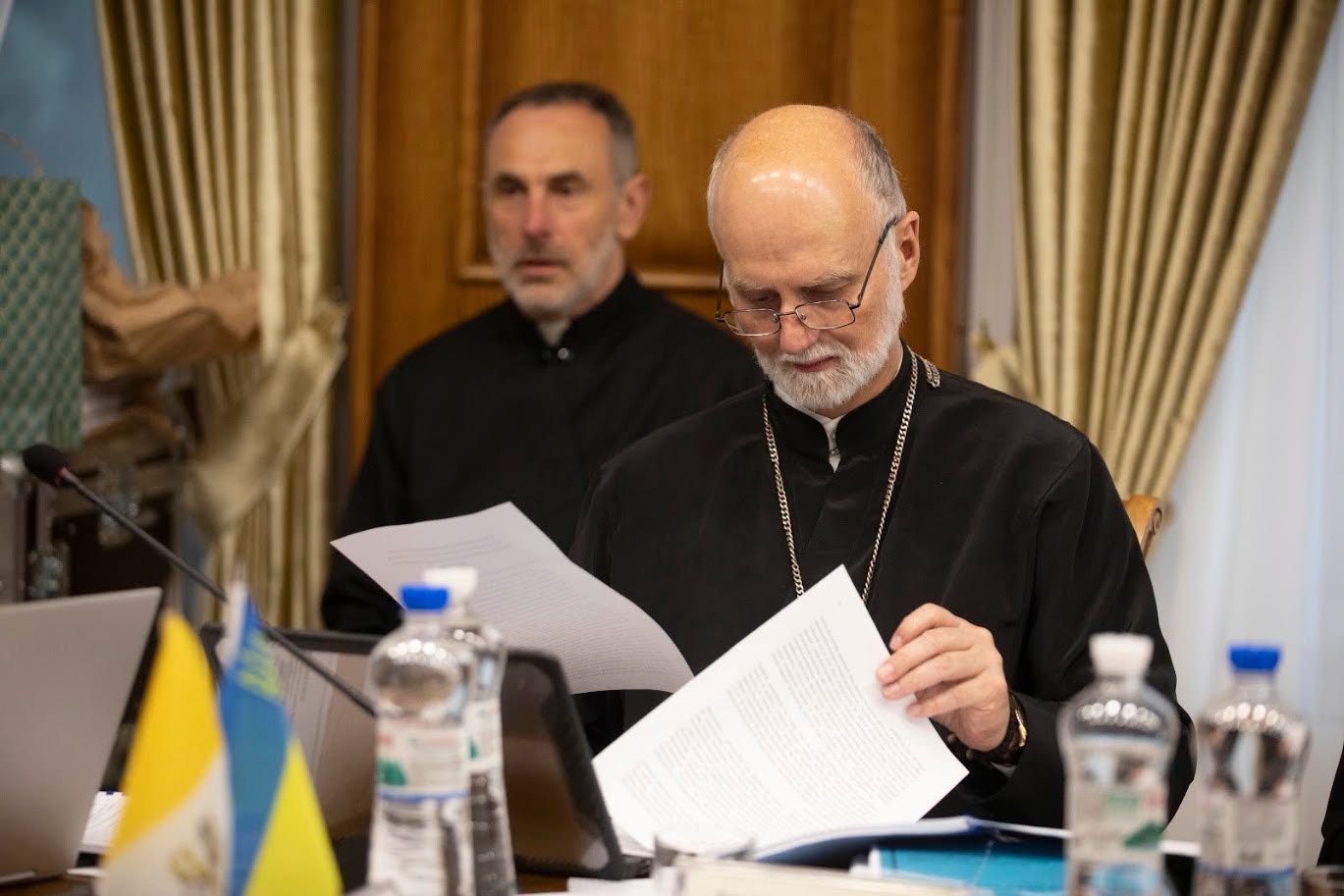
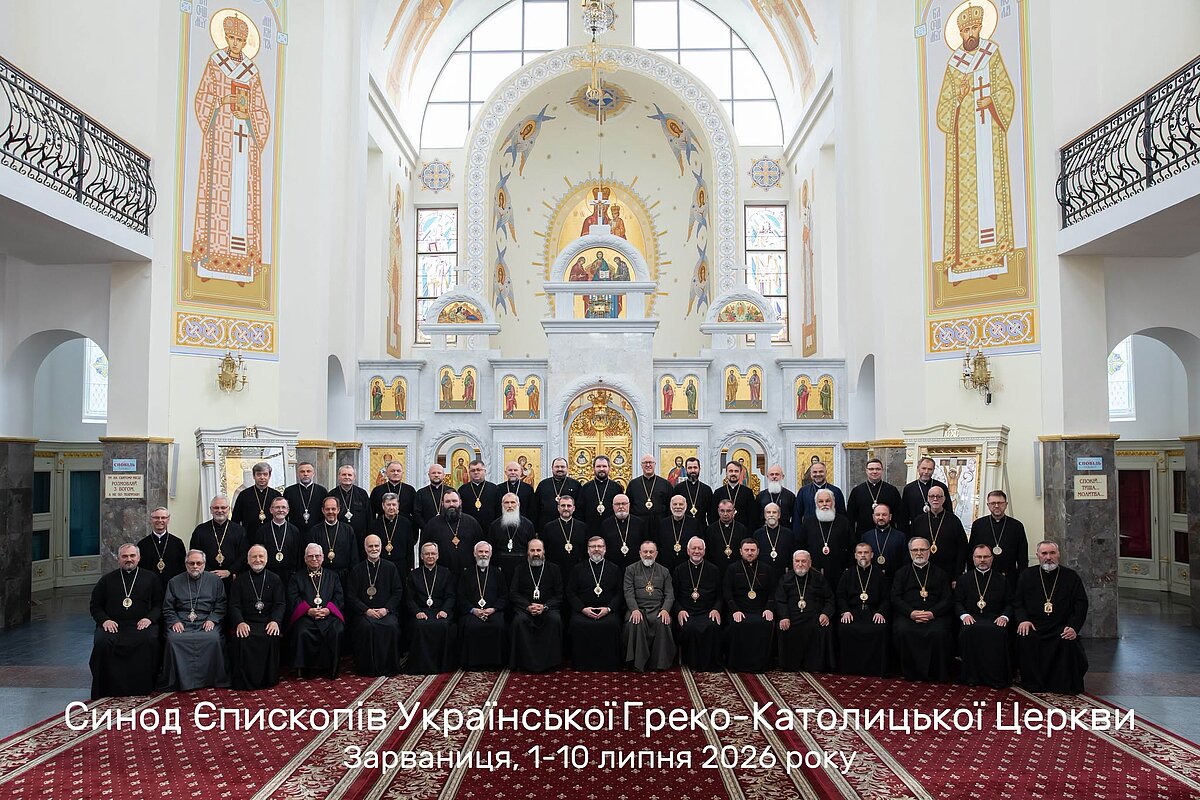
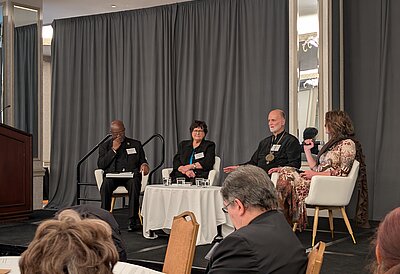
On July 6, the sessions of the Synod of Bishops of the Ukrainian Greek Catholic Church at the Marian Spiritual Center in Zarvanytsia became a journey around the world. Through eleven reports presented over the course of a single day, bishops described the life of Ukrainian Greek Catholic communities on four continents, from the front-line regions of Ukraine to parishes in Australia.
Among the presentations was a report by Archbishop and Metropolitan Borys Gudziak of Philadelphia on the pastoral situation of the UGCC in the United States. He examined the Church's 140-year history in America in light of the experience of other Eastern churches active in the country, drawing on parish and clergy statistics from all four eparchies of the Philadelphia Metropolia.
The Metropolitan identified three main challenges: the need for a more missionary approach, a shortage of bishops and missionary priests, and a diocesan structure formed decades ago that no longer reflects where Ukrainian communities live today.
Together with the other UGCC bishops in the United States, he stressed the need to move beyond functioning primarily as an ethnic Church and become a genuinely missionary community capable of responding to the current geography of Ukrainian migration.
"The presentation was an attempt to understand where we stand, based on 140 years of history and in comparison, with the experience and achievements of other Eastern churches in America," Metropolitan Borys said. "The Ukrainian Greek Catholic Church has considerable achievements. But it has also gone through many difficulties and suffered tremendous losses. The question is whether we can learn something from this history and from the experience of others."
As an example, he pointed to the Orthodox Church in America.
"You need to look at how many parishes they have in Chicago, Texas, and California. We have far fewer there. To a large extent, these are sociologically similar communities," he said.
That Church, he explained, had Russian origins and a Russian elite supported by the empire before the First World War. Many former Greek Catholics entered it during conflicts with the Roman Catholic hierarchy. After the Russian Revolution, it lost state support, and the composition of its membership became comparable to ours.
"So it gradually assimilated into American society. Beginning in the 1960s, that Church consciously chose a new direction, no longer primarily Slavic but open to the broader American population. Today, two-thirds of its bishops, 80 percent of its clergy, and half of its faithful are of non-Slavic origin. Our Church has 219 parishes; they have 530. We have four bishops; they have nine."
Archbishop Borys cautioned against drawing the wrong conclusions from that comparison.
"There's often a tendency to compare our best with someone else's worst or, if you're a pessimist, our worst with someone else's best. That's not the point. The point is to show that there are possibilities. The presentation was an attempt to put forward different hypotheses for future development."
He connected those possibilities with one of the Church's most pressing challenges.
"But for that, we need bishops and priests. Today, the shortage of candidates for the episcopacy is one of the major problems facing the Ukrainian Greek Catholic Church globally. In 1900 there were two bishops; today there are 56. The overall number of faithful is roughly comparable. If it was three million then, today it is four and a half million."
According to Archbishop Borys, the deeper issue is a lack of missionary spirit.
"There's a lack of missionary spirit among priests. We serve our own people well, close to home. But Christ's call is, 'Go and teach all nations, baptizing them in the name of the Father, and of the Son, and of the Holy Spirit.' Maybe we haven't fully heard that yet. This is a great challenge: understanding Christianity as more than a cultural identity. Someone may be Galician, and therefore Greek Catholic or Ukrainian, and so they go to the Ukrainian church to celebrate Easter. But what matters is the experience and conviction that in Christ we find both salvation and the fullness of life in this world, and salvation and fullness of life in eternity."
He said the presentation was well received.
"The presentation received a positive response from the bishops, including the bishops from Ukraine and His Beatitude himself. These are, of course, theoretical considerations and proposals. Putting them into practice is no simple task. But the Synod has given its mandate to move forward."