“The Person Who Responds to the Call Will Be at Peace”: Fr. Taras Svirchuk on Finding One’s Path

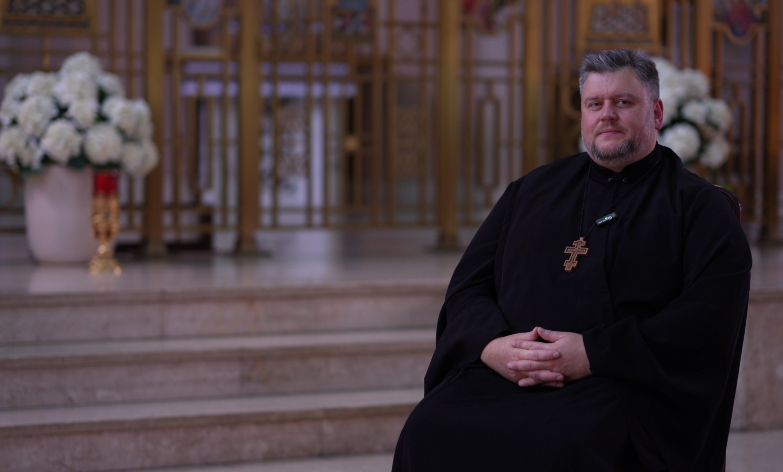
The central theme of the 2026 Synod of Bishops of the Ukrainian Greek Catholic Church is “Pastoral Care of Vocations to the Priesthood and Consecrated Life.” Continuing our series on vocations, we invite you to a conversation with Fr. Taras Svirchuk, a priest of the Congregation of the Most Holy Redeemer.

How can we understand what God is calling us to? Do doubts mean that we have chosen the wrong path? And does responding to a call to the priesthood or monastic life really mean giving up something greater?

Father, how can a person understand that God is truly calling them to a particular path? How did you experience your own vocation?

I cannot say that there was a particular moment in my life like the one we read about St. Paul in the Acts of the Apostles—something happened, and suddenly everything became clear. I think God is the one who gives the vocation; in other words, He summons us. He is the source of the vocation, and then we make the first steps in recognizing this fundamental calling that God gives us.

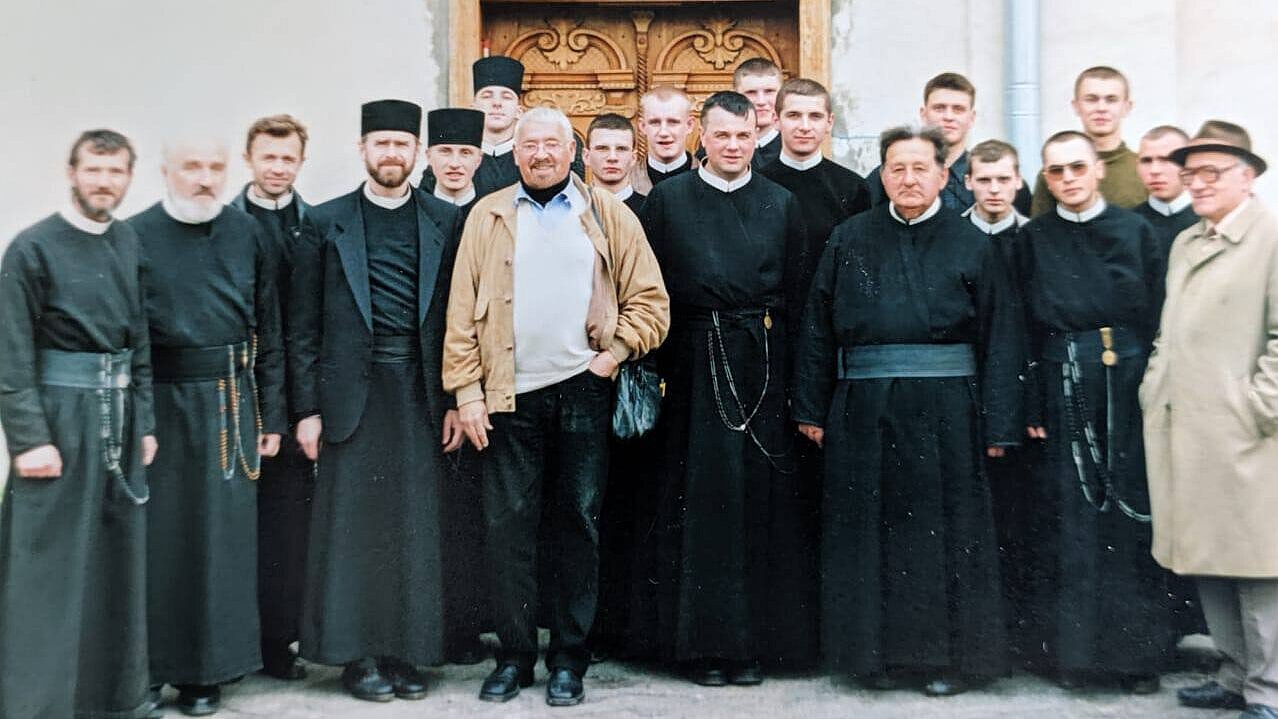
In my case, it began very simply. I was an altar boy in a parish served by the Redemptorists, and I became curious about where they came from, what they did, and what it meant to be a monk and a priest. When I was in ninth grade, I visited the novitiate for the first time. I saw their prayer, their work, their life together. After I graduated from the eleventh grade, I decided to join the Redemptorists.

Does discernment end once a person has already made a choice? What happens when an idealized understanding meets reality?

I joined the Redemptorists when I was 17, and the novitiate was the first real moment of detachment from my family—from my parents, my sister, my home. It was difficult. There were moments when I asked myself whether maybe I should go back home. But discernment does not end the moment you cross the threshold of a monastery or seminary. It continues in the course of studies, philosophy, theology, and formation. I think there are different moments in life when we look back and ask ourselves whether we are actually on the right path. And I think this is true everywhere—whether you are married, unmarried, in a monastery, or anywhere else. I remember the words of now-Bishop Bohdan Dzyurakh, who gave us a retreat at the end of our novitiate. He spoke about ideals and their reality. Figuratively speaking, at the beginning you are flying because you have your own understanding of what monastic life is. Then you come, and there is reality. The most important thing is to come down to the ground.

We can call it a crisis, a temptation, or difficulties, but we have to walk on the ground, to see reality and to live within that reality. Difficulties are moments that are supposed to help us become closer to God and to be more certain that we are going in the right direction with God, following His calling. Because God is the one who is acting in this reality.

People often see monastic life or the unmarried priesthood primarily as a great sacrifice. Is that how you experience it?

People often ask me whether I am a married priest, whether I have a family and children. And when they hear that I do not, they say, “It’s a great sacrifice.” But over the course of my life, I have learned that there are different sacrifices. I don’t know whether there is perhaps a greater sacrifice in being a married man, in being a good father or mother, a good parent to your children. It also means sacrificing a certain kind of independence.

We know that Jesus Christ, John the Baptist, St. Paul, and John the Evangelist were not married. Not every person is meant to be married. Perhaps that is why we should not push our children only in that direction. It is a choice, and God is ultimate happiness and peace. If He calls us to married life, He summons us to that. If He calls us to the unmarried priesthood or monastic life, He summons us to that. The person who responds to the call will always be at peace and happy.

What, then, can families and parishes do to help a person discern this path?

The most important thing is that if somebody reaches out, we help them discern, instill in them the assurance that God is the one who calls, and do not interfere. Of course, prayer is very important, and it is very important to support the person. Spiritual conversation can also be very supportive if someone reaches out and asks. They can also come and see how a monastic community lives. When Jesus called His apostles, His disciples, He said, “Come and follow Me.” And we are all called to follow Christ. We also need to pray not only for vocations to the priesthood or monastic life. We need to pray for everyone’s vocation—to the priesthood, to monastic life, and to family life. Because without family life, there is no monastic life.

We support each other. We are the Church of Christ. I think the circle starts with God and ends with God.

In a society of competition and success, can a vocation to the priesthood or monastic life look like a loss?

We live in a society of competition, a society of being perfect, of success. We hear the word “success” very often. And then we may think: What is the priesthood? What is monastic life? It is losing opportunities, losing time, money. But it is not.You are gaining. As Jesus said to Peter, who said, “We left everything and followed You,” you will gain much more here—you will gain families, brothers and sisters. You see how open people are to you. You see their kindness and openness, that together we can do something, that together we are following Christ, that together we are finding and discovering something about Him. It’s not about the money. It’s about the people.

We often speak about a “successful priest.” What does being a good priest mean to you?

I don’t want to use the word “successful” at all. I think it is a very technical word. We can speak about success in a mission, success in construction, building or rebuilding, success in retreats or Lenten missions. But the priesthood is a gift of the Holy Spirit. Is it something mine? It’s not mine. I believe that God is acting through us, and not us. No matter how weak or sinful a priest may be, if he says, “Lord, help me. I am sinful,” God can still do more through him than through someone who looks super successful. For me, being a good priest means being a good collaborator with the grace of God, someone who is working with God. Using the language of the Bible, it means being a good servant.

What is most important to you today in the mission of a priest?

First of all, never to lose God from my sight.To hear His Word and pass it on. Not to obstruct Him, but to be attuned to Him. And to remain a Christian who is himself being converted, so that I do not disfigure His image in the eyes and understanding of the people.

How, then, can we recognize God’s providence in our own lives?

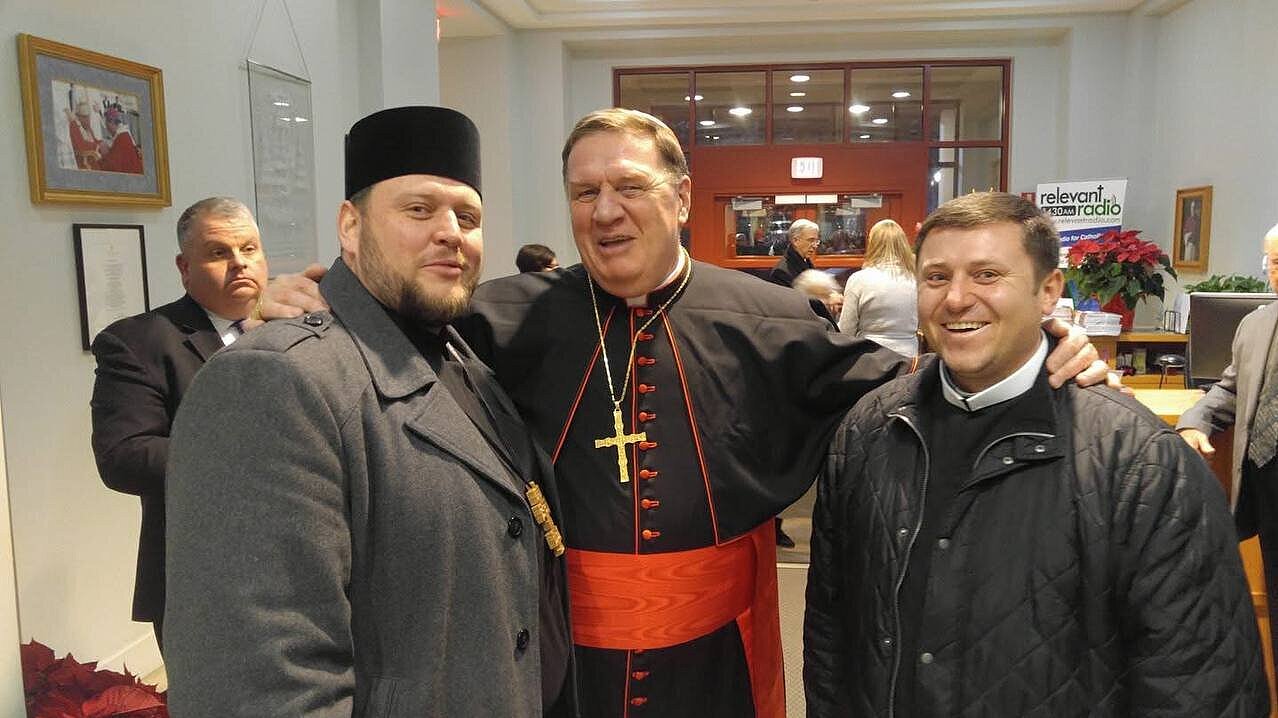
We want to calculate everything—which is good; we plan. But there is always God’s providence in everything. I never thought that I would be a priest in the United States of America. When I was at school, after the collapse of the Soviet Union, I joined an English-language class. We had seven hours of English a week, and I remember thinking: If I am going to join a monastery, why do I need English? They told me, “Learn English. It will help you in the course of life.” Later, I went to Ireland, where the Irish Redemptorists helped confreres from Poland, Slovakia, and Ukraine improve their English. Then there was an opportunity to continue my studies. The first time I came to the United States was to preach Lenten missions, and later I became a member of the Redemptorist community here. So there is always God’s providence in everything. Maybe some would say, “Oh, it’s a coincidence.” I do not see the coincidence. I see the straight line.

Oftentimes we think, “I don’t see the result,” or “I don’t think this is the right thing to do.” But we do not see the end. God has the whole picture; we have just a part of it.

Interview by Halyna Vasylytsia
Related News

More News
"The World Has Never Been So Ukrainian": International Symposium Explores the Future of the Global Ukrainian Community

#U.S.

#Ukraine

#Archeparchy

"The World Has Never Been So Ukrainian": International Symposium Explores the Future of the Global Ukrainian Community

Kyiv International Economic Forum 2026: A Discussion on Culture, Values and Ukrainian Identity

#U.S.

#Ukraine

#Archeparchy

Kyiv International Economic Forum 2026: A Discussion on Culture, Values and Ukrainian Identity

Christ the King Ukrainian Catholic Parish in Philadelphia Celebrates Its Feast Day

#U.S.

#Archeparchy

#Parishes

#Sermon

Christ the King Ukrainian Catholic Parish in Philadelphia Celebrates Its Feast Day

Ukrainian National Women's League of America Celebrates 100th Anniversary in Jenkintown

#U.S.

#Ukraine

#Archeparchy

Ukrainian National Women's League of America Celebrates 100th Anniversary in Jenkintown