- Support the Seminary
- Archeparchy
- Our faith
- Offices and ministries
- News and Updates
- Events
- Parishes
- Child Protection
- Ways to Give
- Subscribe to "The Way"
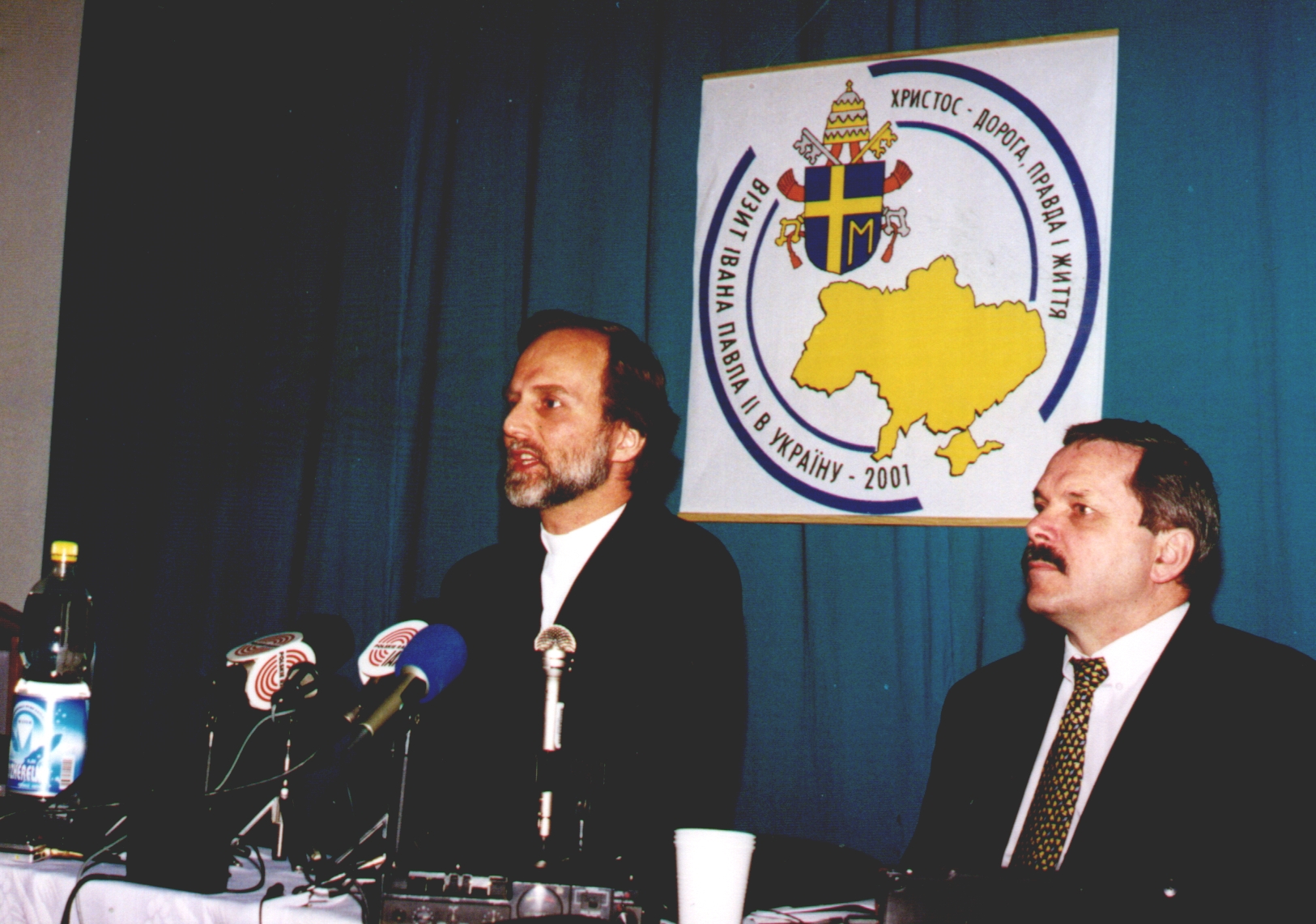
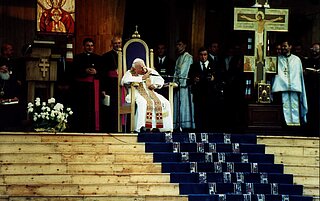
Can a single visit change the course of a nation’s history? Twenty-five years after Saint John Paul II’s journey to Ukraine, Metropolitan Borys Gudziak believes it did. More than a landmark event in the life of the Church, the Pope’s pilgrimage became a moral catalyst that helped Ukrainians more deeply recognize their dignity, freedom, and responsibility for the future of their country.
In 2001, Ukraine was still a very young independent state, searching for its identity after decades of Soviet rule. Saint John Paul II’s visit carried not only religious significance, but also social and political importance. How do you remember the attitude of the Ukrainian government and society toward the visit? Was there a sense of caution—or even tension—in certain political or church circles?
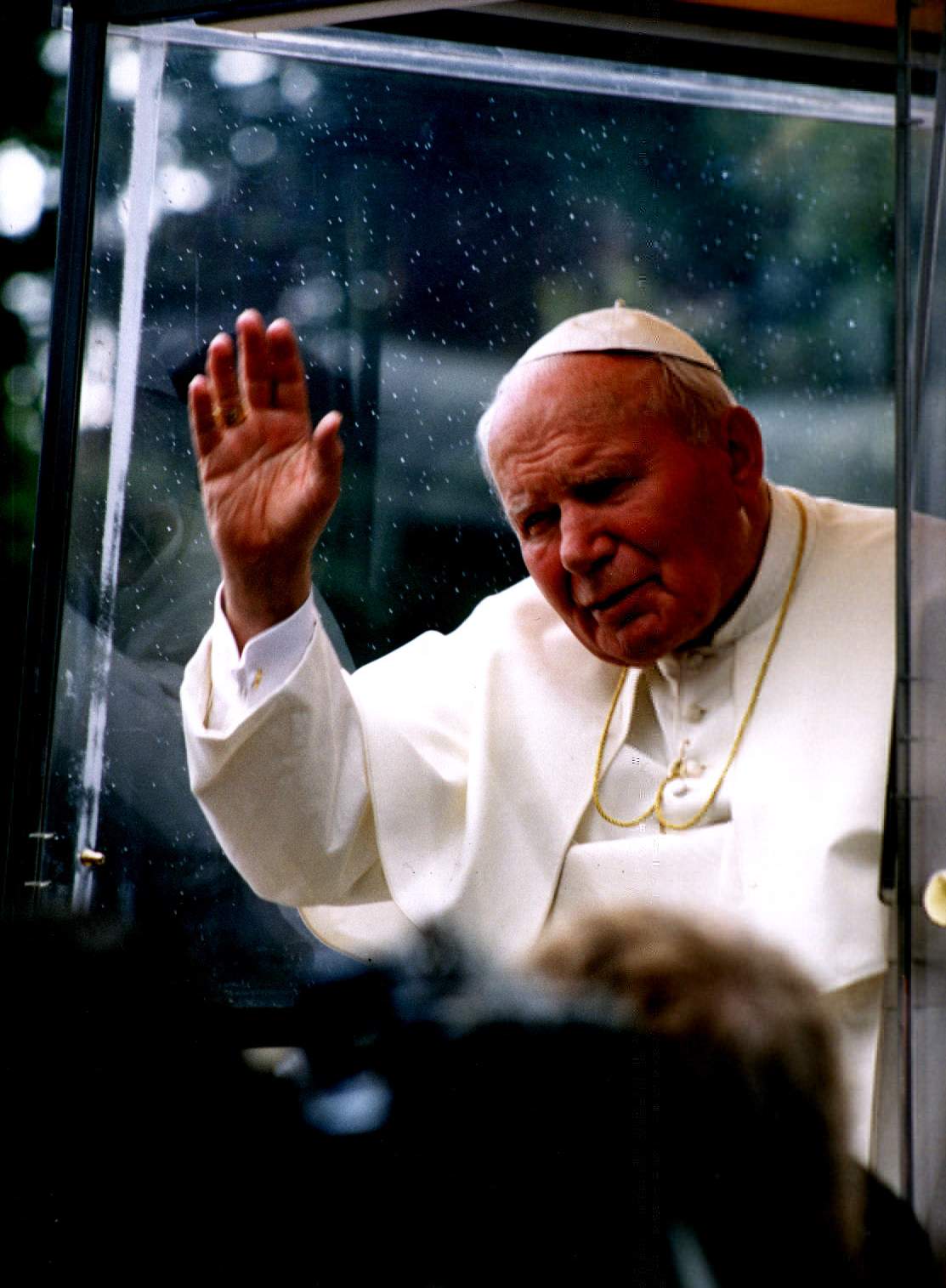
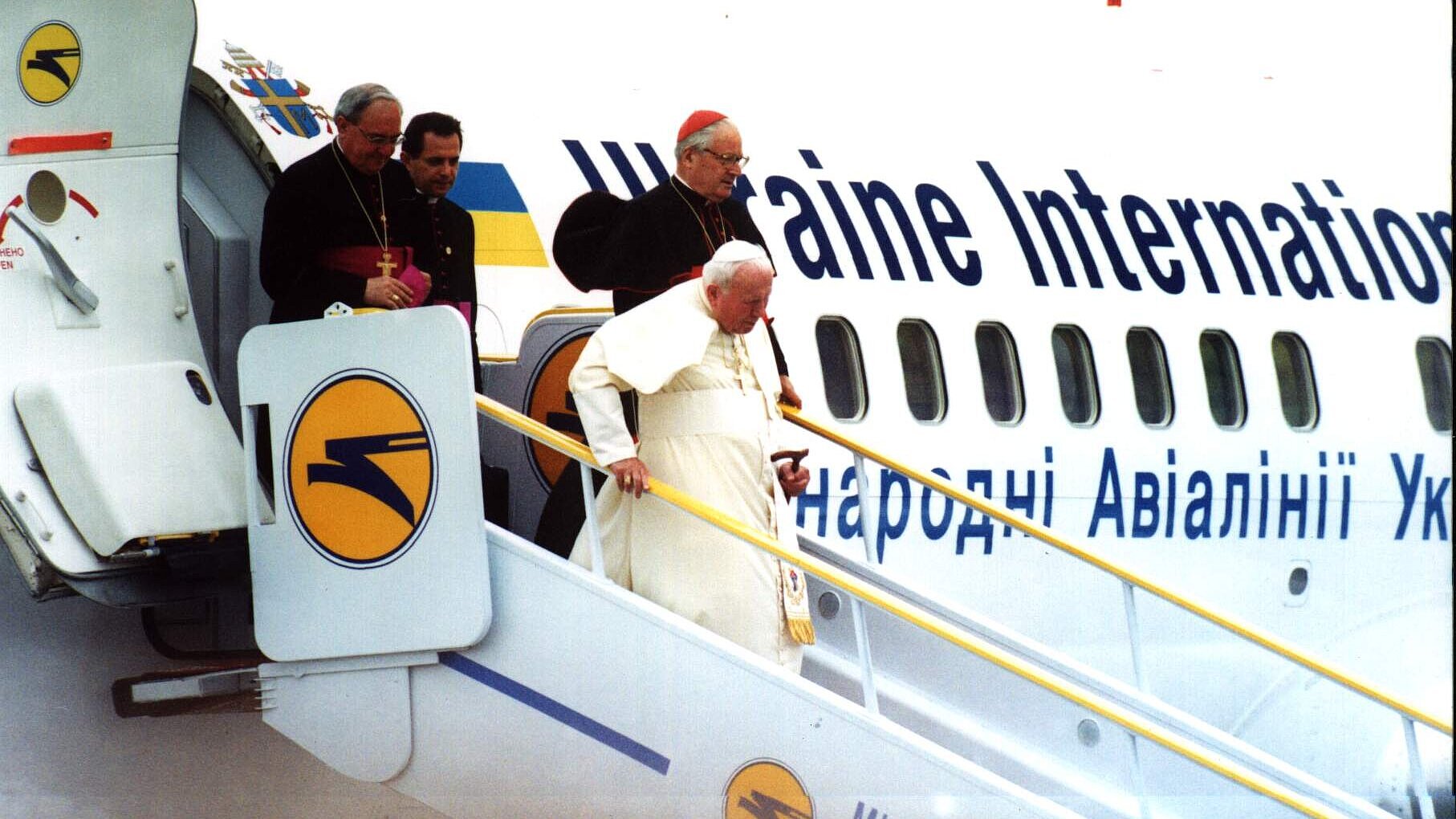
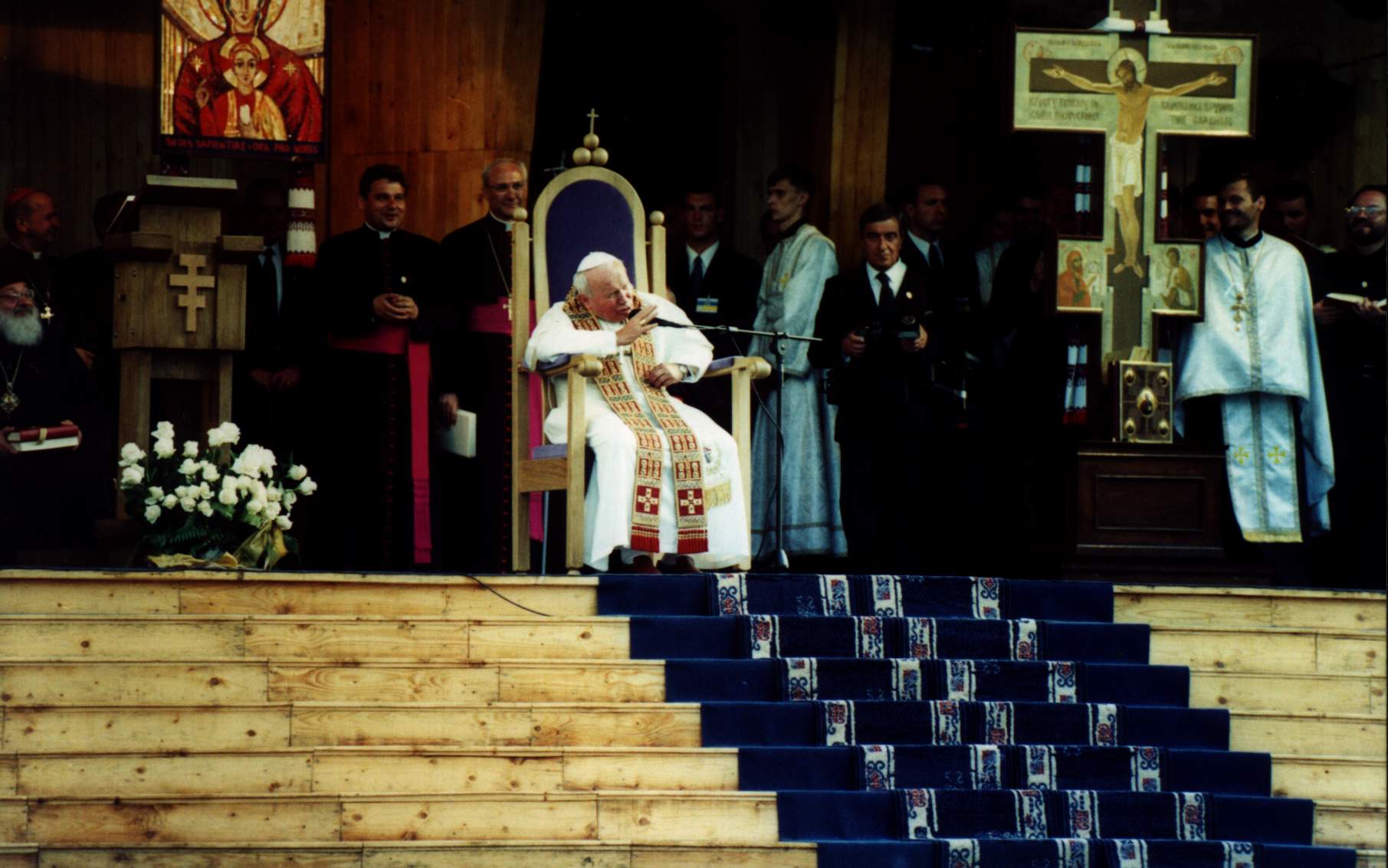
What struck and inspired me most was the goodwill that Ukrainians across the country showed toward Saint John Paul II. Motivated by Christian love and genuine concern, he deeply desired to be in Ukraine and among the Ukrainian people. He understood that our newly regained independence, coupled with the heavy legacy of totalitarianism, left the country vulnerable. At the time, the Pope was already 81 years old. Everyone knew about his Parkinson’s disease, yet he was determined to make this journey. He wanted to honor the witness of the Church’s martyrs and recognize their holiness. He wanted to speak directly to the people of Ukraine.
Leonid Kuchma was still President, while Vladimir Putin had already come to power in Russia. The papal visit, announced in November 2000, was to take place against the backdrop of the brutal murder of journalist Heorhii Gongadze, which had deeply shaken Ukrainian society. During that academic year, the “Ukraine Without Kuchma” movement was gaining momentum, and the possibility of a return to the habits and practices of the totalitarian past hung over the country like a dark cloud.
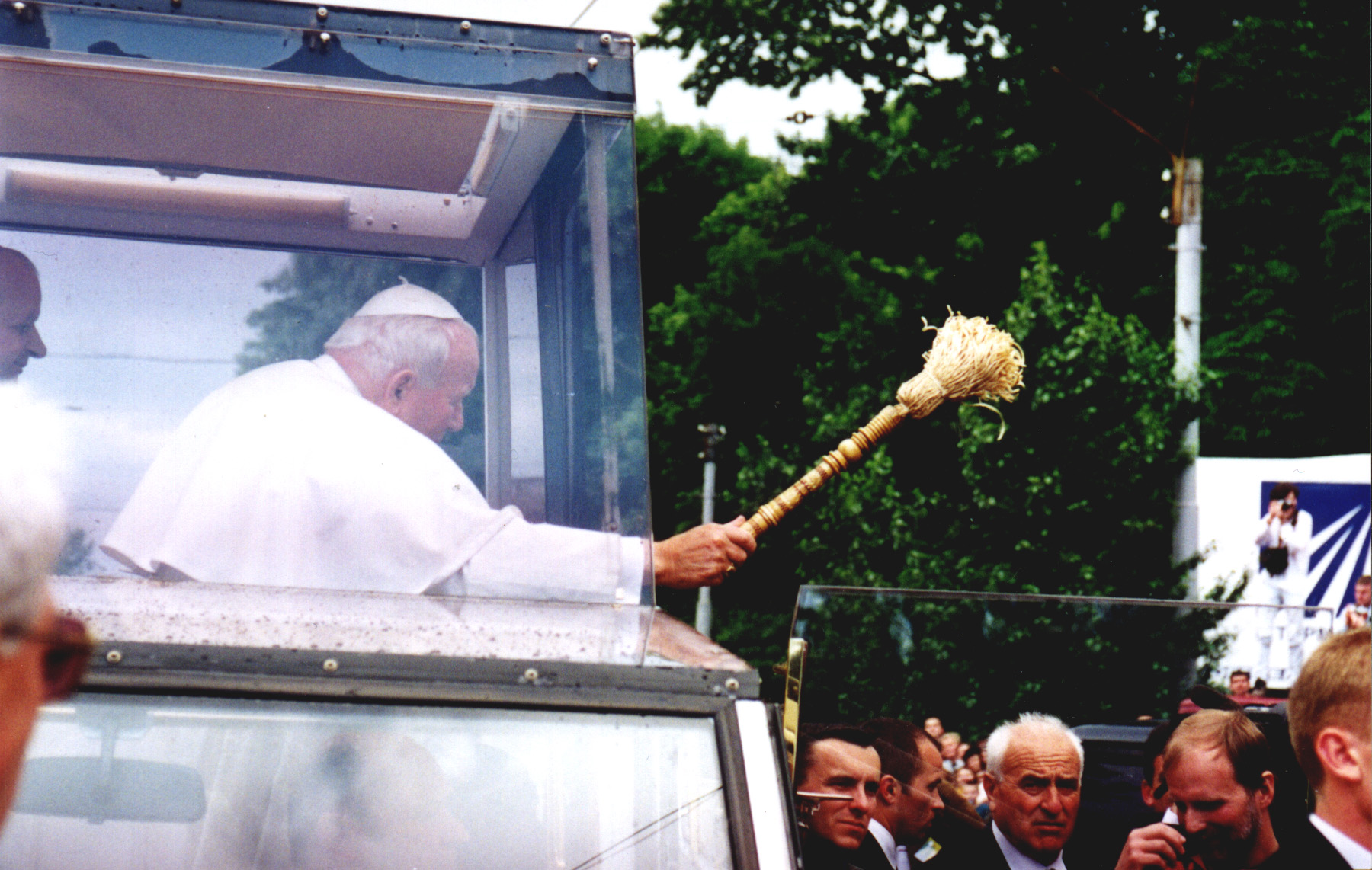
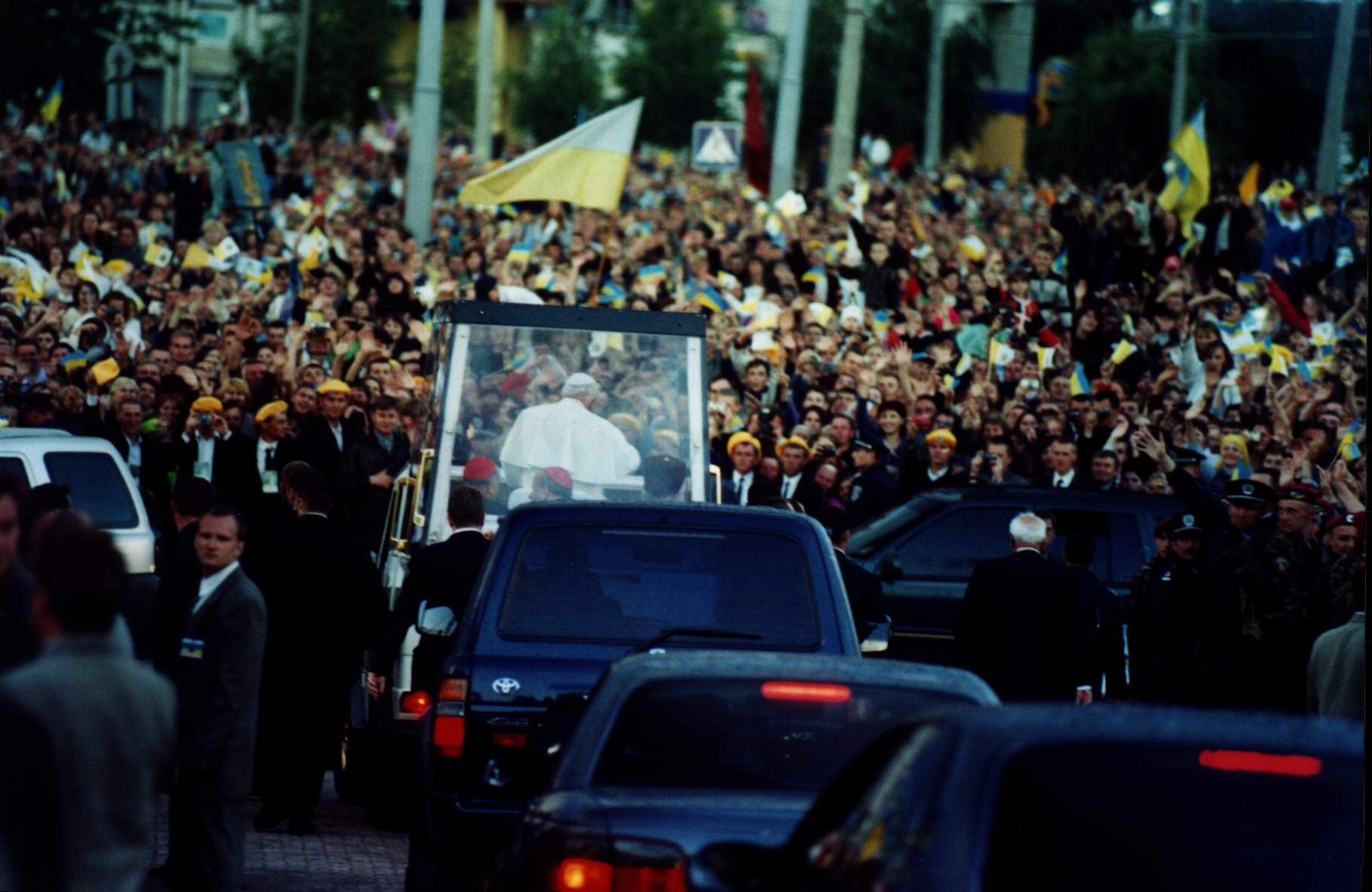
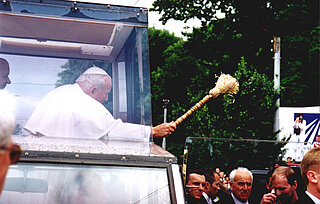
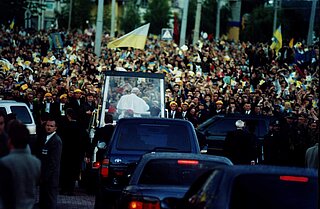
The Pope wanted to be with us at all costs. He came to bring God’s word, hope, and the assurance of God’s blessing. He wanted to affirm the dignity of Ukraine and its people. Those four days changed Ukraine. People were captivated by John Paul II. They wanted him to come and could not understand the active opposition from Russia and from the Ukrainian Orthodox Church of the Moscow Patriarchate to the very idea of the visit. I still remember a taxi driver in Kyiv speaking to me about it.
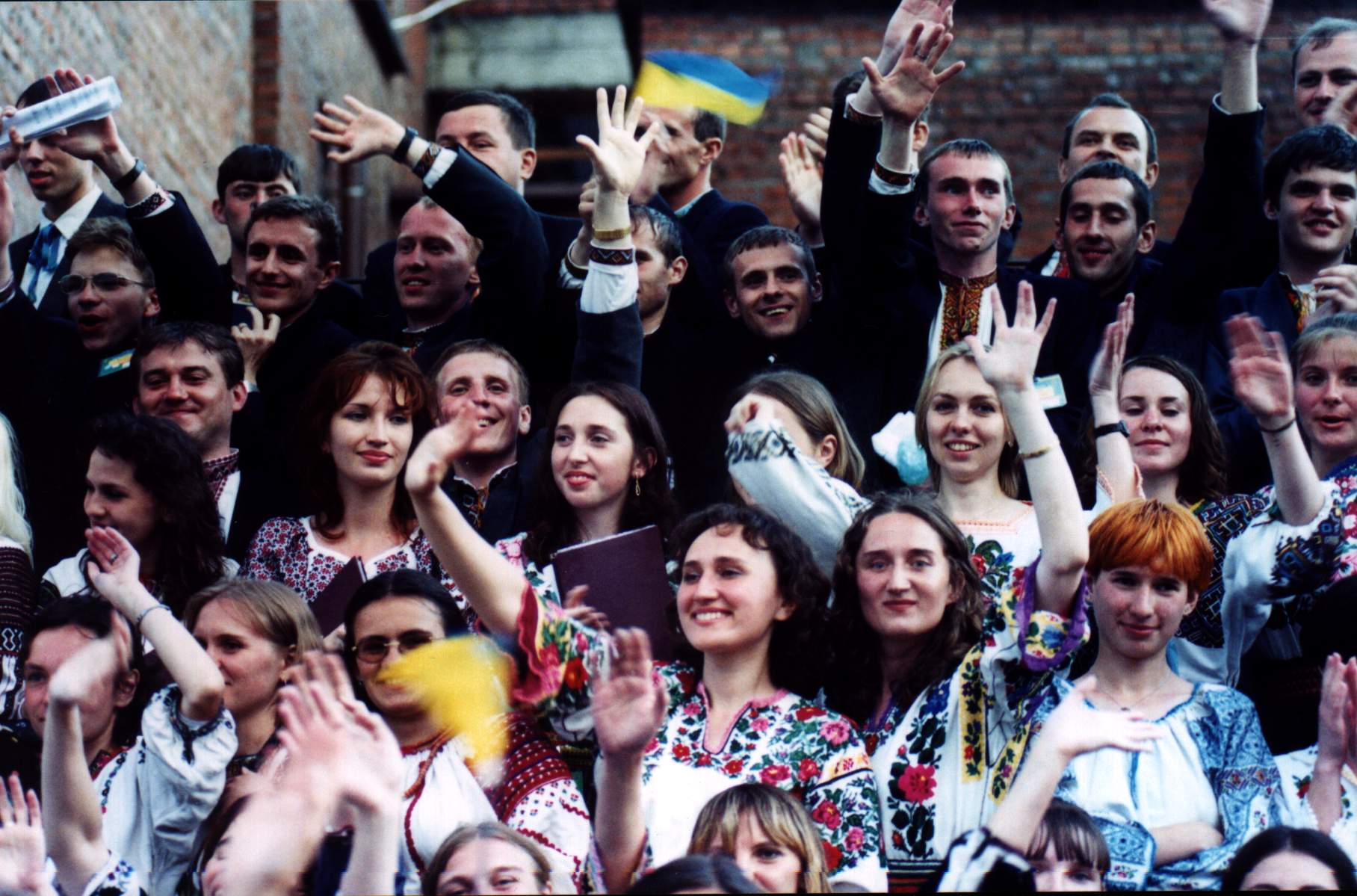
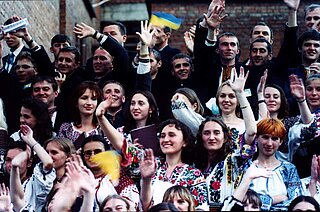
The Ukrainian people themselves showed their very best side. If I recall correctly, crime rates in Lviv dropped significantly during those days. And long after the Pope had departed, one could still sense a spirit of faith, hope, and genuine joy—in the streets, during public gatherings, and in everyday encounters.
Looking back 25 years later, can we say that this visit was one of those defining moments that helped Ukraine better understand itself as an independent nation, a part of Europe, and a people with its own spiritual identity?
Saint John Paul II’s visit was not only historic—it was transformative. I believe it did more than leave a lasting memory; it helped shape the course of Ukrainian history itself. The moral encouragement and inspiration that Ukrainians received came at a time marked by oligarchic corruption, social hardship, weak rule of law, widespread poverty, and growing Russian interference in Ukraine’s political and public life. The impact of that encouragement endured long after the visit ended. The Pope’s pilgrimage contributed to the awakening and maturation of Ukrainian civil society. Whether consciously or not, people increasingly embraced the principles of Catholic social teaching: respect for the God-given dignity of every person, solidarity, subsidiarity, and commitment to the common good.
Saint John Paul II understood the power of such spiritual movements. He had personally witnessed the celebration of the Millennium of the Baptism of Poland. The years of preparation for that anniversary in the 1960s and its observance in 1966 helped shape a national consciousness that would later find expression in the Solidarity movement of the 1980s. That movement played a decisive role in the fall of communism in Poland and contributed to the collapse of communist regimes throughout Eastern Europe.
For this reason, John Paul II understood that similar spiritual and national awakenings could take place among other peoples, including Ukrainians. As early as 1979, shortly after his election to the papacy, he wrote to His Beatitude Josyf Slipyj, encouraging the Ukrainian Greek Catholic Church to prepare for the Millennium of the Baptism of Kyivan Rus’-Ukraine in 1988. He recognized that such commemorations could become powerful catalysts for the spiritual and social renewal of a nation.
That is why, during his visit to Ukraine, he spoke and acted with great intentionality, seeking to strengthen the dignity of Ukraine and its people, above all in their own self-understanding. It is also why he made such a remarkable effort to address people in the Ukrainian language.
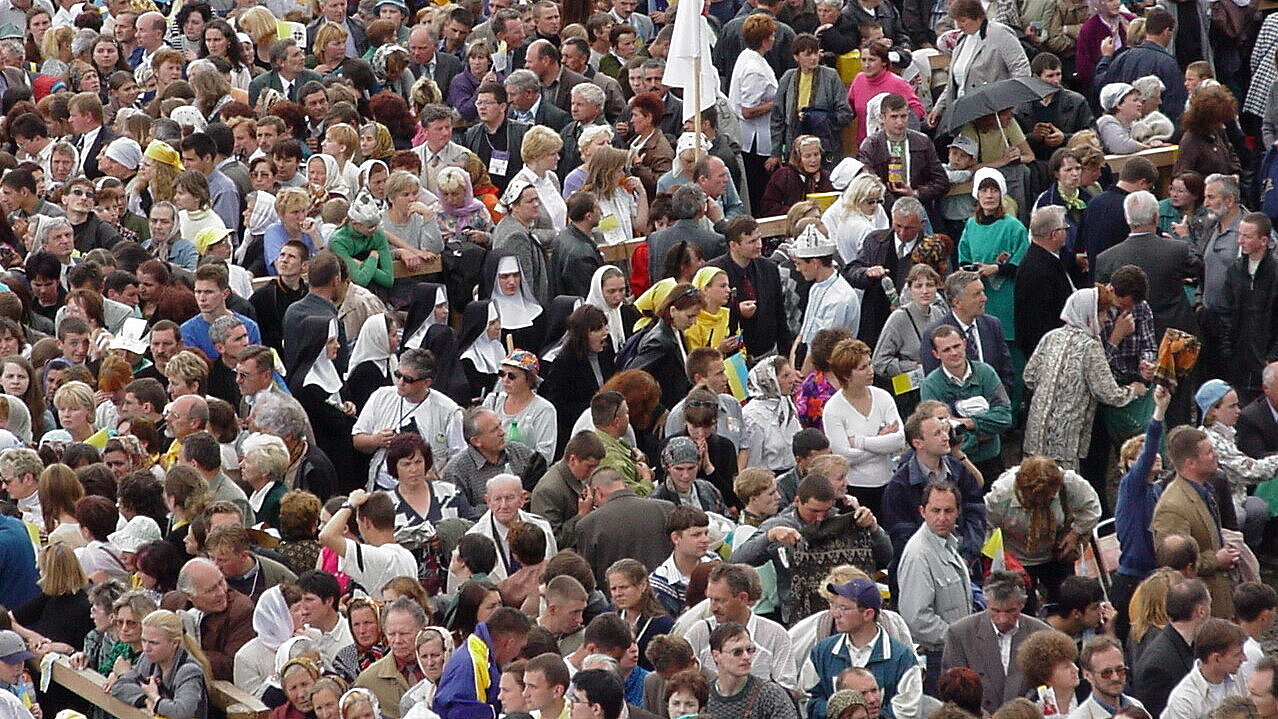
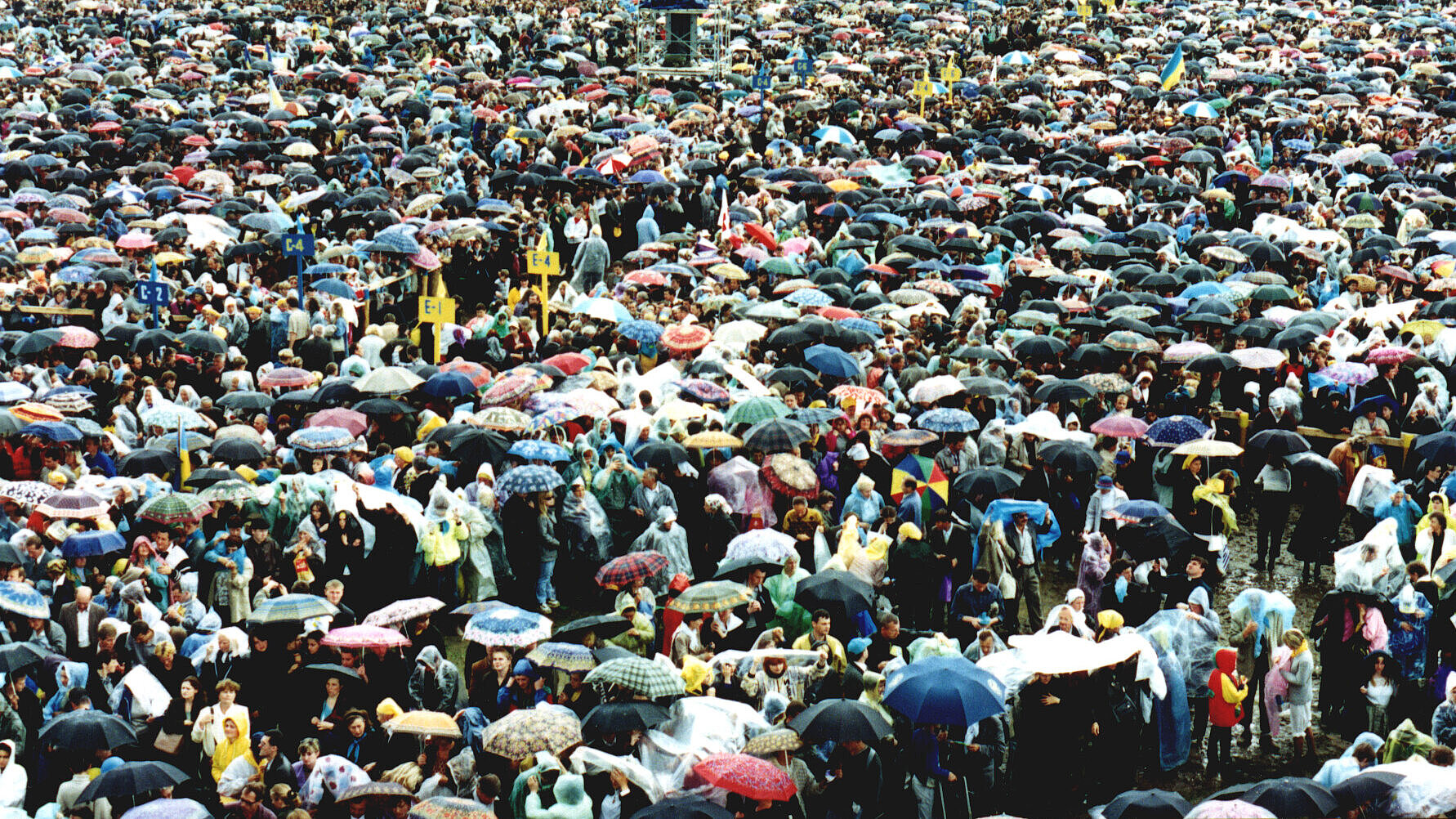
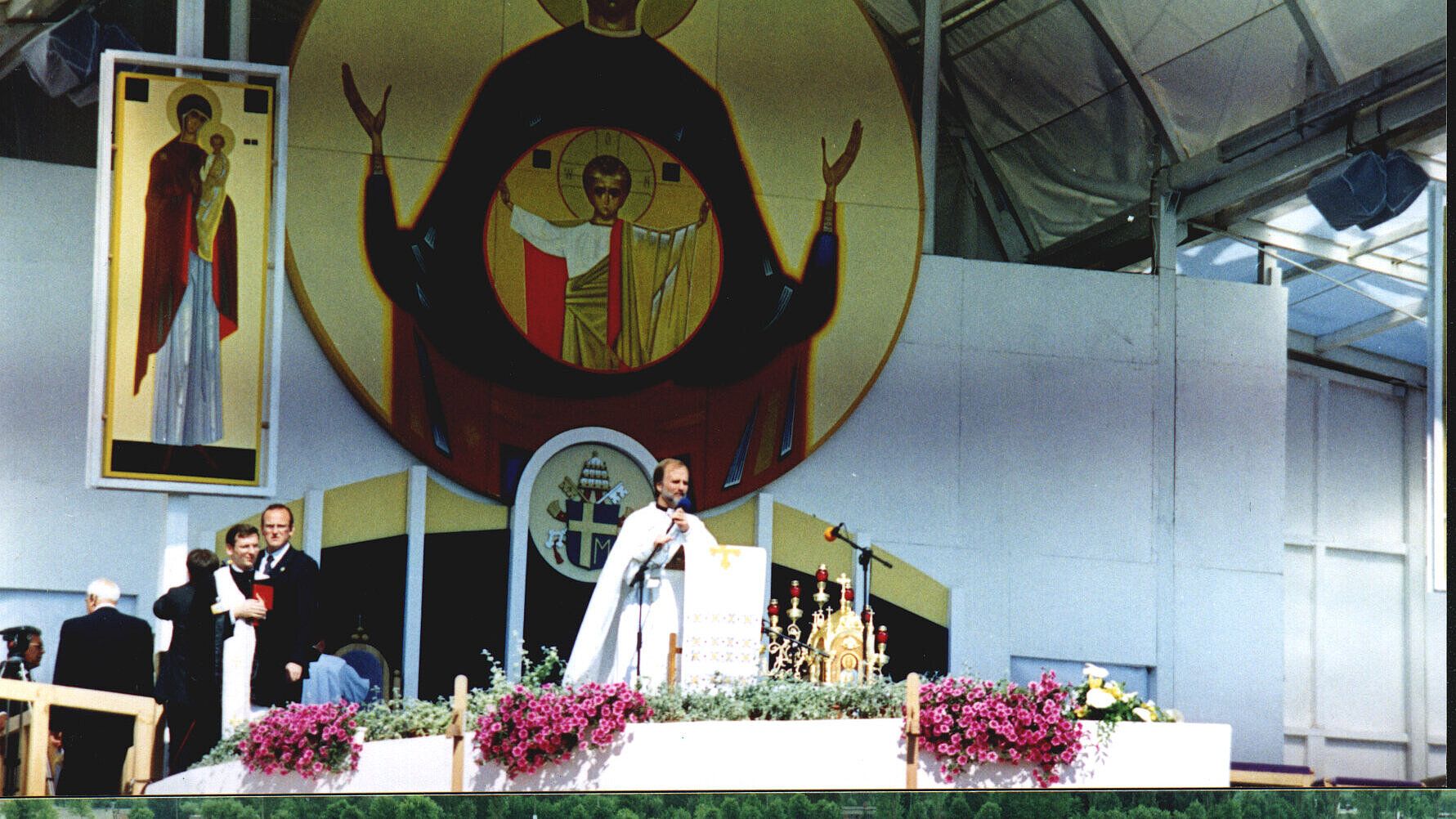
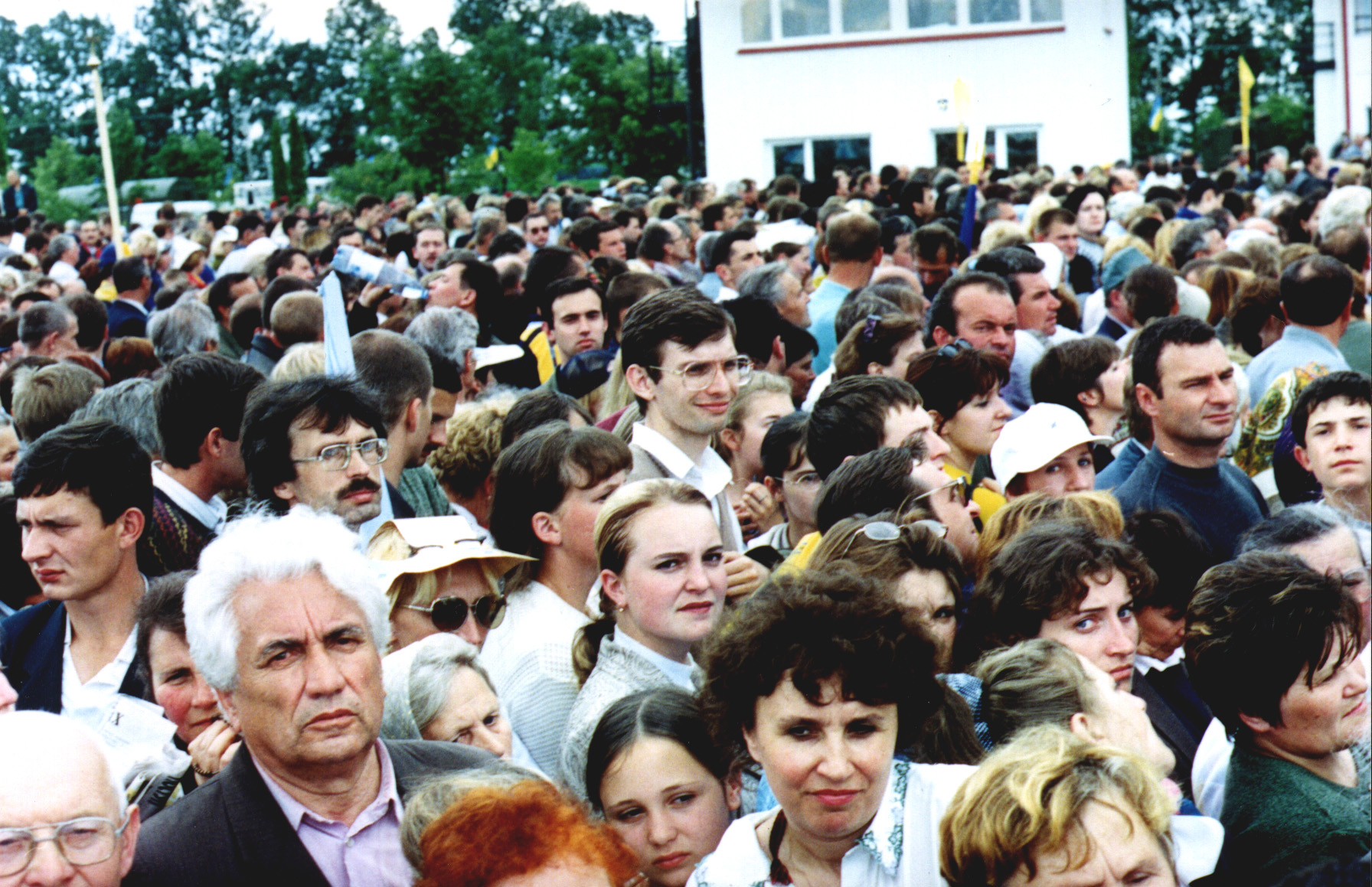
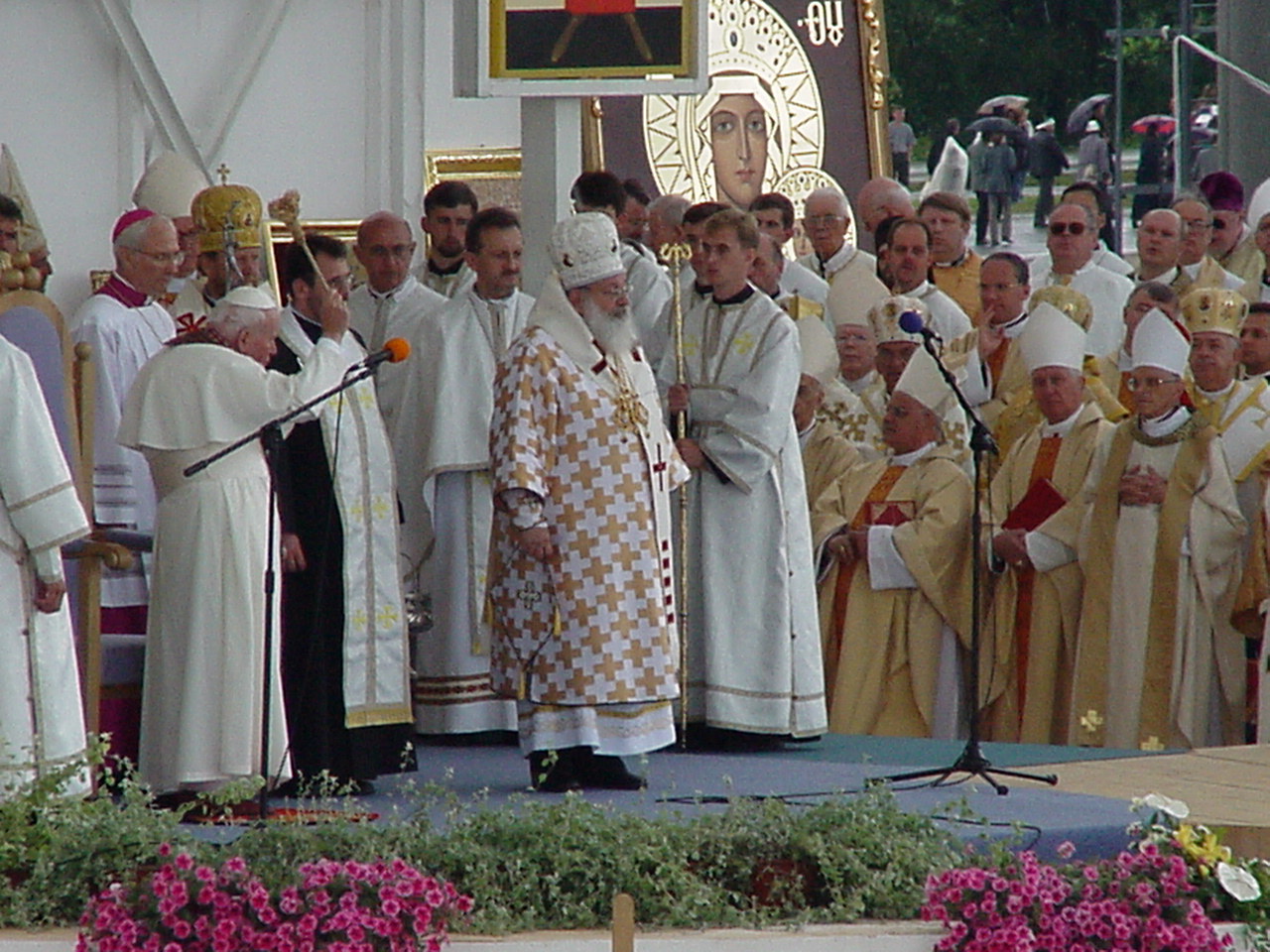
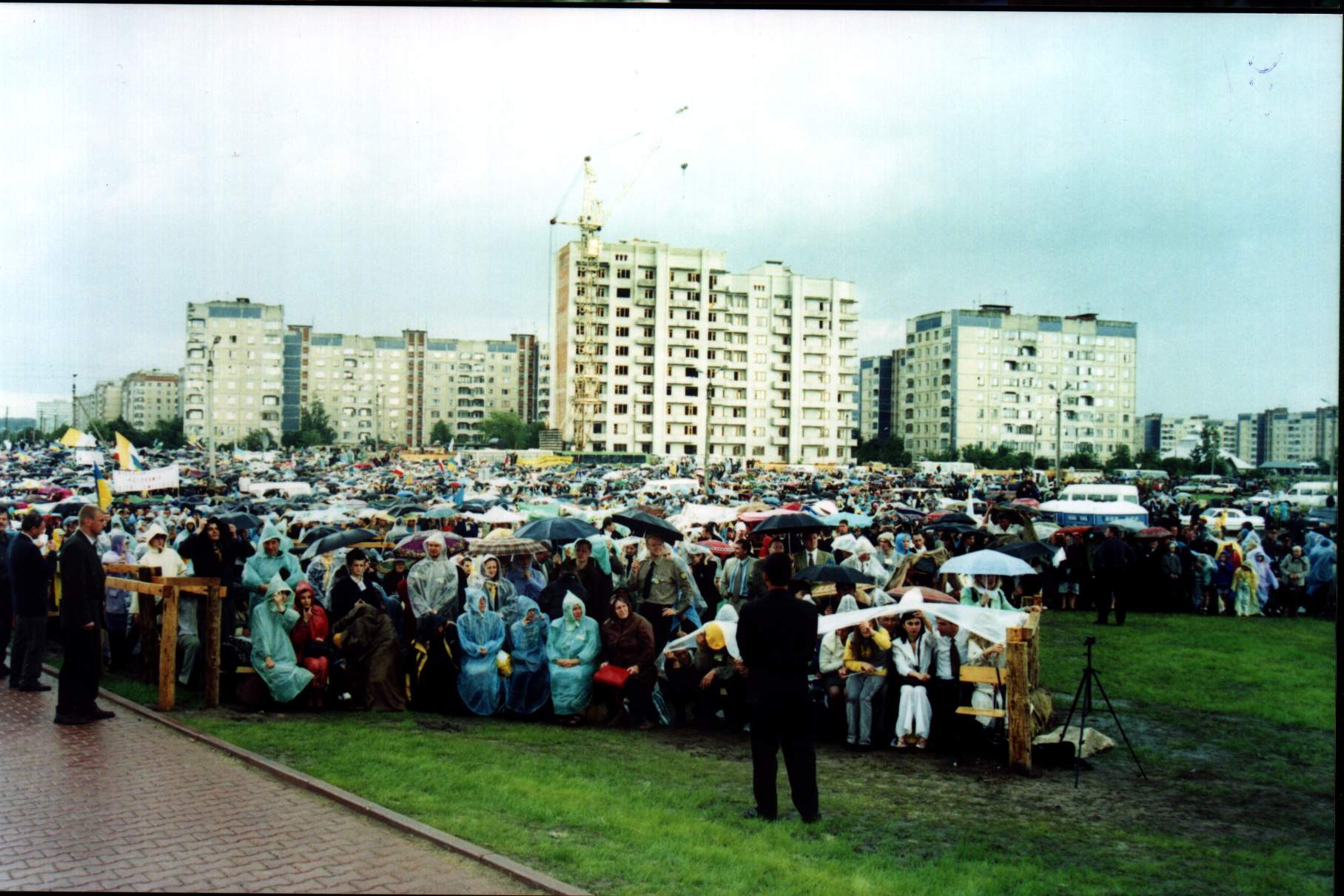
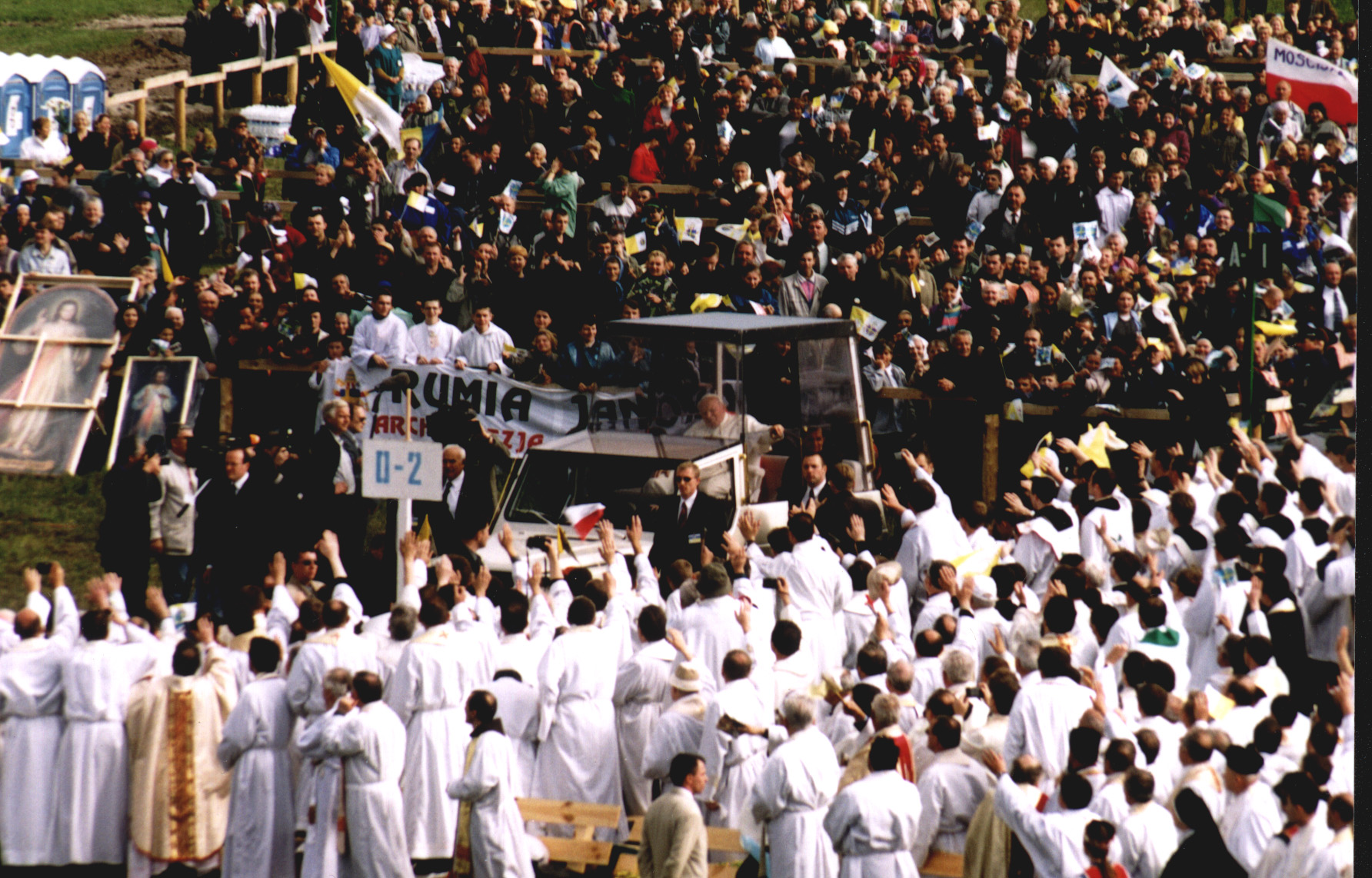
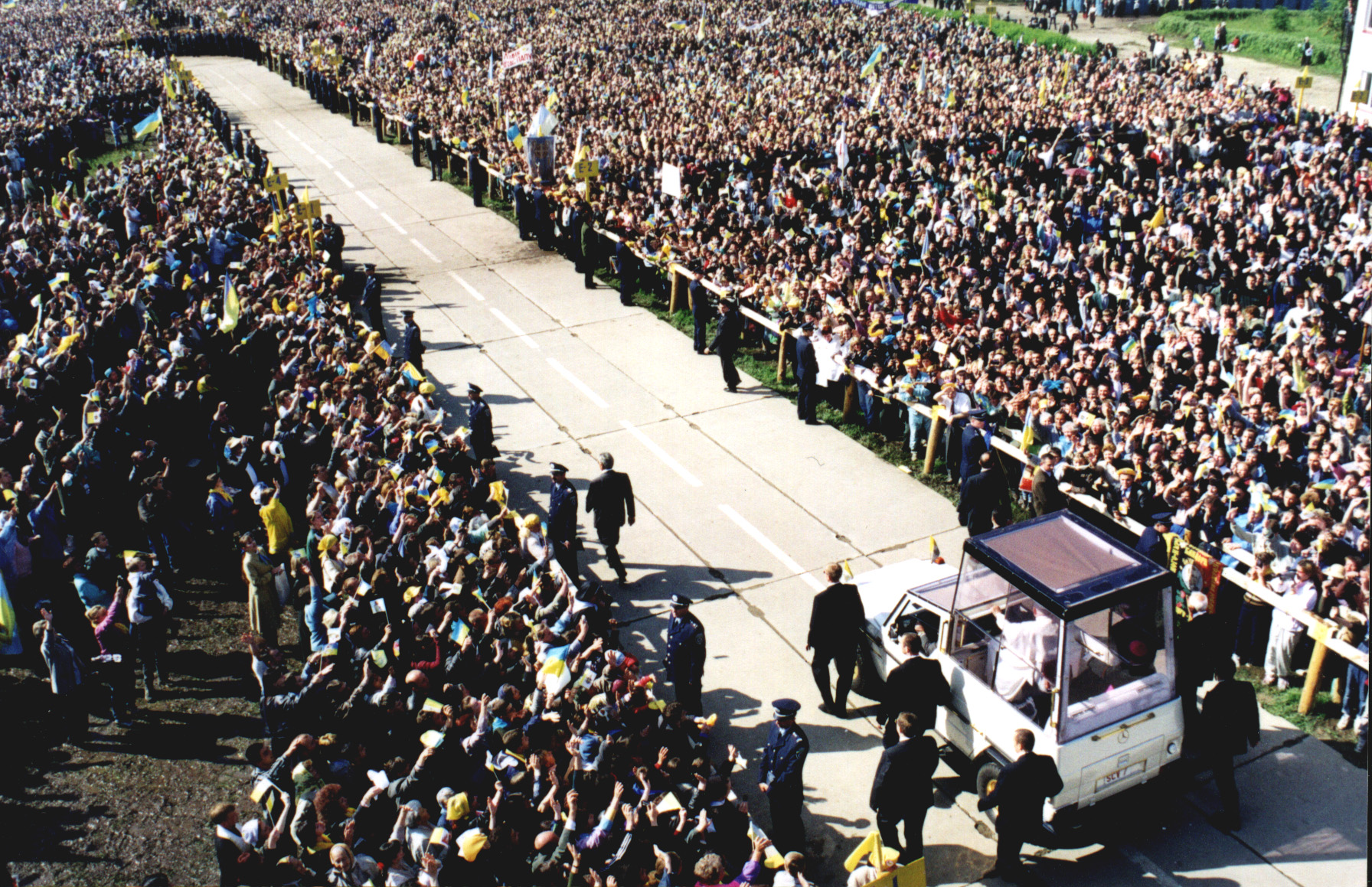
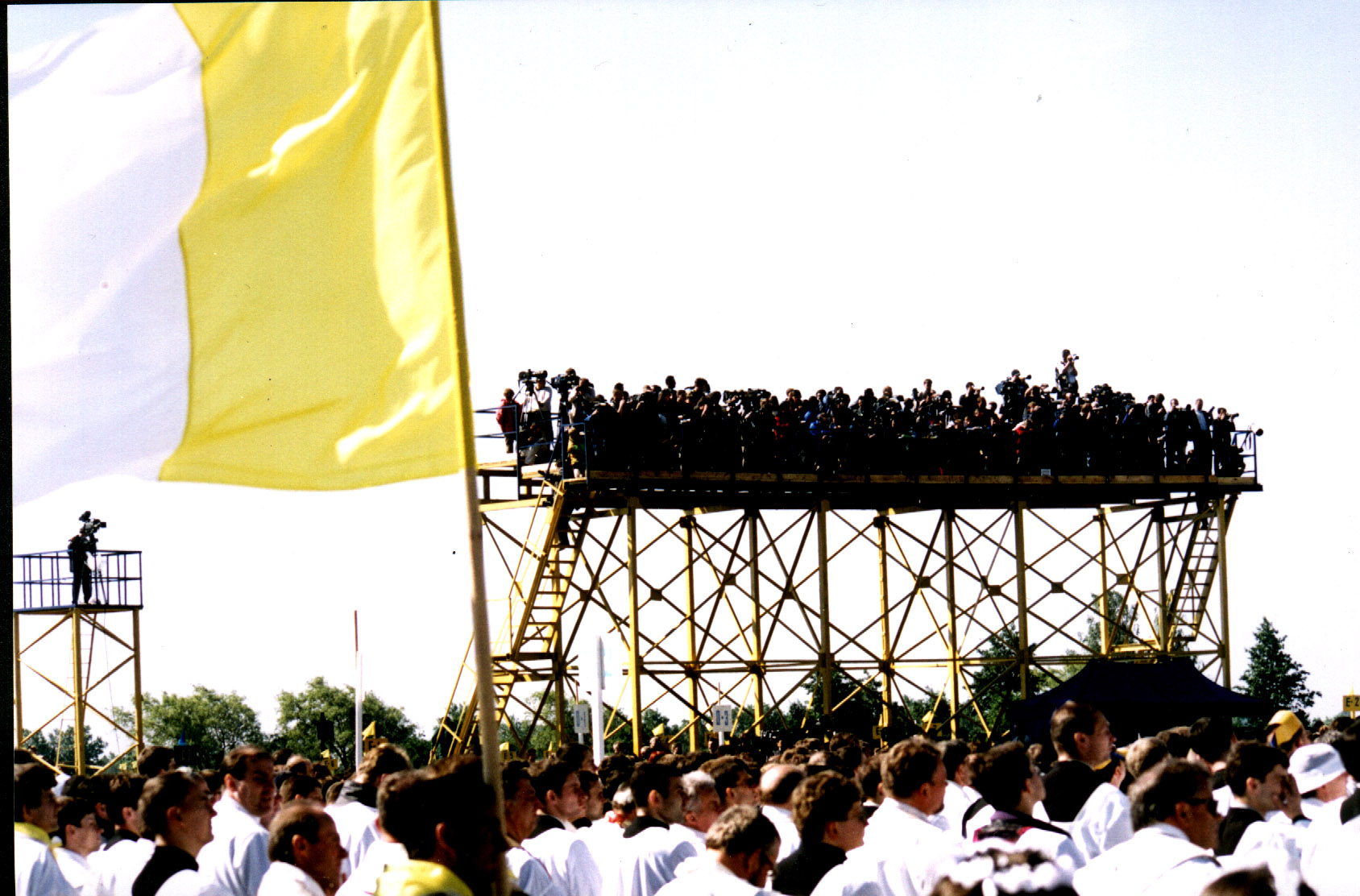
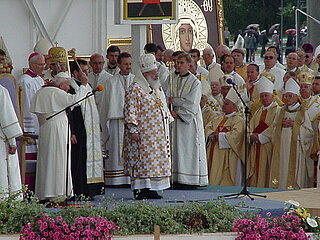
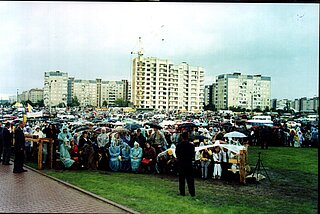
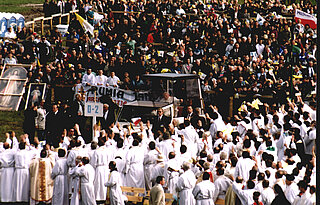
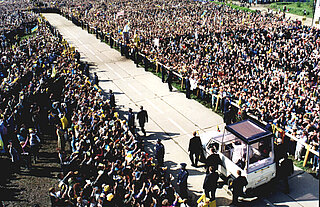
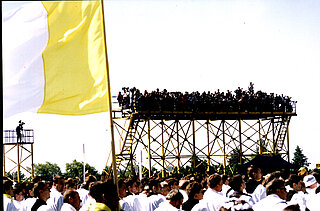
More than one million faithful gathered for the Divine Liturgy of the Ukrainian Greek Catholic Church at the Lviv Hippodrome. Ukraine had never witnessed a gathering of that magnitude before. Saint John Paul II brought people together in the name of God’s truth, human dignity, and God’s blessing, reminding each person of the eternal destiny of the human person and the immortality of the soul.
I am convinced that these developments contributed, at least in part, to both the Orange Revolution and the Revolution of Dignity. They also helped strengthen the resilience that has enabled Ukrainians for more than thirteen years to resist the aggression of a tyrant, endure a brutal war, and confront the ongoing crimes against humanity that accompany attempts to destroy Ukraine and the Ukrainian people. That is why, on the twenty-fifth anniversary of Saint John Paul II’s visit to Ukraine, it is so important to recognize the significance of this event for our history, our statehood, and our spiritual maturity.
You founded the Institute of Church History, which collected testimonies about the underground Church and its martyrs. To what extent did these materials contribute to the beatification of the Ukrainian Greek Catholic Church’s New Martyrs in 2001?
The purpose of a beatification process is to answer a fundamental question: Was this person holy? Were his or her virtues heroic? In the case of non-martyrs, there is an additional question: Is there a miraculous sign from God—that is, a verified miracle attributed to the candidate’s intercession? By its nature, a beatification cause is an ecclesiastical and juridical process, something akin to a tribunal that seeks evidence, testimony, and signs of holiness in a particular person’s life. Historical research can help answer some of these questions, but the work of historians is much broader. It seeks to reconstruct the full picture of the Church’s life and the biographies of individual figures—whether ecclesiastical, spiritual, or civic leaders.
The archives of the Institute of Church History contain extensive documentation on persecution, exile to Siberia, life in prison camps and in the underground Church, and the transmission of faith from one generation to the next despite atheistic propaganda and repression. Our goal has always been to document as much as possible. Today, the archives contain more than two thousand interviews. Twenty-five years ago, I believe there were approximately one thousand. These materials served as an important resource, but they were not decisive. Our archive could not provide all the answers required by the beatification processes, yet it certainly made a meaningful contribution.
To my knowledge, the modern history of the Church has rarely seen a beatification process involving such a large number of people completed in such a short period of time. Normally, beatification causes take years, and often decades. Saint John Paul II had decided that Ukrainian martyrs would be beatified during his visit to Ukraine. As a result, Vatican offices, together with both the Ukrainian Greek Catholic and Roman Catholic Churches, had to complete the necessary work within a matter of months. The selection of the martyrs was also influenced by these very limited time constraints. There were likely not hundreds but thousands of twentieth-century martyrs in Ukraine. Yet it was important to John Paul II that a significant group of them be formally recognized during his pilgrimage. Working together with representatives of our Churches, those responsible in the Vatican focused on candidates whose biographies and causes had already been researched to some extent and were sufficiently advanced.
Today, those responsible for promoting the causes of beatification and canonization must undertake this work in a much more systematic and sustained way. In the twenty-five years since then, no other cause—whether of martyrs or non-martyrs—has yet reached the stage of beatification. These processes require resources, qualified specialists trained in historical, ecclesiastical, and canonical methodology, as well as the financial support necessary for dedicated teams to work consistently over many years. Only through such sustained efforts can the truth about the extraordinary witness of those proposed for sainthood be fully uncovered and demonstrated.
You had the opportunity to meet Saint John Paul II on numerous occasions. What were those encounters like?
I first saw John Paul II at the Cathedral Basilica in Philadelphia in 1979, when I was eighteen years old. Later, while studying in Rome between 1980 and 1983, I had several opportunities to meet him again.
In 1988 and 1989, following visits to Soviet Ukraine, I provided him with reports on the life of the Church and the condition of society under the Soviet regime. Then, in 1995, I personally presented him with materials documenting the rebirth of the Lviv Theological Academy.
Each encounter reflected the remarkable qualities for which he became known throughout the world: a profound faith, genuine attentiveness to people, intellectual depth, and an extraordinary ability to inspire hope. He possessed a unique gift for helping people recognize their dignity and their calling before God.
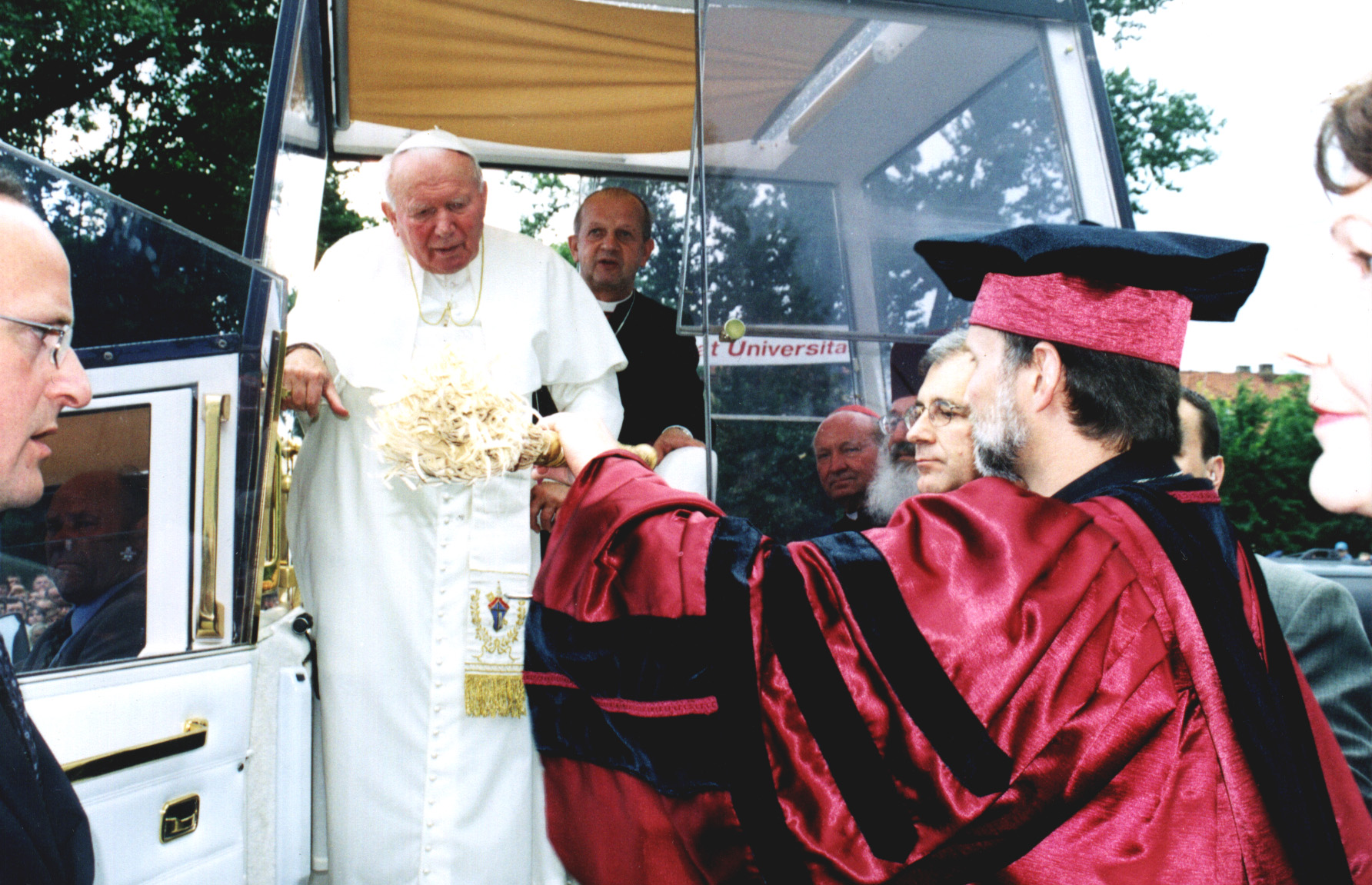
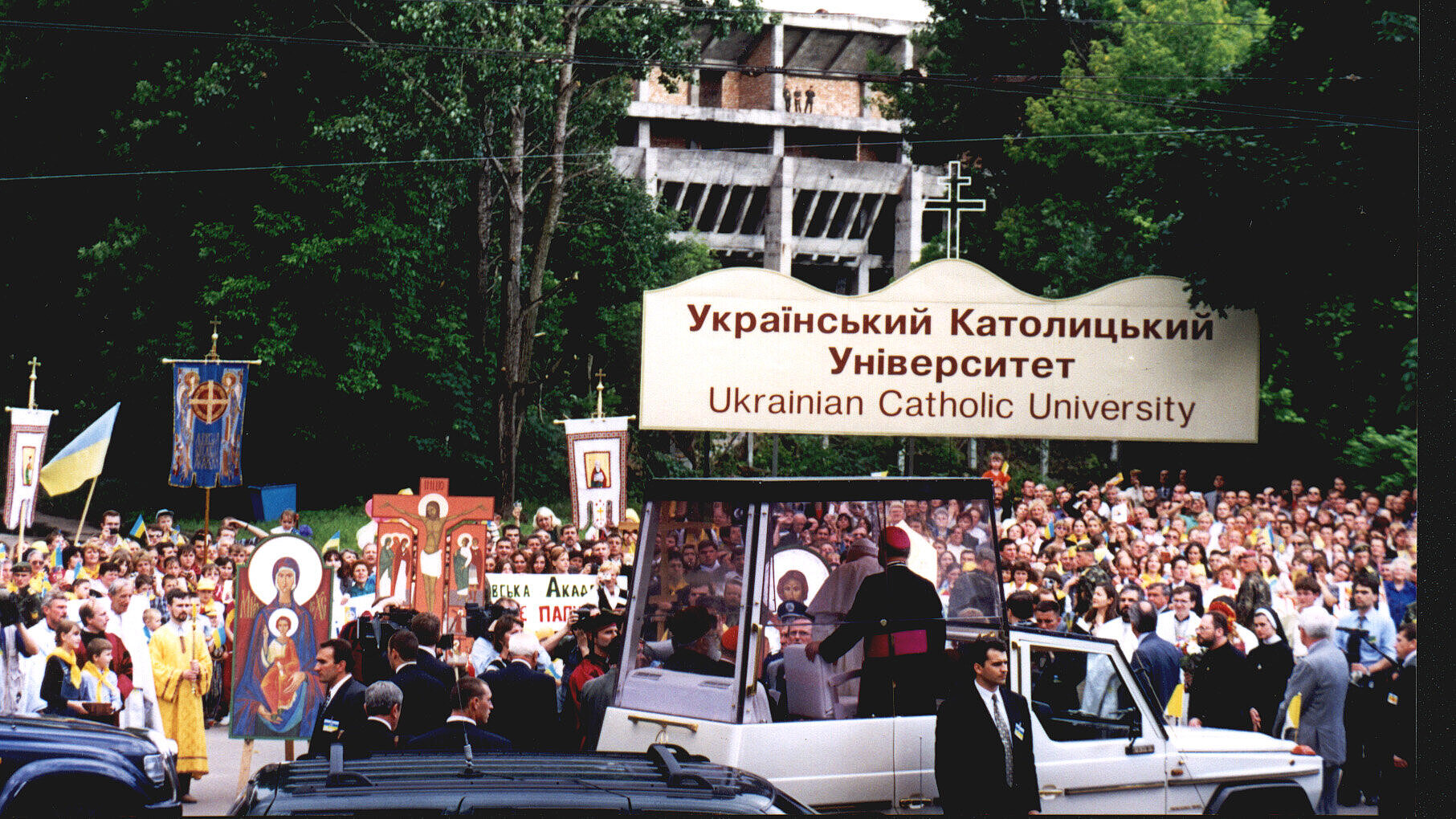
It was you who welcomed Saint John Paul II on the site of what would later become the campus of the Ukrainian Catholic University. At that moment, could you have imagined what UCU would become over the next twenty-five years?
Today, it is difficult to deny the connection between the papal visit, the blessing of the land for the future campus of the Ukrainian Catholic University and the new Lviv Theological Seminary, and the remarkable development of these institutions in the years that followed.
We remain deeply grateful to Saint John Paul II and Pope Benedict XVI for their support and blessings. Pope Benedict, in particular, made the first major contribution to the university’s capital campaign, helping to launch a new phase of UCU’s growth and development. Of course, we hoped that the university would play an important role in the life of the Church, Ukrainian society, and even the broader international community. What was difficult to foresee, however, was how quickly this would happen and to what extent. Looking back today, it is hard not to see God’s blessing upon these institutions and their mission.
Looking even further ahead, what is your greatest hope for UCU one hundred years after Saint John Paul II blessed this site?
My hope is contained in the very name of the institution itself: that it will truly remain a university, truly remain Catholic, and truly remain Ukrainian.
I hope that UCU will continue to engage in the critical and creative exploration of the universal human experience and the human vocation. I hope that the Gospel truth will always remain its cornerstone and guiding mission. And I hope that, while rooted in Ukraine and serving the Ukrainian people, the university will also contribute—even in a modest way—to humanity’s spiritual and intellectual heritage.
Saint John Paul II knew firsthand the realities of totalitarianism, war, and the struggle of nations for freedom. Do you see anything in his words and actions that helps us understand how he might view Russia’s war against Ukraine today? What do you think he would say to Ukrainians who have been fighting for their freedom and living through war for so many years?
Without question, he would speak with kindness, theological depth, clarity, and conviction. But I believe he would do more than speak—he would act prophetically.Like the recent Popes, he would call upon the entire Catholic world and all people of faith to pray for Ukraine. Prayer draws down God’s grace, and God’s grace works miracles in human history. He would also help people understand, without ambiguity, the enduring consequences and recurring patterns of communist tyranny. Having experienced those realities firsthand, he understood how deeply they can wound nations and societies. And I believe that, just as he did in 2001, he would simply come to Ukraine and be present with its people.
We all understand how essential solidarity is at this moment. Therefore, on this anniversary, we join His Beatitude Sviatoslav, our bishops, and the President of Ukraine in inviting Pope Leo XIV to visit Ukraine. I have no doubt that such a visit could carry historical significance comparable to that of Saint John Paul II’s pilgrimage twenty-five years ago. That is why I encourage everyone to pray that such a visit may become a reality.